
Da Nang Guide 2026: Complete Travel Guide to Beaches, Mountains, Food, Culture and Day Trips
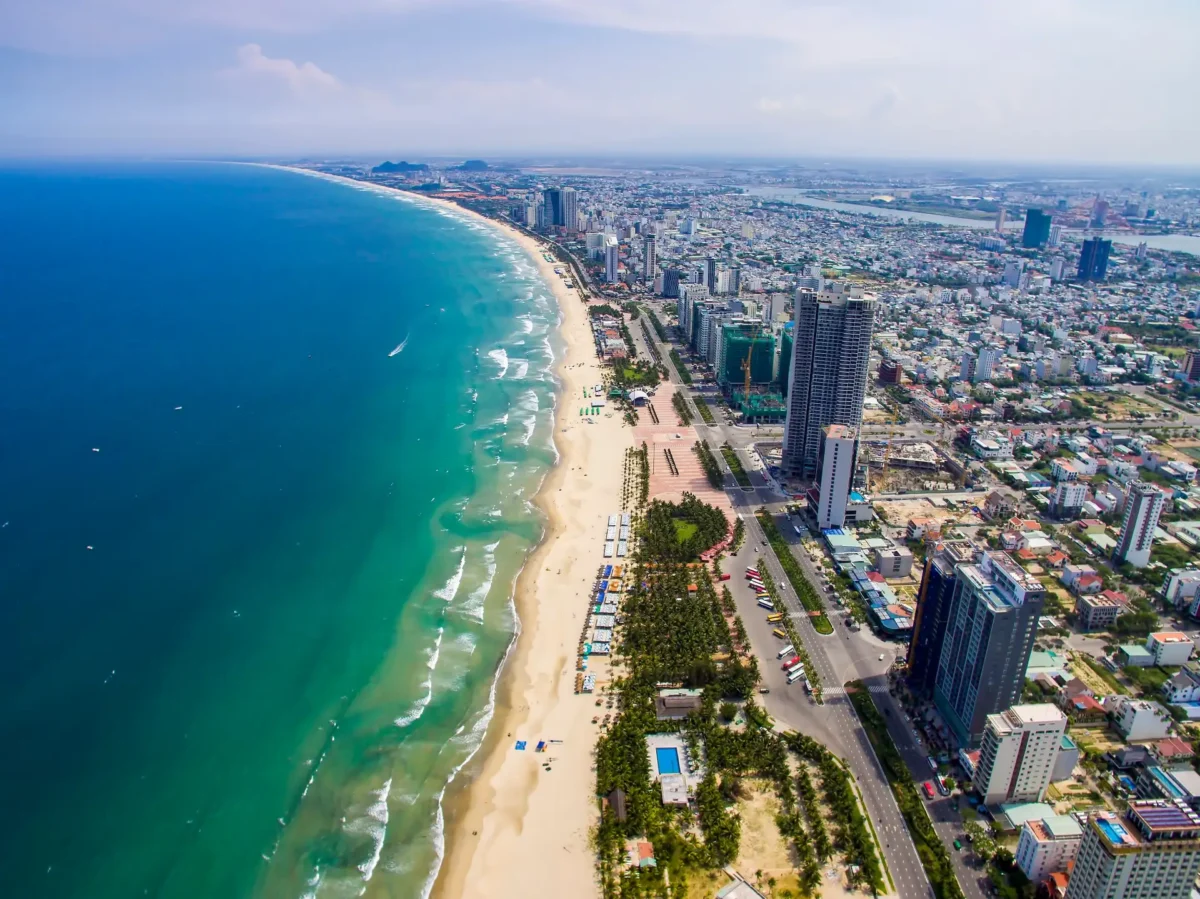
Da Nang is one of the easiest cities in Vietnam for international travelers to explore. Set on the central coast between Hue and Hoi An, the city combines long sandy beaches, a modern urban center, the Han River, the forested Son Tra Peninsula, Marble Mountains and easy access to some of Central Vietnam’s most important cultural and natural attractions. It is also one of the best places in Vietnam to build a flexible itinerary because you can spend the morning swimming at My Khe Beach, visit a Buddhist pagoda in the mountains in the afternoon, eat seafood by the coast in the evening and still have time for a night walk along the river. Da Nang has an international airport close to the city center, making it particularly convenient for travelers who want to avoid long overland journeys.

Where Is Da Nang?
Da Nang sits on Vietnam’s central coast, with the East Sea to the east, the mountains of Son Tra to the northeast and the Hai Van Pass leading toward Hue to the north. Hoi An is south of the city, while the Marble Mountains sit between Da Nang and Hoi An.
This location gives Da Nang an unusual advantage. You can use the city as a comfortable base while exploring several different landscapes without changing hotels every night. Within a relatively short distance are beaches, mountains, caves, pagodas, fishing communities, traditional villages and UNESCO-listed heritage destinations.
The city itself is divided broadly into several useful areas for travelers. Hai Chau is the central urban district around the Han River, with markets, restaurants, cafés and government buildings. My Khe and the coastal area are popular with international visitors because of the beach, hotels, seafood restaurants and nightlife. Son Tra offers mountains, forest and ocean views. Ngu Hanh Son, where Marble Mountains are located, is farther south and convenient for travelers continuing toward Hoi An.
Why Visit Da Nang?
Da Nang is particularly appealing because it combines the advantages of a major Vietnamese city with the atmosphere of a coastal resort.
You can find international-standard hotels and resorts, modern cafés, restaurants, shopping centers and excellent transportation, but you can also reach quiet beaches, mountain roads and rural landscapes within a short drive.
For travelers visiting Vietnam for the first time, Da Nang is one of the easiest places to balance relaxation and sightseeing. You do not have to choose between spending your entire holiday at the beach and spending every day visiting historical attractions.
A typical day could begin with sunrise at My Khe Beach, continue with breakfast and coffee, move to Son Tra Peninsula or Marble Mountains, include a seafood lunch, return to the hotel for a few hours by the pool and finish with dinner and a walk along the Han River.
Best Time to Visit Da Nang
Da Nang has a tropical climate with a distinct wetter period, so timing can make a noticeable difference to your experience.
February to May is one of the most comfortable periods for sightseeing, with relatively pleasant temperatures and good conditions for beaches, mountains and day trips.
June to August is hot and humid, but this is also an attractive period for travelers whose priority is swimming and beach holidays. Start outdoor activities early and avoid spending long periods walking in the midday heat.
September to December brings a higher chance of rain and storms. Conditions can change quickly, particularly in Central Vietnam, so travelers visiting during this period should keep outdoor plans flexible.
Da Nang can still be enjoyable during the wetter months, but a beach-focused holiday is more weather-dependent than a cultural itinerary.
Da Nang Weather
The heat can be surprisingly strong during the middle of the day. If you plan to visit Marble Mountains, Son Tra Peninsula or Ba Na Hills, start early whenever possible.
Morning is also the best time for My Khe Beach. You will see people swimming, exercising, walking and enjoying the cooler air before the beach becomes hotter.
Late afternoon is another excellent period for outdoor sightseeing. The lower sun creates softer light for photography and temperatures become more comfortable.
During the rainy season, always check the forecast before scheduling a long mountain or boat excursion.
My Khe Beach
My Khe Beach is the most famous beach in Da Nang and one of the easiest beaches to enjoy because it stretches along the eastern side of the city.
The beach is broad and sandy, with hotels, restaurants and cafés nearby. Unlike isolated resort beaches, My Khe is closely connected to the city, so you can combine a morning swim with sightseeing, shopping and dining without spending hours traveling.
Early morning is particularly interesting because the beach becomes part of daily life in Da Nang. Residents exercise, swim, walk and play sports along the shore.
Late afternoon is better for relaxing, taking photographs and watching the sunset.
For travelers staying in a beachfront hotel, My Khe can become an everyday part of the trip rather than simply another sightseeing stop.
Non Nuoc Beach
South of My Khe is Non Nuoc Beach, closer to Marble Mountains and the resort area.
The beach is particularly attractive for travelers staying at luxury resorts because the atmosphere tends to be quieter and more spacious.
If your priority is relaxation rather than being close to the city’s restaurants and nightlife, the Non Nuoc area can be a better accommodation choice.
Pham Van Dong Beach
Pham Van Dong Beach is another convenient section of Da Nang’s coastline.
It is close to the city center and easily accessible from the main hotel areas.
The beach works well for travelers staying in Hai Chau or northern coastal neighborhoods who want an easy morning by the sea without traveling far.
Son Tra Peninsula
Son Tra Peninsula is one of Da Nang’s most important natural areas.
The peninsula rises dramatically from the coast, combining forest, mountains, beaches and spectacular viewpoints. It is located only a short drive from central Da Nang, yet the landscape feels completely different from the urban center.
The peninsula is also an important habitat for the red-shanked douc langur, a rare primate that makes Son Tra particularly significant for wildlife conservation.
Visitors can explore the peninsula by car, motorbike or private tour, depending on road conditions and current access regulations.
The official Da Nang tourism information describes Son Tra as a large forested peninsula of around 4,400 hectares, with attractions including Linh Ung Pagoda, Ban Co Peak, Mui Nghe and several coastal viewpoints.

Linh Ung Pagoda and Lady Buddha
Linh Ung Pagoda on Son Tra Peninsula is one of Da Nang’s most recognizable religious sites.
The huge white Lady Buddha statue overlooks the sea and city, creating one of the most dramatic viewpoints in Da Nang.
The pagoda itself is worth exploring rather than treating it as a quick photo stop. The combination of temple architecture, gardens, incense, ocean views and mountain scenery creates a peaceful atmosphere.
Dress respectfully when visiting the religious complex.
The viewpoint is also excellent for understanding Da Nang’s geography. From the elevated position, you can see the coastline stretching south and the urban area surrounding the Han River.
Ban Co Peak
Ban Co Peak is one of the highest accessible viewpoints on Son Tra Peninsula.
The road itself is part of the attraction, winding through forested hills with views toward the ocean and city.
At the summit, travelers will find the famous chessboard-themed statue associated with the legend of celestial beings playing chess.
The weather can change quickly at higher elevations, and clouds or mist can sometimes reduce visibility. On a clear day, however, the panoramic view is excellent.
Son Tra’s Wildlife
Son Tra is particularly important for travelers interested in nature.
The red-shanked douc langur is one of the most distinctive species associated with the peninsula. These animals are rare and sensitive to human disturbance.
If you see wildlife, observe from a distance. Do not feed animals, chase them for photographs or make loud noises to attract them.
A responsible wildlife experience is much more valuable than getting a close photograph.
Marble Mountains
Marble Mountains, or Ngu Hanh Son, are a group of limestone and marble hills located south of central Da Nang.
The mountains are named after the five elements: Water, Wood, Metal, Fire and Earth.
The most visited mountain is Thuy Son, which contains caves, pagodas, shrines, stairways and viewpoints.
The attraction is unusual because it combines geology, Buddhist and Taoist religious traditions, historical significance and panoramic views in one compact area.
The current 2026 Da Nang tourism information lists Thuy Son with an entrance fee of 40,000 VND for adults, while Am Phu Cave has a separate entrance fee.
Thuy Son Mountain
Thuy Son is the mountain most visitors explore.
The route includes steps and uneven surfaces, so comfortable shoes are essential.
Inside the mountain are several caves and religious sites, some illuminated by natural openings in the limestone.
The most atmospheric moments occur when sunlight enters through openings in the cave roof, illuminating statues and shrines below.
Allow around two hours if you want to explore properly rather than rushing through the main route.
Huyen Khong Cave
Huyen Khong Cave is one of the most memorable areas of Marble Mountains.
A large opening in the ceiling allows shafts of sunlight to enter the cavern, creating a dramatic contrast between the darker interior and illuminated religious statues.
The cave has been used for religious purposes for generations, so visitors should behave respectfully.
Photography can be particularly beautiful when sunlight enters at the right angle.
Am Phu Cave
Am Phu Cave provides a completely different atmosphere.
The cave is associated with Buddhist concepts of the underworld and contains symbolic representations of judgment, punishment and the afterlife.
It is not simply another natural cave. The religious and philosophical symbolism is an important part of the experience.
Travelers who are uncomfortable with dark or enclosed spaces may prefer to spend more time exploring the open areas of Marble Mountains.
Non Nuoc Stone Carving Village
At the foot of Marble Mountains is the historic Non Nuoc stone-carving tradition, where craftsmen have worked with stone for generations.
Today, the area contains workshops and stores selling sculptures and decorative objects.
If you are interested in Vietnamese craftsmanship, it is worth spending some time observing the work rather than simply looking at finished products.
Dragon Bridge
Dragon Bridge is the symbol most closely associated with modern Da Nang.
The bridge crosses the Han River and features a giant dragon-shaped structure stretching across its length.
During the evening, the bridge becomes one of the city’s most recognizable illuminated landmarks.
The dragon’s fire and water performance takes place on Saturday and Sunday nights at 9:00 PM, according to current tourism information.
If you want to watch the performance, arrive early enough to find a good viewing position. The surrounding streets become much busier around show time.

Han River
The Han River is the center of Da Nang’s evening atmosphere.
The riverfront is particularly attractive after dark when the bridges and buildings illuminate the water.
A walk along the river is an easy activity after dinner and does not require a formal tour.
You can also take a river cruise for a different perspective of the city.
For couples, a private evening boat ride can be a pleasant alternative to a busy sightseeing schedule.
Han River Bridges
Da Nang’s bridges are part of the city’s identity.
In addition to Dragon Bridge, the Han River Bridge is notable because it was designed as a swing bridge, while other modern bridges contribute to the city’s illuminated skyline.
Walking along the river after sunset allows you to see several bridges in one evening.
This is one of the simplest ways to appreciate Da Nang’s modern architecture without spending money on an attraction ticket.
Ba Na Hills
Ba Na Hills is one of the most popular day trips from Da Nang.
Located in the mountains west of the city, Ba Na Hills combines cable-car journeys, mountain scenery, gardens, entertainment, restaurants and European-inspired architecture.
The most famous attraction is the Golden Bridge, a curved pedestrian bridge apparently supported by enormous stone-colored hands.
The destination is very different from the beaches and historical sites of central Da Nang.
It feels more like a large mountain entertainment complex than a traditional Vietnamese attraction.
Current 2026 information confirms that Ba Na Hills has expanded its programming, with themed areas and a three-day ticket option available during 2026.
Golden Bridge
The Golden Bridge is one of Vietnam’s most recognizable modern tourist structures.
The bridge stretches across the mountain landscape and provides panoramic views of the surrounding forest.
Its enormous hand-shaped supports make it instantly recognizable in photographs.
Go early if possible because clouds and crowds can both affect the experience.
Weather is particularly important at Ba Na Hills. The mountain can be cool, cloudy or misty even when Da Nang is hot and sunny.
Is Ba Na Hills Worth Visiting?
It depends on what you want.
If you enjoy theme parks, cable cars, gardens, photography, family entertainment and unusual architecture, Ba Na Hills can easily justify a full day.
If your priority is authentic historical sites, traditional villages and quiet nature, you may prefer Son Tra, Marble Mountains or Hoi An.
Families often enjoy Ba Na Hills because there are many activities beyond the Golden Bridge.
For couples, it can be fun, but it is best combined with more atmospheric experiences rather than making the entire Da Nang itinerary revolve around it.
Da Nang Cathedral
Da Nang Cathedral, commonly known as the Pink Church, is located in the city center.
The distinctive pink exterior makes it easy to recognize, and the building reflects the city’s French colonial period.
It is a relatively quick visit and can be combined with Han Market and other central attractions.
Visitors should remember that it remains a functioning religious building.
Han Market
Han Market is one of Da Nang’s best-known traditional markets.
It is useful for travelers looking for Vietnamese snacks, dried foods, coffee, clothing, souvenirs and regional products.
The market can be busy and crowded, particularly during peak hours.
If you want to explore comfortably, go earlier in the day.
Con Market
Con Market is particularly interesting for travelers who want to explore Da Nang’s food culture.
Compared with a polished shopping mall, the market provides a much more traditional atmosphere.
Food stalls offer noodles, rice dishes, snacks, desserts and other Vietnamese specialties.
It is one of the best places to explore Da Nang through food rather than sightseeing.
Da Nang Food Guide
Da Nang’s food culture is one of its biggest advantages.
The city sits between northern and southern culinary traditions while also having a strong Central Vietnamese identity.
The best way to experience the food is not to search only for expensive restaurants. Mix restaurants with markets, small eateries, seafood restaurants and cafés.
A good food itinerary should include Mi Quang, Bun Cha Ca, Banh Xeo, seafood, Nem Lui, fresh fruit, Vietnamese coffee and Central Vietnamese snacks.
Mi Quang
Mi Quang is one of Central Vietnam’s signature noodle dishes.
It typically combines broad rice noodles with a small amount of concentrated broth, meat or seafood, herbs, peanuts and crispy rice crackers.
The dish is very different from noodle soups in Hanoi or Ho Chi Minh City because the broth is used more as a concentrated sauce than as a large bowl of liquid.
It is an essential dish to try while staying in Da Nang.
Bun Cha Ca
Bun Cha Ca is a fish-cake noodle soup strongly associated with Da Nang.
The broth is generally light but flavorful, with fish cakes, noodles and vegetables.
It is especially enjoyable as a breakfast or lunch dish.
If you enjoy Vietnamese noodle soups, this should be high on your food list.
Banh Xeo
Central Vietnamese Banh Xeo is typically smaller and crispier than some versions found in southern Vietnam.
The pancake is filled with ingredients such as shrimp and pork and served with herbs, vegetables and dipping sauce.
Eating it properly involves wrapping pieces with herbs and dipping them into the accompanying sauce.
Nem Lui
Nem Lui consists of grilled pork skewers traditionally served with herbs, rice paper and dipping sauce.
It is a fun dish for groups because everyone can assemble their own rolls.
The combination of smoky grilled meat, herbs and savory sauce makes it particularly good for an evening meal.
Da Nang Seafood
Because of its coastal location, Da Nang is an excellent place for seafood.
Restaurants near the beach offer everything from simple grilled fish and shellfish to large seafood meals.
For the freshest experience, choose restaurants with clear information about today’s available seafood rather than ordering only imported or frozen products.
For families and groups, a shared seafood meal can be one of the easiest dinners because everyone can choose different dishes.
Da Nang Coffee
Da Nang has developed an impressive café scene.
The city has traditional Vietnamese coffee shops as well as modern cafés serving espresso, cold brew and specialty coffee.
Beachfront cafés are ideal for relaxed mornings, while cafés around Hai Chau provide a more urban atmosphere.
If you are staying several days, try at least one traditional Vietnamese coffee and one modern specialty café.
Da Nang Nightlife
Da Nang’s nightlife is more relaxed than Ho Chi Minh City but more developed than many smaller Vietnamese destinations.
The main options include riverside bars, rooftop lounges, cafés, seafood restaurants and evening walks.
The Han River is the natural center of nighttime activity.
For travelers who prefer a quieter evening, a seafood dinner followed by a river walk is often more enjoyable than spending the night in a crowded club.
Son Tra Night Market
The area around Son Tra becomes lively in the evening, particularly near Dragon Bridge.
Food stalls, souvenirs and casual dining make it a convenient place to combine with the Dragon Bridge fire and water show.
It is best treated as a casual evening rather than a major shopping destination.
Da Nang for Couples
Da Nang is one of Vietnam’s better destinations for couples because you can easily combine beach relaxation, mountain scenery and good restaurants.
A romantic day might begin with sunrise at My Khe, continue with breakfast and coffee, then move to Son Tra Peninsula.
After an afternoon at the hotel or beach, have dinner overlooking the Han River and finish with an evening walk.
For a more luxurious trip, stay at a beachfront resort and use private transportation for day trips.
Da Nang for Families
Families benefit from Da Nang’s compact geography.
The beach is close to many hotels, restaurants are plentiful and the city has attractions suitable for different ages.
You can combine a relaxed morning at the beach with Marble Mountains or Ba Na Hills in the afternoon.
Families with young children should avoid trying to visit too many attractions in one day. Da Nang works best when you leave several hours for swimming and rest.
Da Nang for Older Travelers
Da Nang is relatively easy for older travelers because many attractions can be reached by car and the city has a large selection of comfortable hotels.
Marble Mountains involves stairs, so travelers with mobility limitations may prefer Son Tra, the beach, museums and river experiences.
A private car is particularly useful because it reduces unnecessary walking and allows sightseeing to take place during the cooler parts of the day.
Da Nang for Adventure Travelers
Adventure travelers can use Da Nang as a base for a wide range of activities.
Son Tra offers mountain roads and hiking.
The coastline provides water-based activities.
Marble Mountains provides cave exploration and climbing stairs.
Ba Na Hills provides mountain scenery and cable-car experiences.
Further afield, the Hai Van Pass and Central Vietnam’s rural landscapes offer opportunities for motorbike and cycling adventures.
Da Nang for Beach Lovers
If the beach is your main reason for visiting, stay near My Khe, My An or Non Nuoc.
Choose My Khe or My An if you want easy access to restaurants and cafés.
Choose Non Nuoc if you prefer a more resort-oriented atmosphere.
A four- or five-day beach holiday can work very well without filling every day with sightseeing.
Da Nang for Photographers
Da Nang provides an unusually wide range of photography subjects.
Sunrise at My Khe gives you beach and human activity.
Son Tra provides mountains, forest and ocean.
Marble Mountains offers caves, temples and dramatic light.
Dragon Bridge and the Han River provide nighttime city photography.
Ba Na Hills provides architectural and mountain photographs.
Hoi An, only a short journey away, adds historic architecture and lantern-lit streets.

Hai Van Pass
The Hai Van Pass is one of the most scenic routes connecting Da Nang and Hue.
The road climbs between mountains and sea, providing dramatic coastal views.
For travelers who enjoy road trips, a private car journey over the pass is far more memorable than treating the route simply as transportation.
If weather is clear, stop at viewpoints for photographs.
The pass can be cloudy or rainy, so visibility is never guaranteed.
Da Nang to Hoi An
Hoi An is close enough to Da Nang that many travelers use Da Nang as their base.
However, staying in Hoi An for at least one night can be worthwhile because the atmosphere changes dramatically after dark.
The journey from Da Nang to Hoi An normally takes around 45–60 minutes depending on traffic.
If you are traveling privately, you can combine Marble Mountains with the transfer.
Da Nang to Hue
Hue lies north of Da Nang, with the Hai Van Pass creating the natural boundary between the two destinations.
The journey is more interesting by private car because you can stop along the route.
A classic Central Vietnam itinerary is:
Hue → Hai Van Pass → Da Nang → Hoi An
This route combines imperial history, mountains, beaches and historic architecture.
Da Nang to Phong Nha
Phong Nha is farther away, but it can be combined with Da Nang in a longer Central Vietnam itinerary.
Phong Nha provides caves and national-park landscapes, while Da Nang provides beaches and modern city comforts.
For premium travel, private transportation or a combination of private transfer and domestic flight can make the itinerary more efficient.
Da Nang and Hoi An
Da Nang and Hoi An should not necessarily be treated as competing destinations.
They complement each other.
Da Nang offers beaches, modern hotels, mountains, seafood and city life.
Hoi An offers historic architecture, lanterns, traditional crafts and an older urban atmosphere.
A good itinerary can stay in Da Nang for several nights and visit Hoi An, or split the accommodation between both destinations.
Da Nang and Hue
Hue provides the historical depth that Da Nang lacks.
The combination works particularly well for travelers who want both relaxation and culture.
Spend two nights in Hue, two or three nights in Da Nang and then continue to Hoi An.
Da Nang and Ba Na Hills
Ba Na Hills is easiest to visit as a day trip from Da Nang.
Leave early, spend most of the day in the mountains and return to the city in the evening.
Do not schedule another major attraction immediately afterward because Ba Na Hills is large and can take most of the day.
Da Nang 2-Day Itinerary
Day 1: Start early with sunrise at My Khe Beach, followed by breakfast and coffee. Continue to Son Tra Peninsula to visit Linh Ung Pagoda and enjoy the mountain and ocean viewpoints. Return to the city for lunch and spend the afternoon relaxing at the beach or hotel. In the evening, explore the Han River and Dragon Bridge before having dinner at a seafood restaurant.
Day 2: Visit Marble Mountains in the morning before temperatures become too high. Explore Thuy Son, the caves and pagodas, then have lunch in the city. Spend the afternoon at My Khe or Non Nuoc Beach and finish the day with a riverside dinner and evening walk.
Da Nang 3-Day Itinerary
Day 1: Begin with sunrise at My Khe Beach and explore the coastal area before breakfast. Spend the morning visiting Son Tra Peninsula, Linh Ung Pagoda and selected viewpoints, then return to the city for lunch. Take the afternoon slowly with beach time and finish with Dragon Bridge and the Han River at night.
Day 2: Leave early for Marble Mountains and spend several hours exploring the caves, temples and viewpoints. Continue toward Hoi An in the afternoon, where you can explore the historic center and stay for the evening lantern atmosphere before returning to Da Nang or staying overnight in Hoi An.
Day 3: Choose between a full-day trip to Ba Na Hills or a slower Da Nang day with beaches, cafés, museums and shopping. For travelers who prefer nature, spend the morning exploring more of Son Tra and the coast. Finish with a final seafood dinner before continuing to your next Central Vietnam destination.
Da Nang 4-Day Itinerary
Day 1: Arrive in Da Nang, check into your hotel and spend the afternoon relaxing at My Khe Beach. Explore the Han River after sunset and enjoy dinner in the city center.
Day 2: Visit Son Tra Peninsula, Linh Ung Pagoda and the mountain viewpoints in the morning. Return for lunch, rest during the hottest part of the afternoon and spend the evening around Dragon Bridge and the riverside.
Day 3: Explore Marble Mountains in the morning and continue to Hoi An for an afternoon and evening visit. Return to Da Nang or stay overnight in Hoi An according to your wider itinerary.
Day 4: Spend the day at Ba Na Hills or choose a relaxed beach and food day in Da Nang. For travelers who prefer culture over entertainment, use the day for markets, museums, cafés and additional heritage experiences.
Da Nang 5-Day Itinerary
Five days gives you enough time to experience Da Nang without rushing.
Spend the first two days exploring the city, beaches, Son Tra and Marble Mountains. Dedicate another day to Ba Na Hills or Hoi An. Use the fourth day for a slower beach and food experience. On the fifth day, take a private day trip to Hue or explore additional countryside areas depending on your interests.
The main advantage of five days is flexibility. You can adjust the itinerary according to weather rather than forcing every attraction into a fixed schedule.
What to Pack for Da Nang
Da Nang is generally warm, so lightweight clothing is appropriate for most of the year.
Bring swimwear, comfortable walking shoes, sunscreen, sunglasses, a hat and a lightweight rain jacket.
For Marble Mountains, shoes with good grip are preferable because some cave and stair sections can be slippery.
For Son Tra, bring water and sun protection.
If visiting temples and pagodas, carry clothing that covers the shoulders and knees when appropriate.
A small waterproof bag is useful during rainy periods and beach activities.
How to Get to Da Nang
Da Nang is one of Vietnam’s easiest cities to reach.
Da Nang International Airport is close to the central city and beach areas, making air travel particularly convenient.
Domestic flights connect Da Nang with Hanoi, Ho Chi Minh City and other major Vietnamese destinations.
The city also has a railway station for travelers who prefer train travel.
Road transportation connects Da Nang with Hue, Hoi An and other Central Vietnam destinations.
For premium itineraries, flying between distant regions and using private cars for Central Vietnam connections is usually the most efficient approach.
Getting Around Da Nang
Da Nang’s compact layout makes transportation relatively simple.
Private car: Best for families, couples and premium travelers.
Taxi: Convenient for short journeys.
Motorbike: Useful for experienced riders who want flexibility.
Ride-hailing services: Practical for short urban journeys.
Walking: Excellent around the beach, riverfront and central areas.
A private vehicle becomes especially valuable when combining Son Tra, Marble Mountains and Hoi An in one day.
Where to Stay in Da Nang
The best area depends on what you want from the trip.
My Khe Beach
Best for first-time visitors, couples, beach lovers and travelers who want many restaurants nearby.
My An
Good for travelers who want a slightly more relaxed atmosphere with cafés, restaurants and easy beach access.
Hai Chau
Best for travelers who prefer the city center, markets, restaurants and access to the Han River.
Son Tra
Good for travelers who want to be closer to the peninsula and enjoy a quieter environment.
Non Nuoc
Best for luxury resort stays and travelers prioritizing beaches, pools and relaxation.
Luxury Hotels and Resorts in Da Nang
Da Nang has a strong selection of luxury beachfront resorts.
For a premium holiday, staying directly on or near the beach allows you to combine sightseeing with downtime.
A good luxury itinerary should not schedule activities from morning until evening. Leave time to enjoy the property, especially if you are paying for a high-end resort.
For couples, a beachfront room with a sea view can be more valuable than staying directly in the city center.
Da Nang for a First Vietnam Trip
Da Nang is an excellent choice for first-time visitors because it introduces several aspects of Vietnam without overwhelming you.
You get the beach experience, Central Vietnamese food, mountain landscapes, Buddhist sites, modern Vietnamese city life and easy access to Hoi An and Hue.
It is also a good place to recover after spending several days in Hanoi or Ho Chi Minh City.
Da Nang for a Longer Vietnam Itinerary
A strong Vietnam route can use Da Nang as the Central Vietnam base:
Hanoi → Hue → Da Nang → Hoi An → Ho Chi Minh City
Another option is:
Hanoi → Hue → Phong Nha → Da Nang → Hoi An → Ho Chi Minh City
The second route is particularly good for travelers who want history, caves, beaches and heritage towns.
Da Nang Travel Safety
Da Nang is generally straightforward for international travelers, but normal precautions still apply.
Take care when crossing busy roads.
Use reputable transportation.
Keep phones and valuables secure in crowded markets.
Be cautious when swimming if waves or weather conditions are unfavorable.
On Son Tra Peninsula, follow current road and conservation regulations.
Do not feed wildlife or approach the red-shanked douc langurs.
During the rainy season, monitor weather conditions before mountain trips and beach activities.
Responsible Travel in Da Nang
Da Nang’s natural environment is one of its biggest assets, particularly Son Tra Peninsula and the coastline.
Visitors should avoid leaving plastic waste on beaches, disturbing wildlife or damaging coral and marine environments.
At religious sites, dress respectfully and follow photography restrictions.
When visiting fishing communities and traditional neighborhoods, remember that these are people’s homes and workplaces rather than attractions created solely for tourists.
Supporting responsible businesses and community-based experiences helps ensure that tourism benefits the wider destination.
Da Nang Travel Tips
Stay at least three nights if you want to experience both the city and nearby attractions.
Wake up early at least once for My Khe Beach.
Visit Marble Mountains in the morning before the heat becomes intense.
Allow a full day for Ba Na Hills. Do not squeeze it between several other major attractions.
Visit Son Tra with time to spare. The peninsula is much more than Linh Ung Pagoda.
Try Central Vietnamese food. Mi Quang and Bun Cha Ca should be high on your list.
Use private transportation for day trips. It saves time and provides much greater flexibility.
Stay near the beach if you prioritize relaxation.
Stay around Hai Chau if food, markets and city life are more important.
Watch the Dragon Bridge show on Saturday or Sunday at 9 PM if your schedule allows.
Check mountain weather before visiting Ba Na Hills. The conditions can be completely different from the city.
Combine Da Nang with Hoi An and Hue. The three destinations complement each other extremely well.
Is Da Nang Worth Visiting?
Da Nang is one of the strongest all-round destinations in Vietnam.
It is not the most historic city in the country, nor is it simply a beach resort. Its appeal comes from the combination of beaches, mountains, food, modern city life, Buddhist sites, nature and convenient access to Central Vietnam’s heritage destinations.
For a first visit, three or four days provides enough time to experience the major highlights without rushing.
If you want a beach holiday, extend the stay to five or six nights and slow down.
If you are using Da Nang as part of a Vietnam itinerary, three nights is often enough to combine the beach, Son Tra, Marble Mountains and either Hoi An or Ba Na Hills.
The most rewarding way to experience the city is to avoid treating it as simply a stop between Hue and Hoi An. Give yourself time to see Da Nang at sunrise, eat its food, explore its mountains and spend an evening beside the Han River.
Explore Da Nang With Vietnam Women Travel
Vietnam Women Travel – Premium Private Tours Led by Women can create private Da Nang journeys beginning in Hanoi and connecting the city’s beaches, mountains, food culture and Central Vietnam heritage sites.
A customized itinerary can include My Khe Beach, Son Tra Peninsula, Linh Ung Pagoda, Lady Buddha, Ban Co Peak, Marble Mountains, Huyen Khong Cave, Dragon Bridge, the Han River, Ba Na Hills, Golden Bridge, Da Nang food experiences and private day trips to Hoi An or Hue.
For couples and families, the itinerary can be adjusted to leave plenty of time for the beach and resort. For travelers interested in culture, the focus can shift toward Marble Mountains, traditional communities, food and the historic destinations around Central Vietnam. For adventure travelers, Son Tra, mountain roads and outdoor activities can become the central theme.
Da Nang also works exceptionally well as part of a longer private journey:
Hanoi → Hue → Da Nang → Hoi An → Ho Chi Minh City
or:
Hanoi → Hue → Phong Nha → Da Nang → Hoi An → Ho Chi Minh City
With private transportation and women-led travel services, you can travel at your own pace rather than following a fixed group schedule.
Vietnam Women Travel – Premium Private Tours Led by Women
Website: https://vietnamwomentravel.com/
Hotline / WhatsApp: +84 988 402 008 | +84 982 416 518 | +84 981 090 989
Email: info@vietnamwomentravel.com
Da Nang Guide | Da Nang Travel Guide | Da Nang Vietnam | Da Nang Beaches | My Khe Beach | Son Tra Peninsula | Linh Ung Pagoda | Lady Buddha | Marble Mountains | Ba Na Hills | Golden Bridge | Dragon Bridge | Han River | Da Nang Food Guide | Mi Quang | Bun Cha Ca | Da Nang Itinerary | Da Nang From Hanoi | Da Nang From Hue | Da Nang to Hoi An | Central Vietnam Travel Guide | Vietnam Travel Guide 2026