
Hue Guide 2026: Complete Travel Guide to Vietnam’s Imperial City, Royal Tombs, Cuisine and Culture
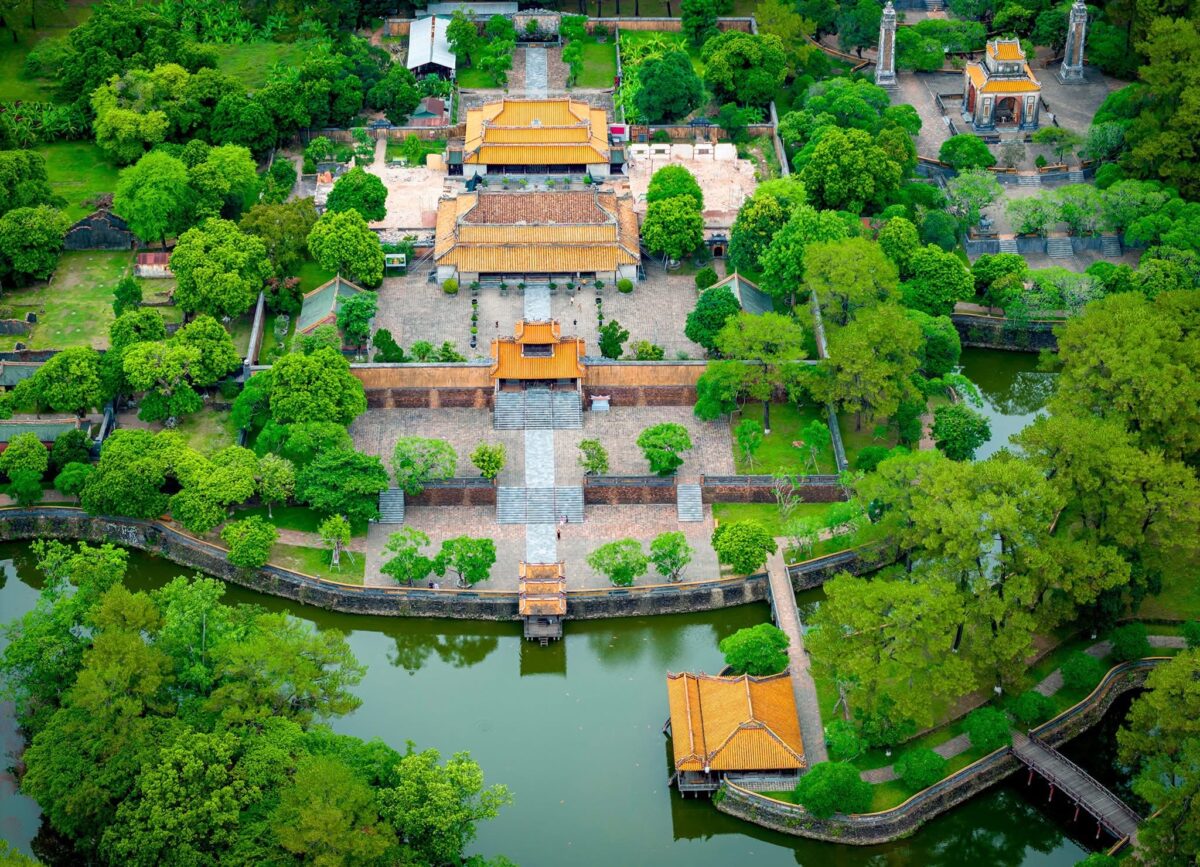
Hue is one of the most historically significant destinations in Vietnam and one of the best places to understand the country through its royal architecture, religious traditions, cuisine and relationship with the Perfume River. From 1802 to 1945, Hue served as the imperial capital of the Nguyen Dynasty, Vietnam’s last royal dynasty. Today, the city is defined by the enormous Hue Imperial City, the royal tombs scattered through the countryside, Thien Mu Pagoda, traditional garden houses, old religious sites, elegant French-era buildings and a distinctive culinary tradition. The Complex of Hue Monuments was recognized by UNESCO as a World Heritage Site in 1993.
Unlike Hanoi or Ho Chi Minh City, Hue does not require travelers to constantly move from one attraction to another. Its appeal comes from understanding the relationship between the palace, river, temples, tombs and surrounding hills. You can spend a morning inside the Imperial City, take a boat along the Perfume River, visit two royal tombs in the afternoon and finish the day with a bowl of Bun Bo Hue or a selection of traditional Hue dishes. For travelers interested in history, architecture, photography, food and slower cultural experiences, Hue deserves more than a rushed stop between Da Nang and Hoi An.

Where Is Hue?
Hue is located in Central Vietnam along the Perfume River, approximately midway between Hanoi and Ho Chi Minh City. The city is well positioned for travelers following a north-to-south Vietnam itinerary because it connects naturally with Da Nang, Hoi An and Phong Nha.
Hue’s geography is important to understanding the city. The Imperial City occupies the northern side of the Perfume River, while much of the modern commercial and hotel area lies south of the river. The royal tombs are spread across the countryside and wooded hills southwest of the city rather than being concentrated in one historic district.
This means that a good Hue itinerary needs transportation. Walking is excellent for the Imperial City and central streets, but visiting Minh Mang, Tu Duc and Khai Dinh tombs in the same day is much easier by private car, taxi or organized transport.
Why Hue Is Different From Other Vietnamese Cities
Hue is not primarily a beach destination, although beaches are accessible nearby. It is not a modern commercial center like Ho Chi Minh City, and it does not have Hanoi’s density of street life.
Hue’s strength is heritage.
The city preserves the remains of an imperial system that governed Vietnam for more than a century. The architecture was deliberately positioned in relation to mountains, rivers, lakes and gardens. The royal tombs were not simply burial places; they were landscapes designed according to each emperor’s personality, philosophy and vision.
Hue also developed one of Vietnam’s most distinctive culinary traditions. Dishes such as Bun Bo Hue, Banh Beo, Banh Nam, Banh Loc and Banh Khoai are strongly associated with the city and are an important part of the travel experience.
Hue Imperial City
The Hue Imperial City, commonly called the Citadel or Dai Noi, is the most important attraction in the city.
The complex began construction in the early 19th century and was designed as the center of Nguyen Dynasty political and ceremonial life. The larger Citadel was protected by walls, gates and moats, while the Imperial City and former Forbidden Purple City formed the royal core.
The site is large enough that visitors should not treat it as a quick photo stop. Allow at least two to three hours, and longer if you have a strong interest in history, architecture or photography.
The complex contains gates, courtyards, ceremonial buildings, temples, gardens, pavilions and restored structures. Some areas were heavily damaged during the wars of the 20th century, while others have survived or been reconstructed.
The Hue City government currently lists the Imperial City entrance at 200,000 VND for adults and 40,000 VND for children aged 7–12, with the current monument pricing applied from January 2026.
Ngo Mon Gate
Ngo Mon Gate is one of the most recognizable structures in Hue.
It served as an important ceremonial entrance to the Imperial City and was associated with royal ceremonies and imperial appearances.
The gate is especially impressive from the south, where the surrounding moat and open space emphasize the scale of the complex.
Go early in the morning if photography is important to you. The light is generally softer, temperatures are more comfortable and the site tends to feel less crowded.
Thai Hoa Palace
Thai Hoa Palace was one of the most important ceremonial buildings in the Imperial City.
The palace was associated with major royal ceremonies and formal occasions. Its architecture, decorative details and interior layout provide an insight into the hierarchy and symbolism of the Nguyen court.
Do not simply photograph the exterior. Look at the details of the roof, columns, decorative motifs and imperial symbols.
The Forbidden Purple City
At the heart of the royal complex was the Forbidden Purple City, an area associated with the emperor, royal family and court.
Much of the original structure was destroyed, but restoration projects have progressively returned parts of the area to a more recognizable form.
For visitors interested in Vietnamese history, this is one of the most important areas of the entire Imperial City because it helps explain how the royal household functioned beyond the formal ceremonial spaces.
Royal Temples Inside the Citadel
The Imperial City is also home to several important temples and ancestral shrines.
These areas were connected with the worship and commemoration of Nguyen emperors and members of the royal family.
The atmosphere changes noticeably here. Instead of the monumental feeling of the main palace courtyards, the temples are quieter and more spiritual.
Allow time to walk rather than simply following the main route from gate to palace.
The Royal Tombs of Hue
One of the most interesting things about Hue is that the emperors did not simply build identical mausoleums.
Each major royal tomb has a different personality.
Minh Mang Tomb is formal, symmetrical and strongly connected with Confucian concepts.
Tu Duc Tomb is more poetic, with lakes, pavilions, trees and landscaped surroundings.
Khai Dinh Tomb is dramatically different, combining Vietnamese imperial design with European-influenced architecture and elaborate mosaic decoration.
These three are the most practical tombs for first-time visitors, but Hue has additional royal tombs worth exploring if you have more time. The official Hue monument authority currently lists individual entrance prices for Minh Mang, Tu Duc and Khai Dinh at 150,000 VND per adult.

Minh Mang Tomb
Minh Mang Tomb is arguably the most balanced of the major royal mausoleums.
The complex uses symmetry, water, gardens, courtyards and architectural axes to create a carefully controlled landscape.
The tomb is surrounded by greenery, giving it a peaceful atmosphere that contrasts with the formal scale of the Imperial City.
If you enjoy architecture, gardens and photography, Minh Mang should be near the top of your Hue list.
The best approach is not to rush through the central axis. Walk slowly and look at how buildings, lakes, bridges and vegetation work together.
Tu Duc Tomb
Tu Duc Tomb has a very different character.
Emperor Tu Duc was associated with poetry and literature, and the tomb complex reflects a more contemplative atmosphere.
The site includes a lake, pavilions, trees and landscaped spaces. The emperor used the area during his lifetime, meaning the complex functioned as more than a burial site.
For many visitors, Tu Duc is the most atmospheric of the major tombs.
It is particularly beautiful in softer afternoon light, when the trees and water create reflections around the pavilions.
Khai Dinh Tomb
Khai Dinh Tomb is the most visually dramatic of the three major tombs.
It is built into a hillside and features a mixture of Vietnamese and European architectural influences. The interior is particularly famous for elaborate mosaics made from ceramics, porcelain and glass.
The staircase leading through the complex is part of the experience, but visitors should be prepared for a substantial number of steps.
Khai Dinh is an excellent choice for travelers who enjoy architecture, decorative arts and unusual visual contrasts.
Gia Long Tomb
For travelers who want something quieter, Gia Long Tomb is worth considering.
It is farther from the main tourist circuit and therefore receives fewer visitors.
The setting is more open and natural, with hills, trees and a sense of isolation.
It is not the best choice if you only have one day in Hue, but it becomes attractive when you have three or more days and want to move beyond the standard itinerary.
Dong Khanh Tomb
Dong Khanh Tomb provides another opportunity to explore Hue’s royal heritage without the crowds associated with the three most famous mausoleums.
The architecture reflects a period of transition in Vietnamese history, making it particularly interesting for travelers who want to understand how royal design changed over time.
Thieu Tri Tomb
Thieu Tri’s tomb is less elaborate than some of the more famous royal mausoleums but is historically significant.
It can be included if you have already visited Minh Mang, Tu Duc and Khai Dinh and want a broader understanding of the Nguyen royal tomb system.
Duc Duc Tomb
Duc Duc’s tomb is closer to the urban area and considerably less grand than the major imperial mausoleums.
It can be useful for travelers interested in the succession history of the Nguyen Dynasty rather than architecture alone.
Which Royal Tombs Should You Visit?
If you have one day, choose two tombs, preferably Minh Mang and either Tu Duc or Khai Dinh.
If you have two full days, three major tombs become comfortable.
If you have three days or more, consider adding Gia Long, Dong Khanh, Thieu Tri or other heritage sites.
The biggest mistake is trying to visit every tomb simply to check them off a list. The tombs are large, and their significance becomes much clearer when you spend enough time understanding the design.
Vietnam Tourism also recommends selecting two or three tombs rather than attempting to rush through all seven.
Thien Mu Pagoda
Thien Mu Pagoda is one of Hue’s most recognizable landmarks.
The pagoda sits on a hill overlooking the Perfume River, with the famous seven-story Phuoc Duyen Tower forming its visual centerpiece.
The site has religious and historical importance and provides one of the most beautiful river views in Hue.
A visit can be combined with a Perfume River boat trip, private car journey or cycling route.
The atmosphere is particularly peaceful in the morning, before the heat becomes intense.
Perfume River
The Perfume River is central to Hue’s identity.
It is not simply a river running through the city; it is part of the way the city is experienced.
You can walk along the riverfront, cross bridges, cycle beside it or take a boat.
A river cruise can be relaxing after several hours of walking through historical sites.
For travelers interested in photography, the river is particularly attractive around sunrise and sunset, when the changing light reflects across the water and the city skyline.

Dragon Boat Experience
Traditional dragon boats are commonly associated with Hue’s Perfume River.
A boat trip can be used simply as a scenic excursion or incorporated into a sightseeing route toward Thien Mu Pagoda and other riverside sites.
For a private itinerary, a private boat is preferable if available because you can control the timing rather than following a fixed group departure.
Sunset is particularly attractive, but morning cruises can be more comfortable during the hotter months.
Hue Garden Houses
Hue’s traditional garden houses are another side of the city that many first-time visitors miss.
These residences combine architecture, gardens, trees and carefully arranged courtyards.
They reflect a different aspect of Hue’s cultural history from the monumental Imperial City.
Instead of huge palace buildings, garden houses provide an intimate view of how wealthy families and traditional households lived.
Kim Long
The Kim Long area is historically important and contains several old garden houses, religious sites and quiet streets.
It is an excellent area for travelers who want to see a less commercial side of Hue.
A bicycle or private car can be useful for exploring this part of the city because the sites are spread out.
An Dinh Palace
An Dinh Palace is a fascinating addition to the standard Hue itinerary.
It is associated with the later Nguyen royal period and displays a mixture of Vietnamese and European architectural influences.
Compared with the Imperial City, the palace feels more intimate.
It is particularly interesting for travelers who want to understand the final period of Vietnam’s monarchy and the changing influence of European architecture.
The Hue monument authority currently lists An Dinh Residence among the heritage sites with a 50,000 VND adult entrance fee.
Hue Museum of Royal Antiquities
The Hue Museum of Royal Antiquities provides useful context for the architecture seen throughout the city.
Objects associated with the Nguyen court help visitors understand royal lifestyles, ceremonies, clothing, decorative arts and craftsmanship.
It is worth visiting after the Imperial City because the objects can make architectural spaces easier to understand.
Nam Giao Esplanade
The Nam Giao Esplanade was associated with important imperial ceremonies.
The site is less visually spectacular than the Imperial City but has significant historical importance because it reveals the ceremonial and spiritual responsibilities of the emperor.
For travelers interested in the political and religious structure of the Nguyen Dynasty, it is worth adding.
Tu Hieu Pagoda
Tu Hieu Pagoda is located in a peaceful, wooded environment away from the busiest tourist areas.
The pagoda has connections with Buddhist traditions and monastic life in Hue.
It provides a calmer experience than some of the city’s major attractions and works particularly well for travelers who want a quiet morning or afternoon.
Hue’s French Colonial Architecture
Hue is strongly associated with imperial architecture, but there is also a visible French colonial influence.
Buildings around the southern side of the Perfume River show a different architectural period, including elegant villas, institutional buildings and hotels.
Walking around the riverfront and central streets allows you to see how the city developed after the imperial period.
Quoc Hoc Hue
Quoc Hoc High School is one of Hue’s most recognizable French-influenced buildings.
The distinctive red architecture sits near the Perfume River and reflects the city’s educational history.
The school remains a functioning educational institution, so visitors should respect access restrictions and avoid treating the campus as an unrestricted tourist attraction.
Dong Ba Market
Dong Ba Market is Hue’s largest traditional market and a useful place to experience the city’s everyday food and shopping culture.
You can find fresh produce, spices, clothing, household goods, snacks and regional specialties.
It is also a good place to observe the ingredients that appear in Hue cuisine.
Visit in the morning if you want to see the market at its busiest.
Hue Cuisine
Food is one of the strongest reasons to visit Hue.
The city’s culinary tradition developed partly from royal cuisine but also from everyday regional cooking.
Hue dishes are often smaller and more delicately presented than the large bowls and plates found elsewhere in Vietnam.
You can spend an entire day tasting different dishes without needing a formal restaurant.
Bun Bo Hue
Bun Bo Hue is the dish most strongly associated with the city.
It is a spicy beef noodle soup made with thick rice noodles, beef and a deeply flavored broth.
The flavor profile is generally more complex and spicy than many northern Vietnamese noodle soups.
A good bowl should have a rich broth, substantial noodles, herbs and appropriate meat toppings.
Do not assume that the best Bun Bo Hue must be served in an expensive restaurant. Small eateries can produce excellent versions.
Banh Beo
Banh Beo consists of small steamed rice cakes traditionally served with toppings such as shrimp, crispy ingredients and savory sauce.
The small size makes them ideal for tasting as part of a larger meal.
They are particularly good when ordered together with other Hue specialties.
Banh Nam
Banh Nam is a soft rice-flour cake traditionally steamed in banana leaves and combined with shrimp and savory toppings.
Its texture is delicate, making it very different from the crispier dishes found elsewhere in Vietnam.
Banh Loc
Banh Loc is a chewy tapioca dumpling usually filled with shrimp and pork.
The translucent wrapper gives the dish its distinctive appearance.
It is commonly served with fish sauce and can be eaten as a snack or part of a larger Hue meal.
Banh Khoai
Banh Khoai is a crispy savory pancake served with ingredients such as shrimp and pork.
It resembles other Vietnamese rice-flour pancakes but has a distinctive Hue preparation and serving style.
It is usually eaten with herbs and dipping sauce.
Com Hen
Com Hen, or clam rice, is another Hue specialty.
It combines rice with small river clams and a range of herbs, vegetables, crispy ingredients and savory seasonings.
The dish is simple but strongly connected with Hue’s food culture.
Hue Vegetarian Food
Hue has a long Buddhist tradition, and vegetarian food is widely available.
Travelers can find vegetarian restaurants as well as vegetarian dishes associated with Buddhist practices.
For travelers interested in food, a vegetarian meal can provide another perspective on Hue cuisine.
Hue Coffee
Hue’s café culture is quieter than Hanoi’s but worth exploring.
Look for cafés around the river, older residential streets and renovated heritage buildings.
A slow coffee after visiting the Imperial City can be a good way to escape the midday heat.
Best Time to Visit Hue
Weather can significantly influence your Hue experience because many of the city’s best attractions are outdoors.
February to April is generally one of the most comfortable periods, with pleasant conditions for walking around the Imperial City and visiting the tombs.
May to July can become very hot and humid, particularly around midday. Start sightseeing early and take a break during the hottest part of the afternoon.
August to January brings an increasing chance of rain, with the wetter period particularly affecting outdoor sightseeing later in the year. Hue can also experience flooding during periods of heavy rainfall.
If you have flexibility, February–April is an excellent window for a first visit.
Hue Weather by Season
February–April
Comfortable temperatures and generally favorable conditions make this one of the best periods for sightseeing.
May–July
Hot and humid. Start the Imperial City and tomb visits early, then use the middle of the day for lunch, cafés or hotel relaxation.
August–September
Rain becomes increasingly important, although conditions can vary from day to day.
October–January
This is the wetter period, and heavy rain can affect outdoor activities and transportation.
If traveling during the wet season, keep your schedule flexible rather than planning several outdoor monuments back-to-back.
How Many Days Do You Need in Hue?
One day is possible but rushed.
Two days is a much better minimum.
Three days allows you to combine imperial heritage, tombs, food, pagodas and countryside without constantly checking the time.
Four days or more works well if you want deeper cultural experiences, cycling, garden houses, additional tombs or nearby destinations.
For most international visitors, two to three nights is ideal.
How to Get to Hue From Hanoi
The fastest practical option is to fly from Hanoi to Phu Bai Airport, then continue by private car to the city.
Phu Bai Airport is approximately 30 minutes from central Hue under normal traffic conditions.
For premium travel, a private airport transfer is the easiest arrangement.
An alternative is an overnight train or long-distance road journey, but these take significantly longer. If your goal is to maximize sightseeing time, flying is more efficient.
How to Get to Hue From Ho Chi Minh City
Flying is by far the most practical option for travelers connecting southern Vietnam with Hue.
The flight saves an enormous amount of time compared with traveling entirely overland.
A private airport transfer can take you directly from Phu Bai Airport to your hotel.
Hue From Da Nang
The journey between Da Nang and Hue is one of the most scenic transportation routes in Central Vietnam.
The road crosses or passes around the Hai Van Pass, depending on the selected route.
A private car allows you to stop at viewpoints along the way rather than treating the journey as simple transportation.
For travelers who have never visited Central Vietnam, this is one of the strongest reasons to connect Hue and Da Nang by private vehicle.
Hue From Hoi An
Hue and Hoi An are natural partners in a Central Vietnam itinerary.
The route can be combined with Da Nang and the Hai Van Pass:
Hue → Hai Van Pass → Da Nang → Hoi An
or the reverse.
A private vehicle is particularly valuable because you can stop at scenic viewpoints and spend more time at places that interest you.
Hue From Phong Nha
Phong Nha and Hue also combine extremely well.
Phong Nha offers caves, jungle and adventure, while Hue provides imperial heritage and cuisine.
The journey is several hours by road, so private transportation is recommended for travelers who want to maximize their time.
A strong itinerary is:
Hanoi → Hue → Phong Nha → Hoi An
Getting Around Hue
The central area is relatively easy to explore on foot.
For the Imperial City, walking is the best option because you can move between gates, courtyards, temples and palaces at your own pace.
For the royal tombs, use a private car, taxi or organized transportation.
Cycling is excellent for countryside areas and quieter streets.
A cyclo can be enjoyable for a short sightseeing experience, particularly around the river and central districts.
Is Hue Good for Families?
Yes.
Children who enjoy history may find the Imperial City fascinating because the architecture is visually impressive.
Families should avoid trying to visit too many tombs in one day. Two well-chosen tombs are usually better than four rushed visits.
A private vehicle is particularly useful because it provides air conditioning, storage space and flexibility.
For younger children, combine historical attractions with boat rides, gardens and food experiences.
Is Hue Good for Couples?
Hue is an excellent destination for couples.
A private boat on the Perfume River, sunset at the riverfront, a garden-house visit, a fine dinner and an evening walk create a more relaxed experience than the standard sightseeing circuit.
Couples interested in photography will also find plenty of opportunities around the Imperial City, royal tombs and river.
Is Hue Good for Older Travelers?
Hue can work very well for older travelers because many attractions can be visited at a controlled pace.
The main challenge is heat and the amount of walking around large historical complexes.
Private transportation is highly recommended.
Visit the Imperial City early, rest during the middle of the day and visit one or two tombs in the afternoon.
If mobility is limited, discuss this in advance so the itinerary can prioritize accessible routes and minimize unnecessary walking.
Hue for Photographers
Hue offers unusually diverse photography opportunities.
The Imperial City provides symmetry, gates, walls and architectural details.
The royal tombs provide gardens, staircases, lakes and mountain scenery.
The Perfume River provides reflections and wide landscapes.
Traditional garden houses provide intimate architectural compositions.
Early morning is particularly valuable because the light is softer and temperatures are more comfortable.
For Khai Dinh Tomb, allow enough time to photograph the interior mosaics as well as the exterior staircase.
Hue for History Lovers
History enthusiasts can easily spend three or four days in Hue.
Start with the Imperial City to understand the political center of the Nguyen Dynasty.
Then visit Minh Mang, Tu Duc and Khai Dinh to understand how individual emperors expressed themselves through architecture.
Add An Dinh Palace and the Museum of Royal Antiquities to explore the later royal period.
Finally, visit religious sites such as Thien Mu Pagoda and Tu Hieu Pagoda to understand the relationship between Buddhism, royal patronage and Hue’s cultural identity.
Hue for Food Lovers
Food can be treated as a major part of the itinerary rather than something squeezed between attractions.
A food-focused day could begin with Bun Bo Hue, continue with Banh Beo and Banh Nam for lunch, include a market visit in the afternoon and finish with a dinner featuring several traditional dishes.
The advantage of Hue is that many famous dishes are relatively small, allowing travelers to sample several specialties in one meal.
Hue Nightlife
Hue’s nightlife is quieter than Da Nang or Ho Chi Minh City.
The riverfront is pleasant after dark, particularly when the city lights reflect across the Perfume River.
There are cafés, restaurants, bars and evening food options around the central tourist area.
Hue is better suited to travelers who want a relaxed evening than those looking for large nightclubs.
Hue at Sunrise
Sunrise is one of the best times to experience Hue.
The river is quieter, the temperature is lower and the streets are less crowded.
Photographers can walk along the Perfume River or explore quiet streets before visiting the Imperial City.
If you are staying near the river, waking early at least once is worthwhile.
Hue at Sunset
Sunset works particularly well along the Perfume River.
A boat ride, riverside walk or private dinner can be timed around the changing light.
The atmosphere is especially attractive after a full day of visiting historical sites.
Hue in the Rain
Do not automatically cancel a Hue trip because rain is forecast.
The Imperial City can still be visited during light rain, and the wet surfaces can create beautiful reflections.
However, heavy rain can make walking uncomfortable and can affect tomb visits and river activities.
If rain is significant, use the day for museums, palace interiors, cafés and food experiences, then move outdoor sightseeing to the next available weather window.
Hue Travel Costs
Hue remains relatively affordable compared with many international heritage destinations.
The biggest costs for a premium trip are normally accommodation, private transportation and guiding rather than entrance tickets.
For 2026, the official Hue monument authority lists the Imperial City at 200,000 VND per adult and the three major tombs at 150,000 VND each. A four-site combination covering the Imperial City plus Minh Mang, Tu Duc and Khai Dinh is currently listed at 530,000 VND per adult.
Prices can change, so travelers should verify the current official rates when finalizing a trip.
Hue 2-Day 1-Night Itinerary
Day 1: Arrive in Hue from Hanoi by flight or from Da Nang by private car, then check into your hotel and enjoy lunch. Spend the afternoon exploring the Imperial City, including Ngo Mon Gate, Thai Hoa Palace, royal temples and the remaining areas of the Forbidden Purple City. In the late afternoon, walk beside the Perfume River before enjoying a dinner focused on Hue specialties such as Bun Bo Hue, Banh Beo, Banh Nam and Banh Loc.
Day 2: Start early with a private car journey to Minh Mang Tomb and Khai Dinh Tomb, taking time to understand the very different architectural styles of the two complexes. Continue to Thien Mu Pagoda overlooking the Perfume River and enjoy lunch before checking out. In the afternoon, travel onward to Hoi An or Da Nang, or return to the airport for your next destination.
Hue 3-Day 2-Night Itinerary
Day 1: Arrive in Hue and settle into your hotel before spending the afternoon inside the Imperial City. Explore the main ceremonial buildings, royal temples and palace courtyards without rushing, then walk along the Perfume River at sunset. Have dinner at a restaurant specializing in traditional Hue cuisine.
Day 2: Leave early for Minh Mang Tomb and Tu Duc Tomb, two of the most atmospheric royal mausoleums. Continue to Thien Mu Pagoda and take a private boat or scenic drive along the Perfume River depending on weather and preference. Return to the city for an evening food experience and relaxed walk through the central area.
Day 3: Spend the morning visiting Khai Dinh Tomb or An Dinh Palace before exploring a traditional garden house or Dong Ba Market. Have a final Hue lunch and then depart by private car toward Da Nang, Hoi An or Phong Nha, depending on your wider Vietnam itinerary.
Hue 4-Day Cultural Itinerary
Day 1: Arrive in Hue, check into your hotel and explore the Imperial City at a comfortable pace. Spend the evening beside the Perfume River and enjoy a traditional dinner.
Day 2: Visit Minh Mang and Tu Duc Tombs, then continue to Thien Mu Pagoda. Enjoy a private river experience before returning to the city.
Day 3: Explore Khai Dinh Tomb, An Dinh Palace and the Museum of Royal Antiquities, followed by a deeper food experience around Dong Ba Market and traditional Hue restaurants.
Day 4: Explore garden houses, Tu Hieu Pagoda and quieter neighborhoods around Hue before departing for Da Nang, Hoi An or Phong Nha.
Hue and Hoi An: How to Combine Them
A combination of Hue and Hoi An is one of the best ways to experience Central Vietnam because the two destinations have completely different identities.
Hue is about royal history, tombs, temples and cuisine.
Hoi An is about historic streets, architecture, tailoring, riverside atmosphere and food.
Allow at least two nights in each if your schedule permits.
The private road journey between them can become part of the experience rather than simply a transfer, especially if you include scenic stops around the Hai Van Pass.
Hue and Da Nang: How to Combine Them
Da Nang is useful as the modern coastal base between Hue and Hoi An.
Travelers can spend time at the beach and enjoy the city’s restaurants before or after visiting Hue’s heritage sites.
For a premium itinerary, the sequence:
Hanoi → Hue → Da Nang → Hoi An
is highly efficient.
Hue and Phong Nha: How to Combine Them
This combination is particularly good for travelers who want a balance between history and nature.
Spend two or three nights in Hue exploring the imperial heritage, then continue to Phong Nha for caves and national-park experiences.
The contrast is substantial and makes the journey feel more varied.
What to Wear in Hue
Lightweight clothing works well during the hotter months, but bring something suitable for visiting temples and religious sites.
Comfortable walking shoes are more important than fashionable footwear because the Imperial City and tombs involve considerable walking.
During the rainy season, pack a compact rain jacket or umbrella.
A hat and sunscreen are essential during the hotter months.
Hue Travel Tips
Start early. The Imperial City and royal tombs are much more comfortable before midday.
Do not visit all seven tombs unless you have plenty of time. Two or three carefully chosen tombs are more rewarding.
Use private transportation for the tombs. They are spread across the countryside.
Stay at least two nights. One rushed day is not enough to understand Hue.
Try several small dishes. Hue cuisine is particularly suited to tasting menus.
Keep rain flexibility. Wet-season weather can disrupt outdoor sightseeing.
Visit the Imperial City with enough time. Two to three hours is a reasonable minimum.
Combine heritage with food. Hue’s cuisine is an essential part of the destination.
Consider a river experience. The Perfume River is central to Hue’s identity.
Don’t rush through the tombs. Their landscapes and architectural symbolism are more important than simply taking photographs.
Is Hue Worth Visiting?
Hue is absolutely worth visiting for travelers who want to understand Vietnam beyond beaches and major cities.
The Imperial City provides the obvious introduction, but the real depth of Hue comes from combining the palace with the royal tombs, Perfume River, pagodas, garden houses and food culture.
A traveler who spends only two hours at the Citadel will see only a fraction of what makes the city special.
Give Hue two or three nights, travel slowly and choose two or three major heritage sites rather than trying to collect every attraction.
For a first visit, the combination of Imperial City + Minh Mang Tomb + Tu Duc Tomb + Khai Dinh Tomb + Thien Mu Pagoda + Hue cuisine provides an excellent introduction.
Explore Hue With Vietnam Women Travel
Vietnam Women Travel – Premium Private Tours Led by Women can create private Hue experiences beginning in Hanoi and connecting the imperial capital with the major destinations of Central Vietnam.
A customized journey can include Hue Imperial City, Minh Mang Tomb, Tu Duc Tomb, Khai Dinh Tomb, Thien Mu Pagoda, Perfume River, An Dinh Palace, traditional garden houses, Dong Ba Market and private Hue food experiences, with the itinerary adjusted according to your interests, fitness level and travel pace.
For travelers exploring Central Vietnam, Hue can be combined with Phong Nha, Da Nang and Hoi An using private transportation, allowing you to experience imperial heritage, spectacular caves, coastal landscapes and historic towns within one premium journey.
For couples, families and private groups, the advantage of a private itinerary is flexibility: start sightseeing early to avoid the heat, spend more time at the monuments that interest you, stop for food whenever you want and adjust the program around weather conditions.
Vietnam Women Travel – Premium Private Tours Led by Women
Website: https://vietnamwomentravel.com/
Hotline / WhatsApp: +84 988 402 008 | +84 982 416 518 | +84 981 090 989
Email: info@vietnamwomentravel.com
Hue Guide | Hue Travel Guide | Hue Vietnam | Hue Imperial City | Hue Royal Tombs | Hue Citadel | Perfume River | Thien Mu Pagoda | Minh Mang Tomb | Tu Duc Tomb | Khai Dinh Tomb | Hue Food Guide | Bun Bo Hue | Things to Do in Hue | Best Time to Visit Hue | Hue Itinerary | Hue From Hanoi | Hue From Hoi An | Hue From Da Nang | Vietnam Travel Guide 2026