
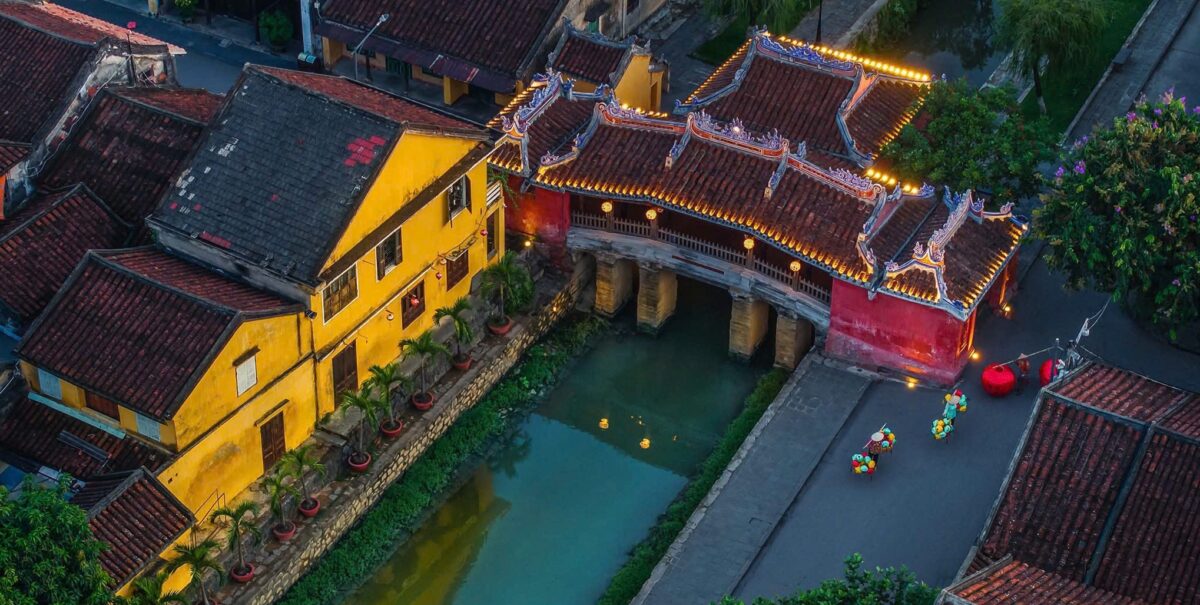
Hoi An Guide 2026: Complete Travel Guide to Ancient Town, Lanterns, Beaches, Food, Countryside and Day Trips
Hoi An is one of Vietnam’s most distinctive destinations, combining a remarkably well-preserved historic trading town with rivers, rice fields, beaches, craft villages and an exceptional food culture. The heart of the destination is Hoi An Ancient Town, a UNESCO World Heritage Site recognized in 1999. The town developed as an international trading port, particularly from the 15th to 19th centuries, when merchants from Vietnam, China, Japan and Europe interacted along the Thu Bon River. That history remains visible today in the narrow streets, wooden merchant houses, assembly halls, temples, Japanese architectural influences and distinctive yellow-painted buildings.
What makes Hoi An particularly attractive is that it is not only an old town. Within a relatively small area, travelers can combine historic architecture with An Bang Beach, Cua Dai Beach, Cam Thanh coconut waterways, Tra Que vegetable gardens, Cam Chau rice fields, the Thu Bon River, craft villages and the Cham Islands. You can spend the morning walking through centuries-old merchant houses, cycle through rice paddies in the afternoon and return to the Ancient Town after dark when thousands of lanterns transform the streets and riverfront.

Where Is Hoi An?
Hoi An is in Quang Nam Province in Central Vietnam, approximately 30 kilometers south of Da Nang. Da Nang International Airport is the nearest major airport and is roughly a 45–60 minute drive from the Ancient Town depending on traffic.
The town sits near the Thu Bon River and is surrounded by a mixture of waterways, agricultural land, villages and coastline. This geography is one of the reasons Hoi An feels different from larger Vietnamese cities. The historic center is compact and easy to explore on foot, while bicycles are ideal for reaching the countryside.
Hoi An also works exceptionally well as a base for exploring Central Vietnam. Da Nang, My Son Sanctuary and the Marble Mountains are easy to combine with Hoi An, while Hue can be reached by a scenic private road journey over the Hai Van Pass.
Why Hoi An Is So Special
Hoi An’s importance comes from its history as an international trading port. Chinese, Japanese and European merchants interacted here, leaving behind architectural and cultural influences that are still visible throughout the Ancient Town. Archaeological evidence points to trading activity in the area as early as the second century BC, while the port became particularly important between the 15th and 19th centuries.
The town’s historic street layout has survived unusually well. Traditional shop houses stand close together along narrow streets, with temples, assembly halls, merchant residences and small courtyards appearing between restaurants, cafés, galleries and shops.
Hoi An therefore works best when explored slowly. The objective is not to visit twenty attractions in one day. It is to walk, stop, look inside old buildings, drink coffee, eat, photograph architectural details and return to the streets at night.
Hoi An Ancient Town
The Ancient Town is the centerpiece of every first visit.
The historic core is compact enough to explore on foot, and many of its streets are pedestrian-friendly at selected times. The architecture combines Vietnamese, Chinese, Japanese and European influences, reflecting the town’s history as a trading center.
The best approach is to visit twice.
Come in the morning when the streets are quieter and the light is softer. This is the best time to examine architecture, visit heritage houses and photograph the old streets.
Return in the late afternoon and stay after sunset. Hoi An’s atmosphere changes completely when lanterns illuminate the streets and the Thu Bon River.
The contrast between daytime and nighttime is one of the strongest reasons to stay overnight rather than visiting only as a day trip from Da Nang.
Japanese Covered Bridge
The Japanese Covered Bridge is Hoi An’s most recognizable historic landmark.
The bridge dates to the late 16th or early 17th century and reflects the Japanese community’s historical presence in the trading port. It has become one of the visual symbols of Hoi An and is also featured on Vietnam’s 20,000 VND banknote.
The bridge is located in the western part of the Ancient Town and is easy to reach on foot.
It is worth seeing both during the day and after dark. During the evening, surrounding lanterns and illuminated buildings create a completely different atmosphere.
Because the bridge is one of the most photographed locations in Hoi An, early morning is the best time if you want photographs with fewer people.
Tan Ky Old House
Tan Ky Old House is one of the best places to understand how wealthy merchant families lived.
The house was built in the 18th century and incorporates architectural ideas from different cultures, reflecting Hoi An’s trading history. The property remained within the same family for generations and contains details that reveal how commercial and family life were organized inside traditional merchant houses.
Rather than rushing through the building, pay attention to the wooden beams, carved details, courtyard, furniture and layout.
A guide can add considerable value here because many of the symbols and architectural details are difficult to understand from photographs alone.
Phuc Kien Assembly Hall
The Phuc Kien Assembly Hall, also known as the Fujian Assembly Hall, is another major architectural landmark.
It was connected with the Fujian Chinese community and served as both a community gathering place and religious sanctuary.
The ornate entrance, courtyard, decorative sculptures and temple interior make it one of the most visually impressive stops in the Ancient Town.
This is a particularly good place for travelers interested in the Chinese influence on Hoi An’s architecture and religious traditions.

Quan Thang Ancient House
Quan Thang Ancient House is another historic residence that helps explain the merchant-house architecture of Hoi An.
Compared with simply walking past the yellow facades outside, entering traditional houses reveals how narrow street-front buildings can open into deeper courtyards and living spaces.
If you purchase an Ancient Town heritage ticket, select the houses and historic buildings that match your interests rather than trying to enter every available site.
Hoi An Museum of History and Culture
The Museum of History and Culture provides useful background on the long development of the region.
Artifacts and exhibits help connect Hoi An’s modern appearance with earlier periods, including the Sa Huynh culture, Cham influence and later trading activity.
For travelers who want to understand why Hoi An looks the way it does, visiting a museum before exploring the streets can make the rest of the town much more meaningful.
Museum of Trade Ceramics
Hoi An’s history as a trading port is strongly connected with ceramics.
The Museum of Trade Ceramics presents artifacts that illustrate commercial connections between Hoi An and other parts of Asia.
It is especially interesting for travelers who want to understand the town not simply as an architectural destination but as a functioning international port.
Museum of Folklore
The Museum of Folklore focuses on traditional culture, arts and performance.
It can be combined with an Ancient Town walking route and provides a useful contrast to the merchant houses and religious buildings.
Hoi An Nighttime
Hoi An after sunset is a completely different experience.
Lanterns illuminate the old yellow buildings, restaurants fill the narrow streets and the Thu Bon River reflects the lights from boats and buildings.
The best strategy is to arrive before sunset.
Spend the late afternoon exploring the Ancient Town, have dinner around sunset and then walk along the river after dark.
Do not rush away immediately after taking photographs. The atmosphere becomes more interesting as the evening progresses.
Hoi An Lantern Festival
The lantern festival is one of the most famous cultural experiences in Hoi An.
It takes place on the 14th day of each lunar month, when the town reduces electric lighting and lanterns become especially prominent. Visitors can see candle-lit lanterns along the river and traditional nighttime activities in the Ancient Town.
If your dates are flexible, planning around a lunar festival night can add another dimension to the trip.
However, do not assume the town is only beautiful during the festival. Lanterns are part of Hoi An’s identity throughout the year.
Lantern Making
Lantern making is one of Hoi An’s best hands-on cultural experiences.
Workshops allow visitors to learn how the frames are constructed and how silk or fabric is applied.
A lantern-making class is particularly good for families and couples because you leave with something that is both decorative and connected to Hoi An’s traditional craft culture.
Choose a workshop that emphasizes the actual craft process rather than simply selling finished souvenirs.
Hoi An Tailor Shops
Hoi An is famous for custom-made clothing.
The tradition has deep connections with the town’s history of textiles and trade, and today travelers can order suits, dresses, shirts, jackets, trousers and other garments.
The important thing is to allow enough time.
A quality custom garment usually requires measurements, fabric selection, a first fitting and adjustments. If you only have a few hours before leaving Hoi An, do not order a complicated garment expecting perfect results immediately.
For a better experience, stay at least two nights and place your order early during the trip.
How to Choose a Tailor
Do not select a tailor solely because of the cheapest price.
Look at the quality of the fabric, stitching, communication, fitting process and examples of finished work.
Be very specific about what you want.
Bring photographs or examples of the style, explain the fit you prefer and ask how many fittings are included.
For premium clothing, spending more on fabric and construction can make a significant difference.
Hoi An Food
Hoi An has one of Vietnam’s most distinctive food cultures.
Its cuisine reflects the history of Central Vietnam and the town’s interaction with different trading communities.
You should try several small dishes rather than eating only at large restaurants.
A good Hoi An food experience might include Cao Lau, White Rose dumplings, Mi Quang, Com Ga Hoi An, Banh Mi, Hoanh Thanh, seafood and Central Vietnamese desserts.
Cao Lau
Cao Lau is arguably Hoi An’s signature dish.
It combines thick noodles, sliced pork, herbs, greens and crispy toppings with a small amount of concentrated sauce or broth.
The texture is one of its defining features.
Unlike a typical Vietnamese noodle soup, Cao Lau is relatively dry, allowing the noodles and toppings to dominate.
Try it at least once in Hoi An itself because the dish is strongly associated with the town.
White Rose Dumplings
White Rose, or Banh Bao Banh Vac, consists of delicate translucent rice-flour dumplings filled primarily with shrimp.
The dumplings are shaped to resemble flowers, which explains the English name.
They are small and elegant, making them perfect as part of a larger meal.
Com Ga Hoi An
Com Ga Hoi An is Hoi An-style chicken rice.
The rice is cooked with chicken stock and typically served with shredded chicken, herbs, onions and other accompaniments.
It is a simple-looking dish but has considerable depth when prepared properly.
Mi Quang
Although strongly associated with the wider Quang Nam region, Mi Quang is an essential dish to try while staying in Hoi An.
It features broad rice noodles, herbs, peanuts, toppings such as shrimp, pork or chicken and a small quantity of concentrated broth.
The combination is particularly satisfying for lunch.
Hoi An Banh Mi
Hoi An is famous for its banh mi, and trying one from a respected shop is one of the easiest food experiences in the city.
The Vietnamese baguette provides a crisp exterior while the fillings combine savory meat, pâté, herbs, pickled vegetables and sauce.
It is inexpensive, quick and ideal for travelers who want to eat while exploring.
Hoi An Coffee
Hoi An’s café culture is part of the destination.
Traditional Vietnamese iced coffee is an obvious choice, but there are also modern cafés inside restored houses and along quieter streets.
For the best experience, sit somewhere with a view of the street rather than simply choosing a café because of its interior.
Watching bicycles, vendors, residents and travelers pass by is part of the Hoi An experience.
Hoi An Central Market
The Hoi An Central Market is useful for experiencing the town’s food culture and shopping scene.
Morning is generally the most interesting period because fresh produce, seafood, herbs and other ingredients are being brought in.
Food stalls also provide an opportunity to try small dishes without committing to a formal restaurant meal.
Hoi An Countryside
The countryside around Hoi An is one of the most underrated parts of the destination.
Rice paddies, vegetable gardens, waterways and small roads surround the historic town.
Cycling is an excellent way to explore these areas because you can travel slowly enough to stop for photographs and observe everyday activities.
The countryside is particularly attractive in the early morning and late afternoon.

Cam Chau
Cam Chau is one of the best areas for cycling between the Ancient Town and countryside.
The landscape includes rice fields, gardens, waterways and narrow roads.
A morning bicycle ride here can take only two or three hours but provides a completely different perspective on Hoi An.
It is especially enjoyable for travelers who find the Ancient Town crowded during the middle of the day.
Tra Que Vegetable Village
Tra Que Vegetable Village is located between Hoi An and the coast.
The area is known for vegetable cultivation and agricultural traditions.
Visitors can combine a bicycle ride with a farm experience, learn about cultivation methods and enjoy dishes prepared with freshly harvested herbs and vegetables.
For families, this can be more engaging than another museum visit.
Cam Thanh Coconut Village
Cam Thanh is known for its waterways and coconut-palm landscape.
One of the most recognizable activities is riding a traditional round basket boat through the waterways.
The experience can be entertaining, especially for families and first-time visitors, although the atmosphere can become busy during peak periods.
For a quieter experience, go early or arrange a private excursion at a less crowded time.
Thu Bon River
The Thu Bon River is fundamental to Hoi An’s identity.
The river helped establish the town as a trading port and continues to shape the city’s landscape.
A short boat ride provides a different view of the Ancient Town.
Sunset is particularly attractive, although morning boat trips can be more peaceful.
Traditional boats, fishing activities and riverfront buildings create a strong connection between the modern tourist town and its historical relationship with waterways.
Hoi An Boat Trips
There are several ways to experience Hoi An from the water.
A short sunset cruise is easy to combine with an evening in the Ancient Town.
A traditional wooden boat can provide a more cultural atmosphere.
A round basket boat through Cam Thanh’s waterways offers a completely different experience.
For couples, a private sunset boat is a more comfortable option than joining a large group.
An Bang Beach
An Bang Beach is the most popular beach near Hoi An.
It is roughly 10 kilometers from the Ancient Town and offers a combination of sandy beach, restaurants, cafés and beach bars.
An Bang is convenient because you can spend the morning at the beach and return to the Ancient Town for the evening.
Go early if you want a quieter atmosphere.
Late afternoon is another good period because the heat is less intense.
Cua Dai Beach
Cua Dai Beach is closer to several resort properties and is another option for travelers who want to stay near the sea.
The coastline has experienced erosion over time, but beach conditions vary by season and location.
If your main purpose is a resort holiday, compare the specific beachfront conditions around your hotel rather than assuming every section of coastline will look identical.
Hidden Beach
Hidden Beach sits between An Bang and Cua Dai and provides another option for travelers seeking a quieter coastal experience.
It is better suited to a relaxed beach stop than a full day of sightseeing.
Hoi An Resort or Ancient Town?
This is an important decision when booking accommodation.
Stay in the Ancient Town or nearby if you want to walk to restaurants, heritage buildings and nighttime activities.
Stay near An Bang or Cua Dai if the beach and resort experience are more important.
Stay in Cam Chau or the countryside if you want greenery, cycling and a quieter atmosphere while remaining close to the town.
For a first visit, staying close enough to walk into the Ancient Town at night is highly recommended.
Cham Islands
The Cham Islands are located off the coast of Hoi An and provide a completely different experience from the Ancient Town.
The group consists of eight islands and forms part of the Cu Lao Cham Marine Park, which is recognized as a UNESCO Biosphere Reserve. Activities include snorkeling, diving, beaches and exploring island communities.
A day trip is enough for travelers who mainly want to swim and snorkel.
An overnight stay is better if you want to experience a quieter side of island life.
Sea conditions are important, so island trips should remain flexible during periods of rough weather.
My Son Sanctuary
My Son Sanctuary is one of the best day trips from Hoi An for travelers interested in history.
The archaeological site contains Hindu temple structures associated with the ancient Champa civilization.
The temples are dramatically different from Hoi An’s Chinese, Japanese and Vietnamese-influenced architecture.
Visit early in the morning because the site can become hot, especially during the warmer months.
Combining My Son with Hoi An works extremely well:
Morning – My Son Sanctuary → Afternoon – Hoi An countryside → Evening – Ancient Town

Hoi An and Da Nang
Da Nang and Hoi An are natural partners.
Da Nang provides beaches, modern hotels, Son Tra Peninsula and Marble Mountains.
Hoi An provides historic architecture, lanterns, food, countryside and a slower atmosphere.
The two destinations are close enough that travelers can stay in either city and visit the other, although staying at least one night in Hoi An is worthwhile because the Ancient Town is most atmospheric after dark.
Hoi An and Hue
Hue and Hoi An provide a strong historical combination.
Hue focuses on the Nguyen Dynasty, Imperial City, royal tombs and Perfume River.
Hoi An focuses on international trade, merchant houses, Chinese and Japanese influences and the Thu Bon River.
Traveling between them by private car via the Hai Van Pass turns the transfer into a scenic journey rather than simply a transportation day.
Hoi An and Phong Nha
For a longer Central Vietnam trip, Hoi An can be combined with Phong Nha.
Phong Nha is about caves, forests and adventure.
Hoi An is about heritage, food, beaches and traditional architecture.
The contrast creates a very varied itinerary.
Best Time to Visit Hoi An
February to May is generally one of the strongest periods for visiting Hoi An.
The weather is usually favorable for walking, cycling and beach activities, while temperatures are more comfortable than during the hottest summer months. Vietnam Tourism identifies March to May as an especially good period, while April is also highlighted for its combination of warmer sunny days, cooler nights and favorable beach conditions.
June to August can be hot. Beach mornings and late-afternoon sightseeing are better than long walks during midday.
September to January brings greater rainfall, and October to January can experience significant rain and storms.
Rain does not automatically ruin Hoi An. In fact, the Ancient Town can look particularly atmospheric after a shower, but travelers should keep outdoor plans flexible.
Hoi An in the Rain
Rain can arrive quickly in Central Vietnam.
Carry a lightweight rain jacket or umbrella during wetter months.
If heavy rain arrives, move indoors to cafés, museums, historic houses, restaurants or tailor shops.
After the rain stops, the yellow walls, tiled roofs and lanterns can become especially photogenic because wet streets reflect the surrounding lights.
Hoi An in the Morning
Morning is arguably the best time to see Hoi An’s historic side.
The streets are quieter, temperatures are lower and the town feels more connected to everyday life.
Walk around the Ancient Town before breakfast, visit one or two heritage buildings and then continue to the market.
For photographers, early morning offers the cleanest compositions.
Hoi An in the Afternoon
The middle of the day can be hot.
This is an excellent time for a long lunch, café, spa treatment, tailor fitting or hotel break.
If you are staying near the beach, spend the afternoon swimming instead of walking around the Ancient Town under strong sunlight.
Hoi An at Night
Evening is when Hoi An becomes most famous.
The streets glow with lanterns, restaurants become busy and the river reflects the lights.
Do not plan to leave immediately after dinner.
Walk slowly through the streets, cross the bridges, explore quieter lanes and stop for a drink or dessert.
Hoi An for Couples
Hoi An is one of the best destinations in Vietnam for couples.
A romantic itinerary could include a sunrise bicycle ride, breakfast in the countryside, a relaxing afternoon at the hotel, sunset on the Thu Bon River and dinner in the Ancient Town.
Couples can also combine Hoi An with a private lantern-making workshop, tailor experience, cooking class or private boat.
Hoi An for Families
Families can easily spend three or four days in Hoi An without running out of activities.
Children can enjoy bicycle rides, basket boats, beaches, lantern-making workshops, cooking classes and boat trips.
The Ancient Town is interesting, but younger children may not want several hours of historical houses and museums.
Mix cultural sightseeing with outdoor activities.
Hoi An for Older Travelers
Hoi An is relatively easy to explore because the Ancient Town is compact.
However, the narrow streets can become crowded at night.
Private cars are useful for visiting My Son, Marble Mountains, the countryside and beaches.
A slow walking itinerary with regular café breaks is more enjoyable than trying to visit every heritage building.
Hoi An for Photographers
Hoi An is one of Vietnam’s best photography destinations.
The most productive subjects include:
Yellow shop houses
Lanterns
Japanese Covered Bridge
Thu Bon River
Traditional merchant houses
Chinese assembly halls
Rice fields
Bicycle scenes
An Bang Beach
My Son Sanctuary
The strongest light is generally early morning and late afternoon.
At night, use the lantern-lit streets and river reflections rather than relying only on the main bridge for photographs.
Hoi An for Food Lovers
Food should be one of the central reasons to visit.
Instead of eating three large meals, consider making the day a sequence of smaller experiences.
Start with Cao Lau or Com Ga for lunch, have a banh mi in the afternoon, taste White Rose dumplings before dinner and finish with seafood or a multi-dish Central Vietnamese meal.
A guided food experience can be particularly useful because many of the best dishes are found in small establishments that travelers may otherwise overlook.
Hoi An for Shopping
Hoi An is excellent for travelers who want clothing, silk, handicrafts, lanterns, ceramics and decorative objects.
The key is to distinguish between genuine craft products and mass-produced souvenirs.
For silk or custom clothing, ask questions about materials and production.
For fragile ceramics and handicrafts, consider how you will transport them before buying large items.
How Many Days Do You Need in Hoi An?
One day: possible, but rushed.
Two nights: good for first-time visitors.
Three nights: ideal for most travelers.
Four to five nights: better if you want beaches, countryside, cooking, shopping and day trips.
If you are staying only one night, prioritize the Ancient Town from late afternoon through evening.
If you have three nights, you can comfortably combine heritage, countryside and beach time.
How to Get to Hoi An
Hoi An does not have its own major commercial airport.
Most international travelers arrive through Da Nang International Airport, approximately 50 minutes from the Ancient Town under normal conditions.
A private airport transfer is the most convenient option, especially for families, couples and travelers with luggage.
Hoi An can also be reached by road from Hue, Da Nang, Phong Nha and other destinations.
Da Nang Airport to Hoi An
The drive from Da Nang Airport to Hoi An normally takes around 45–60 minutes, depending on traffic.
For a premium trip, arrange a private car in advance.
If arriving late at night or traveling with children, private transfer is considerably more comfortable than trying to organize transportation after landing.
Hue to Hoi An
The journey from Hue to Hoi An is one of the best scenic transfers in Central Vietnam.
The route can pass through the Hai Van Pass and offer views of mountains, coastline and Lang Co Lagoon.
Rather than taking the fastest possible route, travelers with enough time should consider a private transfer with scenic stops.
Hoi An to Da Nang
The journey is short enough for a day trip.
If you stay in Hoi An, you can visit Da Nang for beaches, Son Tra Peninsula or Marble Mountains and return to Hoi An in the evening.
However, there is enough to see in Da Nang that a separate stay is worthwhile for longer itineraries.
Getting Around Hoi An
Walking is the best way to explore the Ancient Town.
Cycling is ideal for the countryside.
Private car is best for My Son, Da Nang, Hue and longer excursions.
Taxi or ride-hailing is useful for short trips outside the walking area.
Boat is ideal for experiencing the Thu Bon River.
Avoid trying to drive a car through the narrowest Ancient Town streets.
Hoi An 2-Day Itinerary
Day 1: Arrive in Hoi An and check into your hotel. Spend the afternoon exploring the Ancient Town, including the Japanese Covered Bridge, Tan Ky Old House, Phuc Kien Assembly Hall and several historic streets. Stop for Cao Lau or White Rose dumplings, then return to the riverfront around sunset. Have dinner in the Ancient Town and stay out after dark to experience the lantern-lit streets and Thu Bon River.
Day 2: Start early with a bicycle ride through Cam Chau and the surrounding rice fields, continuing toward Tra Que Vegetable Village. Return for lunch and spend the afternoon at An Bang Beach. Come back to Hoi An before sunset and enjoy a final dinner followed by an evening walk through the Ancient Town.
Hoi An 3-Day Itinerary
Day 1: Arrive in Hoi An and spend the afternoon exploring the Ancient Town. Visit the Japanese Covered Bridge, Tan Ky House and one of the major assembly halls before enjoying coffee and traditional dishes. Stay through sunset and experience Hoi An after dark.
Day 2: Cycle through Cam Chau and Tra Que in the morning, then return to town for lunch. Spend the afternoon at An Bang Beach or enjoy a cooking or lantern-making experience. Return to the Ancient Town for dinner and a relaxed evening beside the Thu Bon River.
Day 3: Take a morning excursion to My Son Sanctuary and return to Hoi An around lunchtime. Spend the afternoon shopping, visiting a tailor or exploring museums and quieter streets. Finish with a private sunset boat ride or final dinner in the Ancient Town.
Hoi An 4-Day Itinerary
Day 1: Arrive and explore the Ancient Town during the afternoon and evening, focusing on its architecture, merchant houses and assembly halls.
Day 2: Spend the morning cycling through Cam Chau and Tra Que, then enjoy an afternoon at An Bang Beach. Return to the Ancient Town for dinner and lantern-lit streets.
Day 3: Take a private day trip to My Son Sanctuary, returning to Hoi An for a relaxed afternoon. Use the remaining time for tailoring, shopping, coffee and a river cruise.
Day 4: Choose between Cham Islands, Cam Thanh and a deeper countryside experience. Alternatively, use the day for complete relaxation at your hotel or beach before continuing to Da Nang, Hue or another destination.
Hoi An 5-Day Itinerary
Five days allows you to experience Hoi An without rushing.
Spend the first two days exploring the Ancient Town, food scene and countryside. Use the third day for My Son Sanctuary. Dedicate the fourth day to the beach or Cham Islands, depending on weather and sea conditions. Use the fifth day for shopping, tailoring, a cooking experience, cycling or simply enjoying the town at a slower pace.
This length is particularly good for couples and families who want a combination of sightseeing and relaxation.
Where to Stay in Hoi An
Ancient Town
Best for travelers who want to walk to historic buildings, restaurants, cafés and nightlife.
Cam Chau
A good compromise between the Ancient Town and countryside, with a quieter atmosphere and easy cycling routes.
Cam Thanh
Good for travelers who want greenery, waterways and a more peaceful setting.
An Bang
Best for travelers who want a beach atmosphere while remaining close enough to visit the Ancient Town.
Cua Dai
Better suited to travelers looking for resorts and a quieter coastal stay.
Luxury Hoi An
Hoi An works particularly well for a luxury holiday because travelers can combine boutique heritage accommodation with private experiences.
Instead of filling every day with sightseeing, consider:
Private airport transfer
Private Ancient Town guide
Private countryside cycling
Private river cruise
Tailor consultation
Private cooking experience
Beach resort stay
Private My Son excursion
The luxury of Hoi An is less about doing more and more about having time to experience the destination without rushing.
Hoi An Travel Tips
Stay overnight. A day trip from Da Nang misses much of the nighttime atmosphere.
Explore early. Morning is quieter and cooler.
Stay through sunset. The town changes dramatically after dark.
Wear comfortable shoes. You will walk extensively.
Carry rain protection. Central Vietnam weather can change quickly.
Book tailoring early. Allow time for fittings and adjustments.
Use bicycles outside the Ancient Town. The countryside is one of Hoi An’s greatest attractions.
Try Cao Lau. It is one of the dishes most closely associated with Hoi An.
Visit My Son early. The archaeological site becomes hot later in the day.
Consider the beach. Hoi An is not only a historical destination.
Keep island trips flexible. Cham Islands depend on sea and weather conditions.
Do not rush the Ancient Town. Its atmosphere is more important than checking off every building.
Is Hoi An Worth Visiting?
Hoi An is worth visiting because very few destinations in Vietnam combine historic architecture, food, river landscapes, beaches, countryside and nighttime atmosphere as effectively.
The Ancient Town is the obvious attraction, but staying only within the old streets gives you an incomplete picture.
The most rewarding Hoi An experience combines the historic center with the surrounding countryside and coast.
Spend the morning exploring heritage buildings, cycle through rice fields in the afternoon, relax at An Bang Beach or visit a craft village, then return to the Ancient Town after sunset.
For most travelers, three nights is an excellent starting point. It provides enough time to experience the historic center without rushing while leaving room for countryside, food and one day trip.
Explore Hoi An With Vietnam Women Travel
Vietnam Women Travel – Premium Private Tours Led by Women offers private journeys through Hoi An designed around your interests rather than a fixed group schedule.
A private Hoi An experience can include Hoi An Ancient Town, Japanese Covered Bridge, Tan Ky Old House, Phuc Kien Assembly Hall, traditional merchant houses, lantern-making, tailor experiences, Thu Bon River cruises, Cam Chau countryside, Tra Que Vegetable Village, Cam Thanh coconut waterways, An Bang Beach, My Son Sanctuary and Hoi An food experiences.
Hoi An can also be incorporated into a premium Central Vietnam journey beginning in Hanoi:
Hanoi → Hue → Da Nang → Hoi An → Ho Chi Minh City
or a longer route including nature and adventure:
Hanoi → Hue → Phong Nha → Da Nang → Hoi An → Ho Chi Minh City
With a private itinerary, you can decide whether your Hoi An experience focuses on heritage, food, beaches, photography, shopping, countryside, romance or a combination of everything.
Vietnam Women Travel – Premium Private Tours Led by Women
Website: https://vietnamwomentravel.com/
Hotline / WhatsApp: +84 988 402 008 | +84 982 416 518 | +84 981 090 989
Email: info@vietnamwomentravel.com
Hoi An Guide | Hoi An Travel Guide | Hoi An Vietnam | Hoi An Ancient Town | Hoi An Old Town | Hoi An Lantern Festival | Japanese Covered Bridge | Tan Ky Old House | Phuc Kien Assembly Hall | Hoi An Food Guide | Cao Lau | White Rose Dumplings | An Bang Beach | Cam Thanh Coconut Village | Tra Que Vegetable Village | My Son Sanctuary | Cham Islands | Hoi An Itinerary | Hoi An From Da Nang | Hoi An From Hue | Vietnam Travel Guide 2026