
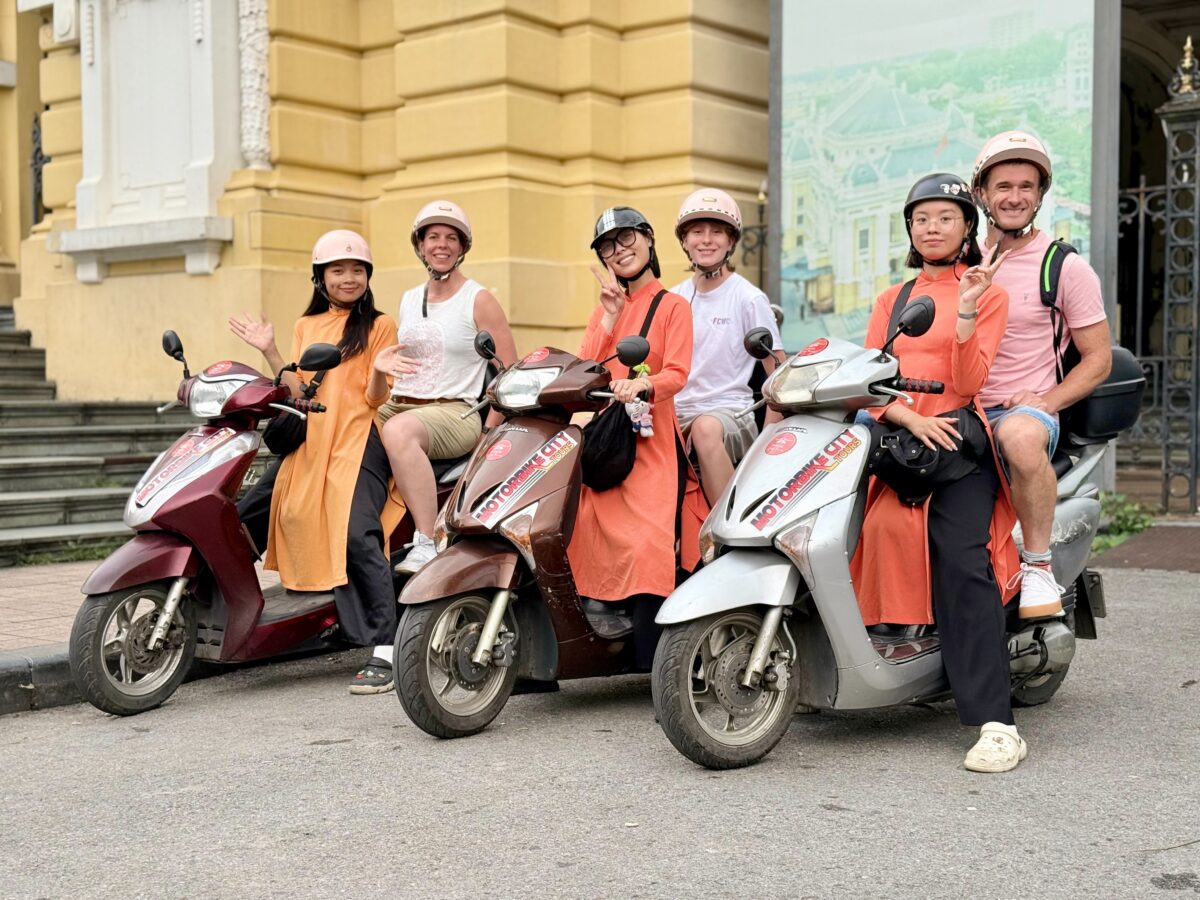
Hanoi Vespa Culinary Tour: A Taste of Authentic Hanoi
A Hanoi Vespa Culinary Tour is one of the most enjoyable ways to discover the food culture of Vietnam’s capital. Instead of simply sitting down for a meal, you ride through Hanoi on a classic Vespa, moving between different neighborhoods, local eateries, markets and hidden food spots while a local guide introduces you to the dishes, ingredients and stories behind Hanoi’s cuisine. The result is a combination of Vietnamese food, street culture, sightseeing and vintage Vespa adventure in one experience.
For travelers searching for the best Hanoi Vespa Culinary Tour, the most important thing is not simply how many dishes are included. A good culinary route should take you to places where local people actually eat, introduce a variety of flavors and allow you to understand why certain dishes are important to Hanoi. Current Asia Vespa Tours food experiences combine vintage scooter riding with local food, hidden neighborhoods, cultural sightseeing and stops at family-run eateries, with women-led guides and professional riders.
What Is a Hanoi Vespa Culinary Tour?
A Hanoi Vespa Culinary Tour is a guided food experience where you travel as a passenger on a vintage Vespa while visiting several local food stops around Hanoi. You do not need to drive the Vespa or have previous riding experience. A professional local rider handles the traffic while you concentrate on the food, scenery and stories from your guide.
Unlike a traditional walking food tour that normally stays within a relatively small area, a Vespa culinary tour can connect several neighborhoods during the same experience. You might start among Hanoi’s historic streets, ride across Long Bien Bridge, explore areas around the Red River, visit local communities and finish with Vietnamese coffee. Current published scooter food tours from Asia Vespa Tours offer morning, afternoon and after-dark options, with food, drinks, equipment and insurance included on the relevant program.
Why Choose a Vespa for a Food Tour?
Food is deeply connected to Hanoi’s neighborhoods. The best places to eat are not necessarily concentrated around one tourist street. A Vespa allows you to travel from one part of the city to another without spending most of your tour walking or waiting for transportation.
You can enjoy the ride and the meal as part of the same experience. One moment you may be passing a busy local market, and a few minutes later you can be sitting at a small family-run restaurant trying a traditional Vietnamese dish. This combination makes a Hanoi Vespa Culinary Tour particularly appealing to travelers who want to experience Hanoi rather than simply visit restaurants.
What Food Will You Eat on a Hanoi Vespa Culinary Tour?
The menu varies according to the tour and season, but a well-designed Hanoi food experience can introduce you to some of the city’s most recognizable dishes, including Bánh Cuốn, Bún Chả, Phở, Phở Cuốn, grilled seafood, Vietnamese salads, local snacks and Egg Coffee.
Rather than treating Vietnamese cuisine as one category, your guide can explain how different dishes use herbs, noodles, grilled meats, broth, fermented sauces and fresh vegetables. This makes the experience much more interesting for travelers who want to understand what they are eating rather than simply photograph it.
Bánh Cuốn: A Hanoi Breakfast Classic
Bánh Cuốn is one of the dishes worth trying early in your culinary journey. These delicate steamed rice rolls are traditionally filled with ingredients such as seasoned pork and mushrooms and served with herbs, dipping sauce and crispy shallots.
The texture is soft and light, while the accompanying herbs and sauce add freshness and flavor. It is a good example of how Vietnamese cuisine can create a satisfying dish without relying on heavy ingredients.
Bún Chả: One of Hanoi’s Signature Foods
No serious Hanoi Culinary Tour should overlook Bún Chả.
The dish combines grilled pork, rice noodles, fresh herbs and a sweet-savory dipping broth. The pork is traditionally grilled over charcoal, creating the smoky aroma that makes Bún Chả so distinctive.
A local guide can explain how to combine the noodles, herbs, pork and dipping sauce properly, turning what may initially look like several separate ingredients into one balanced meal.
Phở: Hanoi’s Most Famous Bowl
Phở needs little introduction to international travelers, but eating it in Hanoi provides a different experience from trying it abroad.
The appeal is in the balance between broth, noodles, meat, herbs and seasonings. A Vespa culinary tour can take you to a local establishment where your guide explains how Hanoi-style Phở differs from versions found elsewhere in Vietnam or outside the country.
For first-time visitors, this is one dish that deserves a place on the itinerary.
Phở Cuốn: A Fresh Alternative
Phở Cuốn offers another way to experience familiar Vietnamese ingredients.
Instead of serving rice noodles in a hot broth, fresh rice sheets are wrapped around beef, herbs and other ingredients, then served with dipping sauce.
It is lighter than a bowl of Phở and particularly enjoyable when you want to keep enough appetite for the next food stop.
Grilled Seafood and Local Street Food
Hanoi may be inland, but seafood is an important part of its urban food scene.
Some culinary itineraries take travelers toward areas known for grilled seafood and local restaurants. The experience is less formal than a conventional seafood dinner: food is often prepared simply, shared at the table and enjoyed with drinks and conversation.
Current Asia Vespa food-tour information highlights authentic local dishes and family-run food stops rather than restricting the experience to a single restaurant.
Vietnamese Salads and Fresh Herbs
Vietnamese food is not just noodles and grilled meat.
Fresh herbs, vegetables and salads provide the balance that makes many Vietnamese dishes feel lighter. Depending on the route, you may encounter banana flower salad or other local preparations featuring herbs, vegetables and savory dressings.
Your guide can also explain which herbs are commonly eaten with particular dishes and why they are important to Vietnamese cuisine.
Egg Coffee: The Hanoi Dessert You Should Not Miss
A Hanoi Vespa Culinary Tour should ideally finish with Vietnamese Egg Coffee.
Egg Coffee is one of Hanoi’s most distinctive culinary creations. Strong Vietnamese coffee is combined with a rich, creamy egg topping to create a drink that feels almost like a dessert.
It is especially enjoyable at the end of a food tour because you can sit down, relax and talk with your guide after several hours of riding and eating. Current Asia Vespa Tours culinary experiences specifically include Egg Coffee as part of the food-and-culture experience.
Hanoi Street Food Is About More Than Food
One reason Hanoi’s culinary culture is so fascinating is that eating is closely connected to the street.
Small restaurants, food stalls and cafés are integrated into residential neighborhoods. People eat on small stools, talk with friends, watch traffic and continue with their daily routines.
When you travel by Vespa, you don’t simply arrive at a restaurant. You see the neighborhood around it, which helps explain why the food culture feels so deeply connected to everyday life.
A Typical Hanoi Vespa Culinary Route
A strong culinary itinerary can follow a sequence such as:
Old Quarter → Long Bien Bridge → Red River communities → local food stop → historic neighborhoods → French Quarter → Vietnamese dinner → Egg Coffee.
The exact route depends on the departure time and tour selected. Current published women-led scooter food-tour itineraries combine Long Bien Bridge, Red River villages, Hanoi Train Street, historical areas, local restaurants and cafés.
This combination makes the experience more than a restaurant-hopping tour.
Start in the Old Quarter
The Old Quarter is a natural starting point because food is everywhere.
Narrow streets are filled with restaurants, cafés, bakeries, markets and family businesses. Your guide can introduce you to the way Hanoi’s historic commercial streets developed and explain how food became such an important part of neighborhood life.
Rather than spending the entire tour in one district, however, the Vespa allows you to continue into other parts of Hanoi.
Ride Across Long Bien Bridge
After exploring central Hanoi, the route can continue toward Long Bien Bridge.
The bridge offers views over the Red River and creates a dramatic transition between the dense urban center and quieter areas beyond the river.
This is an important part of a culinary tour because it gives travelers context: you are not simply being transported from one restaurant to another—you are seeing the city and communities that surround Hanoi’s food culture.
Discover Red River Communities
Beyond the central districts, the landscape can change surprisingly quickly.
You may see banana plantations, flower gardens, vegetable farms and village roads. Current Asia Vespa Tours food-tour information specifically includes scenic rural areas along the Red River, giving travelers an opportunity to experience a quieter side of Hanoi.
For international visitors, this contrast is one of the highlights of the journey.
Visit Local Family-Run Restaurants
The quality of a culinary tour depends heavily on where you eat.
A good operator should select restaurants and food stalls based on food quality, authenticity, cleanliness and local reputation rather than simply choosing places that are convenient for tourists.
Asia Vespa Tours describes its food experiences as using handpicked, family-run local food spots and authentic Vietnamese dishes.
This approach helps make the tour feel more personal and less like a standard restaurant package.
Meet Local Women Guides
A distinctive feature of the experience is having local women as guides and Vespa riders.
The women-led concept is designed to give travelers a more personal connection to Hanoi while supporting professional opportunities for local women. Asia Vespa Tours currently positions its Hanoi experiences around professional women guides and riders with local knowledge of food, culture and neighborhoods.
Importantly, women-led does not mean women-only. Couples, men, women, families and mixed groups can participate.
Hanoi Vespa Culinary Tour: Day or Night?
Both are excellent, but they offer different experiences.
A daytime culinary tour is better if you want to combine food with sightseeing, markets, historical landmarks and countryside scenery.
A night Vespa food tour is better if your priority is street food, local restaurants, cafés, beer and Hanoi’s evening atmosphere.
Current published Asia Vespa Tours schedules include morning, afternoon and after-dark food experiences, with the evening program including dinner.
Hanoi After Dark: Food and Local Atmosphere
At night, Hanoi’s food culture becomes even more lively.
Restaurants fill with local customers, food stalls become busier and cafés remain open late. The streets around the Old Quarter develop a completely different atmosphere from daytime.
A night Vespa culinary tour can combine food with Hanoi nightlife without requiring travelers to plan the evening themselves. Your guide chooses the stops and handles transportation while you enjoy the atmosphere.
How Long Does a Hanoi Vespa Culinary Tour Take?
A typical experience can take around 3.5–4.5 hours, depending on the itinerary.
Current Asia Vespa Tours food experiences list:
Morning: 8:00 AM–12:30 PM
Afternoon: 1:00 PM–5:30 PM
After Dark: 6:00 PM–9:30 PM
The evening experience includes dinner, while the exact food structure depends on the selected program.
This duration is long enough to sample several dishes without making the experience feel like an all-day eating challenge.
Is It One Big Meal?
No.
A good Hanoi Vespa Food Tour is usually structured around multiple tasting stops rather than one enormous meal.
You might eat a small portion of one dish, ride to another neighborhood, try something different, continue sightseeing and then finish with coffee or dessert.
This approach allows you to taste more variety without becoming uncomfortably full after the first stop.
How Much Food Will I Eat?
Expect to eat enough to make the experience feel like a substantial meal, but not necessarily one giant dinner at a single restaurant.
The goal is variety.
You may experience noodles, grilled meat, fresh herbs, seafood, salads, snacks and dessert or coffee during the same journey.
If you have a small appetite, tell your guide at the beginning so portions can be managed appropriately.
Can Vegetarians Join?
Yes, but you should inform the operator in advance.
Vietnamese cuisine has many vegetarian dishes, but fish sauce, meat stock and seafood ingredients can appear in dishes that look vegetarian at first glance.
A good guide can help identify appropriate alternatives and communicate your dietary requirements to the restaurant.
What About Food Allergies?
Travelers with allergies should notify the tour operator before departure.
Be particularly clear about allergies to:
- Peanuts
- Shellfish
- Seafood
- Eggs
- Fish sauce
- Dairy
- Gluten
Your guide can then help communicate the requirements to local restaurants and food vendors.
Do I Need to Drive the Vespa?
No.
You ride as a passenger behind a professional rider.
Current Asia Vespa Tours food-tour information specifically states that no driving experience is required and that guests ride pillion on comfortable scooters with passenger backrests.
This means you can enjoy Hanoi’s traffic and street scenes without having to navigate them yourself.
Is a Hanoi Vespa Culinary Tour Safe?
Choose an operator that uses professional riders, appropriate helmets, insurance and properly maintained scooters.
Asia Vespa Tours currently states that its riders are licensed and experienced and that helmets, rain gear and insurance are provided.
As a passenger, wear the helmet correctly, keep your feet on the footrests and follow your rider’s instructions.
What Should You Wear?
The best clothing is light and comfortable.
Wear:
- Comfortable trousers or shorts
- T-shirt or lightweight top
- Closed-toe shoes
- Sunglasses
- Sunscreen
- Light jacket during cooler weather
Avoid overly formal clothing or uncomfortable footwear because you will spend several hours sitting on a scooter and moving between food stops.
What Happens If It Rains?
Normal rain does not necessarily mean the culinary adventure has to stop.
Current published Asia Vespa Tours information states that tours operate in different weather conditions and provide rain protection.
If severe weather makes riding unsafe, however, the operator should prioritize safety and modify the route or schedule.
Is It Good for First-Time Visitors?
A Hanoi Vespa Culinary Tour is particularly good for first-time visitors because it combines several experiences that would otherwise require separate activities.
In one tour, you can experience:
Hanoi sightseeing + Vietnamese food + local neighborhoods + Red River scenery + café culture + vintage Vespa riding.
That makes it an efficient introduction to the city.
Is It Good for Returning Visitors?
Yes—and arguably even better.
If you’ve already visited Hoan Kiem Lake, the Old Quarter and Hanoi’s major monuments, choose a culinary route that focuses on hidden restaurants, local communities, markets and countryside areas.
This gives you an opportunity to discover a side of Hanoi that standard sightseeing itineraries often miss.
Private Hanoi Vespa Culinary Tour
A private Vespa culinary tour is ideal for travelers who want greater flexibility.
You can travel with your partner, family or friends without sharing the experience with strangers. Depending on the operator, you can also discuss food preferences, dietary requirements, photography stops and the overall pace before departure.
For food lovers, private tours can be particularly useful because you can spend more time at a favorite food stop rather than following a fixed group schedule.
Group vs Private Vespa Culinary Tour
| Feature | Group Tour | Private Tour |
|---|---|---|
| Price | Lower | Higher |
| Privacy | Shared | Exclusive |
| Flexibility | Moderate | High |
| Personal attention | Good | Excellent |
| Best for | Solo travelers & couples | Families & friends |
| Route customization | Limited | Greater |
If you are traveling with several friends or family members, compare the total private-tour price rather than only the per-person rate.
How Much Does a Hanoi Vespa Culinary Tour Cost?
Prices depend on the route, duration, food inclusions and whether you choose a group or private experience.
The current Asia Vespa Tours website lists a Hanoi Vintage Vespa Food Tour at around US$59 per person, while its women-led scooter food experience lists group and private pricing separately.
Because prices can change, check the exact tour page for the current price, inclusions and availability before booking.
What Is Usually Included?
Depending on the selected experience, inclusions can include:
- Vintage Vespa or scooter
- Professional rider
- English-speaking local guide
- Helmet
- Passenger backrest
- Food tastings
- Drinks
- Vietnamese coffee
- Rain protection
- Insurance
- Hotel pickup and drop-off within the applicable area
Current Asia Vespa Tours food-tour information states that food, drinks, gear and insurance are included on its published women-led scooter food experience.
Best Hanoi Vespa Culinary Tour for Different Travelers
| Traveler | Best Choice |
|---|---|
| First-time visitor | City Vespa Culinary Tour |
| Food lover | Vintage Vespa Food Tour |
| Couple | Sunset & Food Vespa Tour |
| Nightlife lover | Hanoi After Dark Food Tour |
| Photographer | Private Vespa Culinary Tour |
| Family | Private Vespa Food Experience |
| Returning visitor | Countryside & Food Vespa Tour |
| Solo traveler | Small-Group Vespa Food Tour |
What Makes an Authentic Hanoi Food Tour?
Authenticity does not simply mean eating unusual food.
A genuinely good culinary experience should introduce you to how local people eat, where they eat and why particular dishes are connected to Hanoi’s culture.
That means visiting neighborhood restaurants, eating seasonal ingredients, learning how dishes are prepared and understanding the relationship between food and everyday life.
The Vespa adds another layer because you travel through the neighborhoods where the food culture exists.
Hanoi Vespa Culinary Tour vs Walking Food Tour
A walking food tour is excellent for concentrating on a small part of Hanoi and moving slowly between nearby food stalls.
A Vespa culinary tour is better if you want greater geographic variety.
You can eat in the Old Quarter, visit a different neighborhood, cross Long Bien Bridge, explore the Red River area and return to central Hanoi—all within a few hours.
If you have limited time, the Vespa option gives you more coverage.
Hanoi Vespa Culinary Tour vs Motorbike Food Tour
Both can provide excellent food experiences.
A modern motorbike tour emphasizes practicality, while a vintage Vespa tour adds retro style and visual character.
The food may be similar, but the transportation changes the atmosphere.
If you want the most traditional local scooter experience, a modern motorbike is practical. If you want food combined with classic design and photography, a vintage Vespa is more distinctive.
What Should You Bring?
You don’t need much.
Bring:
- Phone
- Camera
- Sunglasses
- Sunscreen
- Small secure bag
- Some cash for personal purchases
- Light jacket if needed
Avoid large luggage because you will be moving between several stops on a scooter.
Can I Take Photos?
Absolutely.
The route itself provides many photographic opportunities, including:
Old Quarter streets → French architecture → Long Bien Bridge → Red River → local markets → food stalls → West Lake → Hanoi at night.
Your guide can also recommend safe places to stop rather than attempting to photograph while the Vespa is moving.
Best Time for a Hanoi Vespa Culinary Tour
For food and sightseeing together, the afternoon is an excellent option.
For street food and nightlife, choose after dark.
For cooler weather and morning markets, choose the morning.
For couples and photographers, a sunset departure can combine golden-hour scenery with an evening culinary experience.
Why Choose Asia Vespa Tours?
Asia Vespa Tours positions itself as a specialist in women-led Hanoi Vespa experiences, with vintage Vespa, motorbike, Jeep and bicycle tours. Its current website emphasizes professional local women guides and riders, small groups, local neighborhoods, markets, family-run cafés and authentic food.
The company’s food-tour information also highlights authentic local dishes, hidden areas and community connections rather than limiting the experience to major tourist attractions.
Final Thoughts
A Hanoi Vespa Culinary Tour is much more than a food tour with a scooter attached.
It is a way to understand Hanoi through its food, streets, people and neighborhoods.
You can begin with Bánh Cuốn in a small local restaurant, ride through the Old Quarter, cross Long Bien Bridge, see the Red River communities, try Bún Chả or another Vietnamese specialty, explore hidden streets and finish with a creamy cup of Egg Coffee.
The food tells you about Hanoi’s culinary traditions. The Vespa shows you the city between each meal.
That combination is what makes the experience special.
If your goal is to taste authentic Hanoi while seeing more of the city than a typical walking food tour allows, a Hanoi Vespa Culinary Tour is one of the most enjoyable choices for your itinerary.
Book a Hanoi Vespa Culinary Tour
Asia Vespa Tours — asiavespatours.com offers vintage Vespa culinary experiences in Hanoi, including women-led food tours combining local cuisine, sightseeing, hidden neighborhoods and professional Vespa riders. Current published options include group and private experiences, with food and drinks included on relevant tours.
Asia Vespa Tours — asiavespatours.com
24/7 WhatsApp: +84 982 416 518
Email: info@asiavespatours.com
Taste Hanoi. Ride through Hanoi. Meet Hanoi. The best culinary memories often happen between the restaurants.