
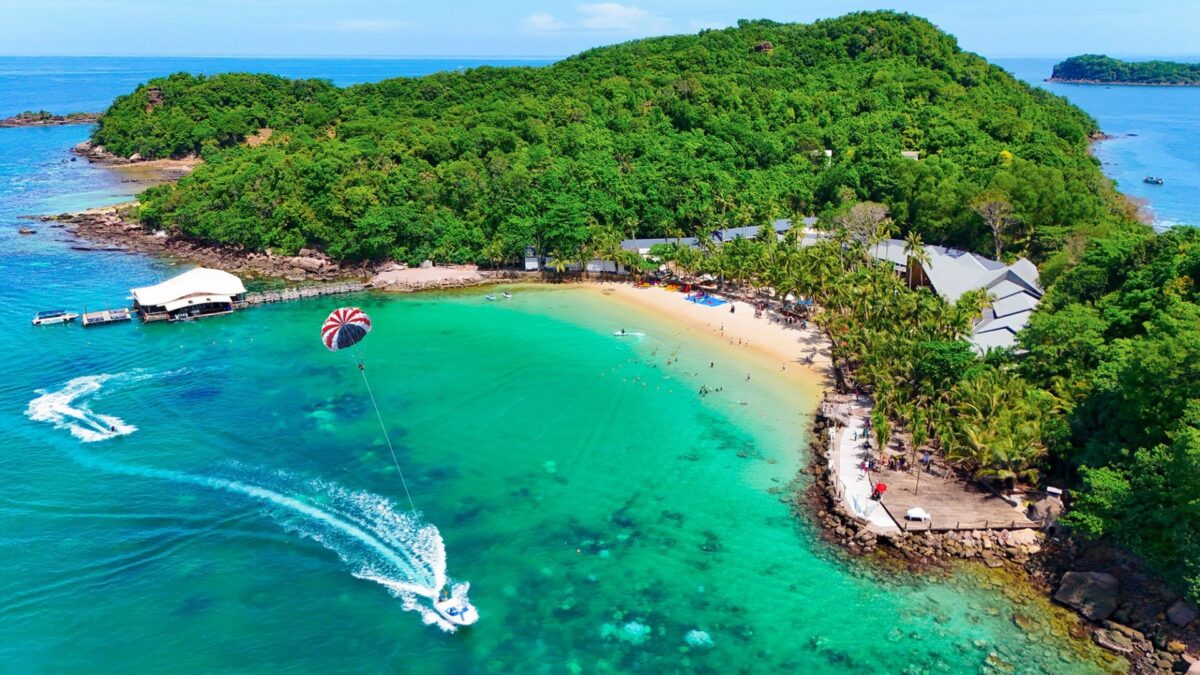
Phu Quoc Guide: Complete Travel Guide to Beaches, Islands, Seafood, Sunsets and Tropical Experiences
Phu Quoc is Vietnam’s largest island and one of the country’s most versatile beach destinations, combining tropical beaches, warm water, coral reefs, fishing villages, night markets, seafood restaurants, forest landscapes and an expanding collection of luxury resorts. Located in the Gulf of Thailand, the island can work equally well as a short beach escape, a family holiday, a romantic getaway or the final relaxing stage of a longer Vietnam journey. Unlike smaller islands such as Con Dao, Phu Quoc has a much broader tourism infrastructure, making it easier to find accommodation, restaurants, activities and transportation for different budgets and travel styles.

Why Visit Phu Quoc?
Phu Quoc’s greatest advantage is variety. You can spend one morning snorkeling around offshore islands, have lunch in a fishing village, visit a pepper farm in the afternoon, watch the sunset over the Gulf of Thailand and finish the evening eating grilled seafood at a lively night market. Travelers who prefer complete relaxation can stay at a beachfront resort for several days, while more active visitors can explore waterfalls, national park trails, beaches, islands and countryside roads.
The island is particularly attractive for couples, families, honeymooners, beach lovers, food travelers, photographers and luxury travelers. It also fits naturally into a longer Vietnam itinerary because you can finish a busy journey through Hanoi, Central Vietnam and southern Vietnam with several days beside the sea.
Understanding Phu Quoc
Phu Quoc is part of Kien Giang Province and lies close to Cambodia’s southern coast. The island is large enough that different areas have very different personalities.
Duong Dong is the main urban center, with restaurants, markets, shops and everyday island life.
Long Beach is the most developed tourist area and has a large concentration of hotels and resorts.
Ong Lang is quieter and attractive to travelers looking for a more relaxed beach atmosphere.
Ganh Dau in the northwest is less developed and closer to the island’s national park.
An Thoi in the south is the main gateway for many island-hopping excursions.
Khem Beach and Sao Beach are among the best-known southern beaches.
This means choosing the right location is one of the most important decisions when planning a Phu Quoc holiday.
Long Beach
Long Beach, or Bai Truong, stretches along the island’s western coast and is the easiest area for first-time visitors.
The coastline is lined with hotels, resorts, restaurants, beach bars and cafés.
Its western orientation also makes it one of the most convenient places to watch sunset.
Long Beach is especially practical for travelers who want to combine beach time with easy access to restaurants and evening activities.
For couples and honeymooners, choose a beachfront property rather than a hotel across the main road if direct access to the sea is important.
Ong Lang Beach
Ong Lang Beach provides a quieter alternative to the busier Long Beach area.
The coastline is broken into smaller sandy sections surrounded by vegetation and rocky areas.
It is a good choice for travelers who want a peaceful resort atmosphere without being completely isolated from restaurants and services.
Ong Lang is particularly attractive for couples and families who want slower days.
Sao Beach
Sao Beach, or Bai Sao, is one of the most famous beaches on Phu Quoc.
The beach is known for pale sand, clear turquoise water and a tropical setting surrounded by greenery.
Conditions can change depending on season and weather, so do not assume that the beach will look identical throughout the year.
Visit early in the morning if you want a quieter experience and softer light for photography.

Khem Beach
Khem Beach, or Bai Khem, is another spectacular southern beach.
The curved bay, light-colored sand and surrounding vegetation create a more secluded appearance than the busier tourist beaches.
Several high-end resorts have developed around the southern coast, making this area particularly suitable for luxury travelers.
If your priority is a premium beachfront holiday rather than nightlife, the Khem Beach area is worth considering.
Ganh Dau
Ganh Dau lies in the northwest of Phu Quoc.
The area is much quieter than Duong Dong and Long Beach, with fishing villages, coastal roads and views toward Cambodia on clear days.
Ganh Dau is a good destination for travelers who want to explore the less-developed side of the island.
It also works well as part of a northern Phu Quoc road trip.
Rach Vem
Rach Vem is known for its floating fishing structures and seasonal starfish sightings.
During suitable conditions, shallow water around the coast can contain numerous red-orange starfish.
Do not remove them from the water or handle them unnecessarily. Starfish can be harmed when exposed to air for extended periods.
The area is best approached as a nature experience rather than simply a photography stop.
Starfish Beach
The nickname Starfish Beach has become widely associated with Rach Vem.
When conditions are right, visitors can see starfish in the shallow water.
The best experience is to observe them in their natural environment.
Do not stand on them, move them for photographs or place them on dry sand.
This is particularly important because increased tourism can put pressure on fragile coastal ecosystems.
Phu Quoc National Park
Phu Quoc National Park covers a substantial part of the island’s northern interior.
The landscape includes tropical forest, mountains, streams and wildlife habitats.
It provides a completely different environment from the beaches.
Nature lovers can combine a forest excursion with a northern island road trip, while travelers who prefer relaxation can simply enjoy the scenery from selected viewpoints and countryside roads.

Hiking in Phu Quoc
Phu Quoc’s forests provide opportunities for short walks and longer nature excursions.
The tropical climate can make hiking surprisingly tiring, especially during the hotter part of the day.
Wear proper shoes, bring water and avoid entering unfamiliar forest trails without guidance.
For most visitors, a guided nature excursion is more rewarding than simply following an unmarked path.
Suoi Tranh Waterfall
Suoi Tranh is one of the island’s best-known nature attractions.
The stream flows through forested surroundings and can form small pools and cascades during wetter periods.
The amount of water varies significantly by season.
It is most worthwhile after periods of rainfall, when the vegetation is lush and the stream is more active.
Suoi Tien
Suoi Tien is another natural area where visitors can combine forest scenery with a short countryside excursion.
The route is less about one dramatic waterfall and more about experiencing the island’s interior landscape.
For families, short nature walks can provide a pleasant break from several days of beach activities.
Phu Quoc Cable Car
The Hon Thom Cable Car connects the southern Phu Quoc area with Hon Thom Island.
The journey provides panoramic views over the sea and small islands.
The cable car itself is an attraction, particularly for families and photographers.
It can be combined with a southern island excursion and beach time.

Hon Thom Island
Hon Thom, or Pineapple Island, is one of the most popular destinations in southern Phu Quoc.
The island has beaches, water activities and resort infrastructure.
Many visitors combine a cable-car ride with snorkeling, swimming or an island excursion.
If you want a quieter experience, consider arranging private transportation and arriving early rather than following the busiest group schedules.
Phu Quoc Island Hopping
Island hopping is one of the best activities in southern Phu Quoc.
Smaller islands around the An Thoi archipelago provide opportunities for:
Snorkeling
Swimming
Coral viewing
Fishing
Beach relaxation
Photography
A private boat gives you more flexibility to choose where to stop and how long to stay.
For couples and families, this is often much more comfortable than joining a large boat carrying dozens of passengers.
An Thoi Archipelago
The An Thoi Archipelago consists of numerous small islands and islets south of Phu Quoc.
Some are developed for tourism, while others remain relatively quiet.
Marine conditions vary throughout the year.
Water clarity is influenced by weather, currents and season, so do not expect identical snorkeling conditions every day.
Hon May Rut
Hon May Rut is a popular stop on southern island-hopping routes.
The island is known for sandy beaches, clear water and snorkeling opportunities.
It works particularly well as part of a full-day private boat experience.
Hon Mong Tay
Hon Mong Tay, sometimes referred to as Finger Island, is another popular southern island.
Its small scale and clear surrounding water make it visually attractive.
During busy periods, the island can become crowded, so timing matters.
A private boat that arrives earlier or later than the largest group tours can provide a much better experience.
Coral Reefs and Snorkeling
Phu Quoc is one of Vietnam’s most accessible destinations for recreational snorkeling.
The waters around the southern islands contain coral habitats and tropical fish.
Snorkeling conditions are generally best when the sea is calm and visibility is good.
Wear appropriate flotation equipment if you are not a confident swimmer and never stand on coral.
Diving in Phu Quoc
Scuba diving is also available around the southern islands.
The experience is generally more suitable for recreational divers than for travelers seeking deep technical diving.
If underwater visibility is your primary reason for visiting, check current sea conditions and choose an experienced dive operator.
Sunset in Phu Quoc
Phu Quoc’s western coastline is famous for sunset.
The island’s position in the Gulf of Thailand means the sun sets over the water on the western side.
Some of the best places to experience it include:
Long Beach
Ong Lang
Dinh Cau
Sunset Town
Beachfront resorts
Sunset Town
Sunset Town in southern Phu Quoc is a purpose-built entertainment and architectural complex overlooking the sea.
The area is known for colorful Mediterranean-inspired buildings, waterfront viewpoints, restaurants, shows and sunset scenery.
It is particularly attractive for travelers who enjoy photography and evening entertainment.
It provides a very different visual experience from the traditional fishing villages elsewhere on the island.
Kiss Bridge
Kiss Bridge has become one of the recognizable modern landmarks of southern Phu Quoc.
The bridge extends over the sea and is designed around two sections that nearly meet, creating a symbolic gap between them.
It is particularly attractive around sunset.
The surrounding area has become a major evening destination, so expect more visitors around sunset than earlier in the day.
Dinh Cau
Dinh Cau is a small temple and coastal landmark near Duong Dong.
The site is associated with local fishing traditions and is particularly atmospheric around sunset.
Its position beside the sea makes it an easy stop after exploring the central town.
Dinh Cau Night Market
The Dinh Cau Night Market is one of the best places to experience Phu Quoc’s evening food culture.
You will find:
Grilled seafood
Squid
Prawns
Crab
Sea snails
Fruit
Desserts
Local snacks
The market can become crowded at night, so keep valuables secure and be careful when moving through busy areas.
Phu Quoc Seafood
Seafood is one of the island’s strongest culinary attractions.
Fresh catches include:
Grouper
Squid
Crab
Prawns
Clams
Oysters
Sea snails
Mackerel
One of the best ways to eat seafood is to choose a restaurant where you can see the day’s catch and select how it will be prepared.
Herring Salad
Goi Ca Trich, or Phu Quoc herring salad, is one of the island’s best-known specialties.
Fresh herring is combined with herbs, coconut, onions, peanuts and a dipping sauce, then wrapped in rice paper.
The combination of fresh fish, herbs and coconut creates a distinctive island flavor.
If you enjoy Vietnamese food and seafood, this is a must-try dish.
Crab and Seafood Hotpot
Fresh crab and seafood hotpot are excellent choices for groups.
The broth is combined with seafood, vegetables and noodles.
For a family dinner, a seafood hotpot can be paired with grilled squid, prawns and local vegetables.
Phu Quoc Fish Sauce
Phu Quoc is internationally recognized for its traditional fish sauce.
The island has a long history of producing fish sauce using anchovies and salt.
A visit to a fish-sauce facility can explain the fermentation process and the importance of the product to local food culture.
Travelers should remember that regulations regarding carrying liquid food products vary by airline and destination.
Phu Quoc Pepper Farms
Phu Quoc is also known for pepper cultivation.
Pepper farms are particularly interesting because they show a different side of the island’s agricultural economy.
The plants are grown in rows, often supported by wooden poles.
Visitors can learn about cultivation, harvesting and processing.
Freshly ground pepper is an excellent edible souvenir.
Coconut and Tropical Fruit
The island’s tropical climate supports a variety of fruits.
Depending on the season, you may find:
Mango
Rambutan
Mangosteen
Pineapple
Coconut
Jackfruit
Fruit shakes and fresh coconut water are particularly refreshing after a day outdoors.
Best Time to Visit Phu Quoc
Phu Quoc has a tropical monsoon climate.
The dry season, generally from around November through April, is the most popular period for beach holidays, with calmer conditions and more sunshine.
The rainy season, generally from May through October, brings more frequent rainfall and rougher seas on some western and southern routes.
The transition months can provide a useful balance between weather and visitor numbers.
If your priority is island hopping and snorkeling, the dry season is generally the safer choice for planning marine activities.
Phu Quoc in the Dry Season
From roughly November to April, conditions are generally favorable for:
Beach holidays
Island hopping
Snorkeling
Diving
Sunset cruises
Outdoor sightseeing
December through February is particularly attractive for travelers escaping colder climates.
Hotels and flights can be more expensive during major holiday periods, so book ahead.
Phu Quoc in the Rainy Season
The rainy season does not mean that every day is completely wet.
You may still have sunny mornings or afternoons between showers.
The island becomes greener, and accommodation can be more affordable.
However, sea conditions can make some island-hopping excursions uncomfortable or cause cancellations.
If you travel during this period, maintain flexibility.
How Long Should You Stay in Phu Quoc?
2 days: enough for a quick beach escape.
3 days: good for beaches plus one island excursion.
4 days: ideal for first-time visitors.
5–7 days: excellent for a relaxed luxury holiday.
If Phu Quoc is the final destination of a long Vietnam trip, four or five nights is ideal because you can slow down after several busy sightseeing destinations.
Phu Quoc 2-Day Itinerary
Day 1: Arrive in Phu Quoc, check into your resort and spend the afternoon relaxing at the beach. Visit Duong Dong and Dinh Cau around sunset, then enjoy fresh seafood at the night market.
Day 2: Take a southern island-hopping excursion to Hon Thom and nearby islands for snorkeling and swimming. Return in the afternoon and enjoy a final sunset dinner by the sea.
Phu Quoc 3-Day Itinerary
Day 1: Arrive, check into your beachfront resort and enjoy a relaxed afternoon. Visit Dinh Cau and Duong Dong before having dinner at the night market.
Day 2: Take a private boat to the An Thoi islands for snorkeling, swimming and beach time. Return before sunset and relax at the resort.
Day 3: Explore the island’s countryside, including a pepper farm and fish-sauce facility, then visit Sao Beach or Khem Beach. Finish the day at Sunset Town.
Phu Quoc 4-Day Itinerary
Day 1: Arrive in Phu Quoc and enjoy the resort, beach and sunset.
Day 2: Private southern island excursion with snorkeling, Hon Thom and selected smaller islands.
Day 3: Explore northern Phu Quoc, including Ganh Dau, Rach Vem and the national park area. Return to the resort for a relaxed evening.
Day 4: Visit a pepper farm and fish-sauce facility, then spend the afternoon at Sao Beach or Khem Beach before watching sunset in the south.
Phu Quoc 5-Day Itinerary
Day 1: Arrival, private airport transfer, resort check-in and beach relaxation.
Day 2: Private boat excursion around the An Thoi Archipelago with snorkeling, swimming and a seafood lunch.
Day 3: Northern Phu Quoc countryside, national park landscapes, Ganh Dau and Rach Vem.
Day 4: Sao Beach, Khem Beach and southern Phu Quoc, followed by Sunset Town and Kiss Bridge.
Day 5: Slow morning at the resort, countryside food experience and final sunset before departure.
This pace gives you enough time for sightseeing without turning a beach holiday into a checklist.
Phu Quoc for Couples
Phu Quoc is particularly well suited to romantic travel.
Couples can combine:
Private beachfront villa
Sunset cruise
Private island excursion
Couples’ spa
Seafood dinner
Sunset Town
Beach picnic
Private snorkeling trip
For honeymooners, choose a resort with direct beach access and a private pool or villa if budget permits.
Phu Quoc for Families
Families benefit from the island’s extensive hotel infrastructure.
Children can enjoy:
Beaches
Swimming pools
Cable car
Island hopping
Snorkeling
Aquatic attractions
Fruit farms
Boat trips
Keep marine activities flexible because weather can change quickly.
A private vehicle is also useful for families because the island is large and attractions are spread out.
Phu Quoc for Adventure Travelers
Adventure options include:
Snorkeling
Diving
Kayaking
Fishing
Hiking
Cycling
Forest exploration
Island hopping
For active travelers, combine a northern forest excursion with a southern boat day.
This creates much more variety than spending every day at the resort.
Phu Quoc for Food Lovers
Food travelers should spend time exploring beyond resort restaurants.
Try:
Herring salad
Fresh seafood
Seafood hotpot
Grilled squid
Crab
Sea snails
Fish sauce
Pepper
Tropical fruit
The best strategy is to combine one or two local meals with high-quality resort dining rather than eating every meal at the hotel.
Phu Quoc for Photographers
Phu Quoc offers excellent visual variety.
Sunrise beaches
Fishing boats
Pepper farms
Fishing villages
Tropical forest
Coral reefs
Cable car views
Sunset
Kiss Bridge
Colorful night markets
The western coast is best for sunset, while the eastern and southern beaches can provide beautiful morning light depending on the season.
Luxury Travel in Phu Quoc
Phu Quoc has developed into one of Vietnam’s strongest destinations for high-end beach holidays.
Luxury travelers can choose from:
Private villas
Beachfront resorts
Private pools
Spa treatments
Private island cruises
Fine dining
Private airport transfers
Personal guides
Private cars
The island’s infrastructure makes it easier to create a premium itinerary here than on many smaller Vietnamese islands.
Where to Stay in Phu Quoc
Long Beach
Best for first-time visitors, restaurants and convenience.
Ong Lang
Best for couples and travelers wanting a quieter atmosphere.
Khem Beach
Best for luxury resorts and secluded beach experiences.
Ganh Dau
Best for travelers wanting a peaceful northern environment.
Duong Dong
Best for access to markets, restaurants and everyday island life.
The right area depends heavily on your priorities.
If you plan to spend most of your time at the resort, choose the beach first.
If you want to explore restaurants every evening, stay closer to Duong Dong or Long Beach.
Getting to Phu Quoc
Phu Quoc International Airport is the main gateway.
Domestic flights connect the island with major Vietnamese cities, making it particularly easy to combine with Hanoi and Ho Chi Minh City.
For travelers beginning in Hanoi, flying is by far the most practical option.
A premium itinerary can be:
Hanoi → Phu Quoc
or:
Hanoi → Ho Chi Minh City → Phu Quoc
For a longer southern journey:
Hanoi → Ho Chi Minh City → Mekong Delta → Phu Quoc
Phu Quoc from Ho Chi Minh City
Flying from Ho Chi Minh City is the fastest option.
The flight is short, and the airport is relatively close to the main tourist areas.
This makes Phu Quoc one of the easiest tropical escapes from southern Vietnam.
Phu Quoc from Hanoi
Direct flights make Phu Quoc accessible from Hanoi without needing to travel through Ho Chi Minh City.
For a premium Vietnam itinerary, a domestic flight is preferable to adding a long overland journey.
Getting Around Phu Quoc
The island is large enough that transportation matters.
Useful options include:
Private car
Taxi
Motorbike
Hotel transfers
Tour vehicles
For a full-day itinerary, private car is the most comfortable option.
Motorbikes can be excellent for experienced riders who want independence, but roads outside the main areas can become quiet and less familiar.
Phu Quoc Airport Transfer
Arrange your airport transfer in advance if you are staying at a high-end resort or traveling with children.
The journey from the airport to your hotel depends on where you stay.
Southern resorts are generally farther from the airport than Long Beach and Duong Dong.
What to Pack
Bring:
Swimwear
Light clothing
Sunscreen
Hat
Sunglasses
Sandals
Walking shoes
Insect repellent
Light rain jacket
Dry bag
Reusable water bottle
For snorkeling, a dry bag is particularly useful for phones and cameras.
Phu Quoc Travel Safety
Phu Quoc is generally easy to travel around, but normal precautions remain important.
Use sunscreen regularly.
Drink enough water.
Follow boat safety instructions.
Do not swim far from shore without checking conditions.
Do not touch coral or marine animals.
Wear a life jacket when required.
If riding a motorbike, wear a helmet and avoid unfamiliar roads at night.
During the rainy season, monitor weather conditions before booking boat excursions.
Responsible Tourism in Phu Quoc
Phu Quoc’s rapid development makes responsible travel increasingly important.
Avoid single-use plastic whenever possible.
Do not step on coral reefs.
Do not remove starfish from the water.
Never purchase products made from protected wildlife.
Avoid feeding marine animals.
Respect fishing communities.
Do not leave rubbish on beaches.
Choose operators that use appropriate safety equipment and follow marine conservation practices.
The island’s long-term appeal depends on protecting the beaches and marine ecosystems that attract visitors in the first place.
Common Phu Quoc Travel Mistakes
One common mistake is staying at the resort for the entire trip and never seeing the island.
Another is trying to visit every beach in one day.
Phu Quoc is larger than it looks on a map.
A third mistake is booking a boat trip without considering seasonal sea conditions.
Another is choosing accommodation based only on price without checking its exact location.
Finally, do not assume every beach has identical water conditions. The wind and seasonal weather can affect different sides of the island differently.
Phu Quoc vs Con Dao
These two islands offer very different experiences.
Phu Quoc: larger, more developed, more resorts, more restaurants, more entertainment and easier access.
Con Dao: quieter, more remote, stronger historical atmosphere, protected nature and fewer tourism developments.
Choose Phu Quoc if you want variety and convenience.
Choose Con Dao if you want solitude, history and wilderness.
For travelers with enough time, visiting both can create an excellent contrast between Vietnam’s developed tropical island destination and its more secluded island environment.
Phu Quoc vs Nha Trang
Nha Trang is a larger coastal city with a stronger urban atmosphere.
Phu Quoc feels more like a tropical island.
Choose Nha Trang for:
City life
Restaurants
Island excursions
Urban beach atmosphere
Choose Phu Quoc for:
Resorts
Tropical scenery
Beaches
Sunsets
Island hopping
Relaxation
Is Phu Quoc Worth Visiting?
Yes, particularly if you want to combine a tropical beach holiday with good infrastructure and a wide selection of activities.
Phu Quoc is not the most remote island in Vietnam, but that is precisely why it works so well for travelers who want both comfort and nature.
You can stay in a luxury beachfront villa, take a private boat to a quiet island, explore a fishing village, visit a pepper farm, eat fresh seafood and watch the sunset without changing hotels.
For a first visit, four days and three nights is a good minimum.
For a honeymoon or luxury beach holiday, five to seven nights allows you to enjoy the island without rushing.
Explore Phu Quoc With Vietnam Women Travel
Vietnam Women Travel – Premium Private Tours Led by Women offers private Phu Quoc journeys for travelers who want a personalized tropical escape rather than a standard package holiday.
A premium journey can begin in Hanoi, continue by domestic flight to Ho Chi Minh City or directly to Phu Quoc, and include private airport transfers, luxury beachfront accommodation, private island excursions, snorkeling, fishing villages, pepper farms, fish-sauce experiences, northern countryside, southern beaches and sunset experiences.
For couples and honeymooners, we can design a private itinerary around beachfront villas, private boat trips, romantic sunset experiences, spa treatments and seafood dining. Families can enjoy private transportation, flexible sightseeing and carefully selected island activities. Food lovers can explore herring salad, fresh seafood, fish sauce and Phu Quoc pepper, while active travelers can focus on snorkeling, diving, hiking and island exploration.
Phu Quoc is also an excellent final destination for a longer Vietnam journey:
Hanoi → Ho Chi Minh City → Mekong Delta → Phu Quoc
or:
Hanoi → Ho Chi Minh City → Con Dao → Phu Quoc
For a complete premium Vietnam experience:
Hanoi → Ha Long Bay → Hue → Hoi An → Ho Chi Minh City → Mekong Delta → Con Dao → Phu Quoc
Every Vietnam Women Travel – Premium Private Tours Led by Women journey is private, personalized and designed around your preferred pace, accommodation level, interests and travel style.
Vietnam Women Travel – Premium Private Tours Led by Women
Website: https://vietnamwomentravel.com/
Hotline / WhatsApp: +84 988 402 008 | +84 982 416 518 | +84 981 090 989
Email: info@vietnamwomentravel.com
Phu Quoc Guide | Phu Quoc Travel Guide | Phu Quoc Vietnam | Phu Quoc Beaches | Sao Beach | Khem Beach | Long Beach | Ong Lang Beach | Phu Quoc National Park | Phu Quoc Island Hopping | Hon Thom | An Thoi Islands | Phu Quoc Snorkeling | Phu Quoc Diving | Phu Quoc Night Market | Phu Quoc Seafood | Phu Quoc Fish Sauce | Phu Quoc Pepper Farm | Phu Quoc Itinerary | Phu Quoc Travel Tips | Vietnam Island Guide