
Hoi An Full-Day Private Car Tour – Countryside, My Son Sanctuary & Local Culture Led by Women
Discover Hoi An, My Son and the Villages Beyond the Ancient Town
Experience the history and countryside of Central Vietnam on our Hoi An Full-Day Private Car Tour – Countryside, My Son Sanctuary & Local Culture Led by Women. Designed as a 100% private experience, this journey combines the ancient Cham heritage of My Son Sanctuary with the agricultural villages, traditional crafts, riverside communities and local culture surrounding Hoi An.
Travel comfortably in your own private air-conditioned car with a professional Vietnamese female guide. Instead of spending the entire day inside Hoi An Ancient Town, you will travel beyond the tourist center to My Son Sanctuary, Tra Que Vegetable Village, Cam Thanh Village, Bay Mau Water Coconut Forest, Kim Bong Carpentry Village and the Thu Bon River, discovering how ancient history and contemporary Vietnamese life exist side by side.
Private Travel with Your Own Vietnamese Female Guide
This is not a group tour. Your private car and female guide are reserved exclusively for you and your companions. You can travel at a relaxed pace, spend longer at places that interest you, stop for photographs, adjust the route around your preferences and enjoy the countryside without following the schedule of a large group.
Your Vietnamese female guide brings the places you visit to life through stories about Cham civilization, Vietnamese history, farming, family traditions, local food, Buddhist influences, traditional crafts and the communities surrounding Hoi An.
Hoi An Ancient Town – Begin in the Historic Center
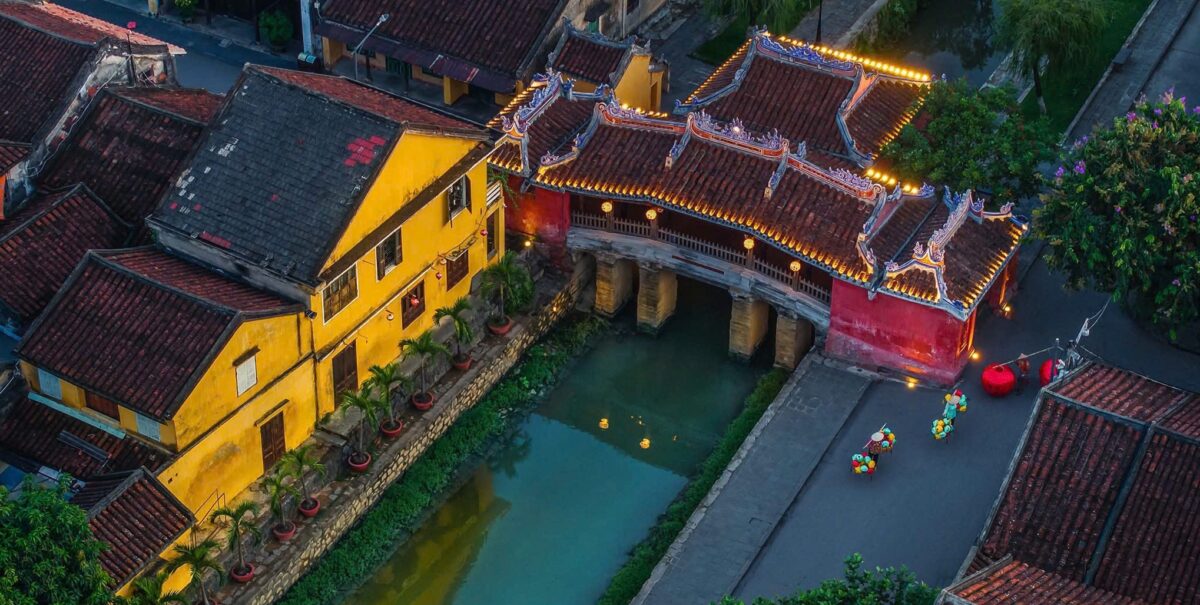
Begin your journey near Hoi An Ancient Town, the historic trading port that brought together Vietnamese, Chinese, Japanese and international merchants for centuries. Your guide introduces the history of the old trading town before you leave the crowded center and travel into the countryside.
As the car moves away from the Ancient Town, the architecture changes from historic merchant houses to gardens, vegetable farms, rice fields and village roads.
This transition gives you an immediate understanding of how closely Hoi An’s historic center is connected with the rural communities surrounding it.
Tra Que Vegetable Village – The Farming Heritage of Hoi An
Continue to Tra Que Vegetable Village, one of the most important agricultural communities around Hoi An.
Walk through the vegetable gardens and see where many of the fresh herbs and vegetables used in Hoi An cuisine are grown. Your guide explains traditional cultivation methods and how local farmers have maintained agricultural practices while adapting to modern tourism and demand for fresh produce.
The visit is particularly meaningful for food lovers because you can see the ingredients that later appear on the tables of Hoi An restaurants.
Learn about herbs commonly used with Cao Lau, Mi Quang, Banh Xeo and other Central Vietnamese dishes, and discover why the soil and farming traditions around Tra Que are important to the region’s cuisine.
A Traditional Vietnamese Farming Community
Continue through the countryside surrounding Hoi An and observe traditional farming landscapes.
The private car allows you to stop at specific viewpoints beside rice fields, vegetable gardens and waterways.
Depending on the season, you may see farmers preparing fields, planting rice, tending vegetables or harvesting crops.
Your female guide explains how agricultural life has traditionally shaped family structures and village communities around Hoi An.
This is the countryside behind the food, culture and prosperity of the ancient trading town.
My Son Sanctuary – The Sacred World of the Champa Kingdom
Continue to My Son Sanctuary, one of the most important archaeological sites in Central Vietnam.
Hidden among green mountains and forested valleys, My Son was once a major religious and political center of the Champa Kingdom.
Walk through the archaeological complex with your female guide and discover the surviving brick temples, towers and sculptures.
Your guide will explain the relationship between the Cham people, Hinduism and the temple complex and help you understand why My Son was built in this particular location.
My Son’s Cham Temple Towers
Explore the distinctive red-brick towers of My Son.
The architecture is particularly fascinating because the ancient builders created large structures from brick while achieving remarkably detailed decorative surfaces.
Look closely at the surviving carvings and architectural details.
Your guide will explain the symbolism of the temples, the religious importance of Shiva and the role My Son played in Cham civilization.
Rather than simply photographing the ruins, you will understand what the sanctuary represented to the people who built and worshipped here.
Cham Sculptures and Hindu Heritage
Discover sculptures and decorative elements associated with Cham religious traditions.
Your female guide can explain the influence of Hinduism, particularly the worship of Shiva, as well as the importance of sacred symbols and deities within Cham culture.
The experience provides a fascinating contrast with the Buddhist and Vietnamese cultural traditions found elsewhere around Hoi An.
My Son Valley and Mountain Landscape
Take time to appreciate the natural setting surrounding the sanctuary.
My Son is surrounded by forested hills, creating a sense of isolation that helped preserve its sacred character.
Your guide will explain why the location was strategically and spiritually important to the Champa Kingdom.
For photography lovers, the combination of ancient red-brick towers and green mountain scenery creates some of the most distinctive images in Central Vietnam.
Return Toward Hoi An
After exploring My Son, return toward Hoi An through the countryside.
The landscape gradually changes from forested hills to agricultural land, villages and waterways.
This is an opportunity to relax in the air-conditioned private car while watching rural Central Vietnam through the windows.
Local Vietnamese Lunch
Stop at a carefully selected local restaurant for lunch.
Enjoy authentic Central Vietnamese dishes rather than a generic tourist menu.
Depending on your preferences and the restaurant, you may try Cao Lau, Mi Quang, Banh Xeo, White Rose Dumplings, Vietnamese spring rolls, grilled meats, fresh vegetables and regional specialties.
Your female guide can explain the ingredients and traditions behind the dishes.
Vegetarian and other dietary requirements can be accommodated with advance notice.
Cam Thanh Village – Waterways and Coconut Forest
Continue to Cam Thanh Village, a traditional community surrounded by waterways and water coconut palms.
This area offers a completely different landscape from My Son.
The red-brick temples and mountain valleys give way to canals, coconut palms, fishing boats and riverside homes.
Your guide explains how local residents have traditionally used the waterways for fishing, transportation and agriculture.
Bay Mau Water Coconut Forest
Visit the Bay Mau Water Coconut Forest, one of Hoi An’s most recognizable natural environments.
The dense water coconut palms grow along narrow waterways and create a distinctive wetland landscape.
Take a traditional Vietnamese bamboo basket boat through the coconut forest and experience the waterways from the perspective of local communities.
The basket boat moves quietly between the palms while your local boatman explains the traditional environment and its connection with fishing.
Cam Thanh Fishing Life
Explore the fishing culture around Cam Thanh.
Observe local boats, fishing equipment and riverside homes and learn how fishing and aquaculture have traditionally supported families in the area.
Your female guide can explain how the local economy has developed from a combination of fishing, agriculture, craft production and tourism.
This is a valuable opportunity to understand the relationship between Hoi An and its waterways.
Thu Bon River
Continue toward the Thu Bon River, one of the most important waterways in the Hoi An region.
The river has connected Hoi An with surrounding villages for centuries and played a major role in agriculture, fishing, transportation and trade.
Stop at a suitable riverside location and watch boats moving along the water.
Your guide will explain how the river helped Hoi An develop as a major trading port and why it remains central to the lives of communities around the city.
Kim Bong Carpentry Village
Continue to Kim Bong Carpentry Village, located across the river from the center of Hoi An.
The village is famous for its traditional woodworking heritage.
Visit a local workshop and see craftsmen working with wood using traditional techniques.
Your guide will explain how carpentry developed alongside Hoi An’s history as a trading port and how local craftsmen produced furniture, architectural elements, boats and decorative objects.
Look closely at the tools, woodwork and detailed carving.
This is a chance to meet the people preserving a traditional skill rather than simply purchasing a souvenir.
Traditional Woodcarving
Learn how experienced craftsmen transform raw wood into decorative and functional objects.
Depending on the workshop, you may see furniture, religious objects, architectural details or carved artwork being produced.
Your female guide can explain the skills required and how woodworking knowledge is passed from one generation to another.
The visit adds an important human element to Hoi An’s cultural heritage.
Riverside Village Life
Continue through the communities around the Thu Bon River.
See family homes, gardens, small workshops, local cafés and riverside businesses.
The landscape provides a different perspective on Hoi An’s famous trading history.
Instead of seeing the old town as an isolated tourist attraction, you begin to understand the network of villages and waterways that supported it.
Local Coffee Stop
Enjoy a relaxed Vietnamese coffee at a local café away from the busiest tourist streets.
Try traditional Vietnamese coffee or another local drink while watching everyday life around you.
Your guide can share stories about modern Hoi An, family traditions and the changes that tourism has brought to local communities.
Hoi An’s Living Culture
Throughout the day, the experience connects three different periods of Central Vietnamese history.
At My Son, you discover the ancient Champa civilization.
Around Hoi An Ancient Town, you learn about the historic trading port.
In Tra Que, Cam Thanh and Kim Bong, you meet communities that continue traditional agricultural, fishing and craft practices today.
This connection between ancient heritage and living culture is what makes the journey more meaningful than simply visiting a collection of monuments.
Why Choose a Private Car?
The private air-conditioned car makes this itinerary ideal for travelers who want comfort while covering several different areas outside Hoi An.
The journey to My Son involves traveling beyond the immediate Hoi An area, while the return route allows you to explore the villages and river communities without worrying about navigation, parking or long rides.
You can relax between stops, keep your belongings safely in the vehicle and enjoy the countryside scenery through the windows.
The private format also means you can spend more time at the places that interest you most.
Why Travel with Vietnam Women Travel?
Vietnam Women Travel – Premium Private Tours Led by Women specializes in private experiences led by knowledgeable Vietnamese women.
Your female guide connects history with everyday life.
She can explain the ancient Cham civilization at My Son, introduce the agricultural traditions of Tra Que, describe fishing culture in Cam Thanh, explain the importance of the Thu Bon River and introduce the traditional craftsmanship of Kim Bong.
The result is a personal cultural experience rather than a simple sightseeing transfer.
And because the tour is private, you travel exclusively with your own companions.
What Makes This Car Tour Different?
This itinerary is built around four distinct cultural landscapes.
My Son Sanctuary reveals the ancient Cham civilization and Hindu heritage.
Tra Que Vegetable Village shows the agricultural foundation of Hoi An cuisine.
Cam Thanh and Bay Mau Water Coconut Forest reveal the fishing and waterway culture of the region.
Kim Bong Carpentry Village introduces the traditional craftsmanship that developed alongside Hoi An’s trading history.
Together, these places show how religion, agriculture, rivers, trade, food and craftsmanship shaped Central Vietnam.
Places You Will Visit
Hoi An Ancient Town
Tra Que Vegetable Village
Tra Que Vegetable Gardens
My Son Sanctuary
Cham Temple Towers
My Son Archaeological Area
Cam Thanh Village
Bay Mau Water Coconut Forest
Vietnamese Bamboo Basket Boat
Cam Thanh Fishing Community
Thu Bon River
Kim Bong Carpentry Village
Traditional Woodworking Workshop
Local Vietnamese Restaurant
Local Countryside Café
What’s Included
Private air-conditioned car, professional Vietnamese female guide, private hotel pickup and drop-off in Hoi An, private transportation throughout the tour, My Son Sanctuary visit, Tra Que Vegetable Village visit, Cam Thanh Village visit, Bay Mau Water Coconut Forest experience, bamboo basket boat ride, Kim Bong Carpentry Village visit, local lunch, drinking water and personalized cultural interpretation.
Not Included
Entrance fees unless specifically included in your booking, personal expenses, souvenirs, additional food and drinks, tips and gratuities, travel insurance and services not specifically listed as included.
Tour Information
Tour Name: Hoi An Full-Day Private Car Tour – Countryside, My Son Sanctuary & Local Culture Led by Women
Tour Type: 100% Private
Transportation: Private Air-Conditioned Car
Guide: Professional Vietnamese Female Guide
Pickup: Your hotel in Hoi An or agreed meeting point
Drop-off: Your hotel in Hoi An or agreed meeting point
Experience: Ancient heritage, countryside, agriculture, river life, traditional crafts and local culture
Suitable For: Couples, families, seniors, friends, history lovers, culture travelers, food lovers, photographers and private groups
Your Private Journey from Champa Heritage to Modern Hoi An
Begin at Hoi An Ancient Town and learn about the city’s history as an international trading port.
Continue to Tra Que Vegetable Village and discover the farms behind Hoi An’s famous cuisine.
Drive through the countryside toward My Son Sanctuary and explore the sacred red-brick temples of the ancient Champa Kingdom.
Return to Hoi An and taste authentic Central Vietnamese cuisine.
Continue to Cam Thanh Village and enter the Bay Mau Water Coconut Forest by traditional bamboo basket boat.
Follow the Thu Bon River and discover the fishing communities that depend on its waterways.
Cross to Kim Bong Carpentry Village and meet craftsmen preserving traditional woodworking skills.
Finish with Vietnamese coffee and a final glimpse of the riverside countryside before returning to Hoi An.
Our Hoi An Full-Day Private Car Tour – Countryside, My Son Sanctuary & Local Culture Led by Women is designed for travelers who want to understand Hoi An beyond its famous lanterns and Ancient Town.
You will experience ancient Cham civilization, Vietnamese agriculture, river life, fishing culture, traditional craftsmanship and local food in one private journey.
Private Car. Private Female Guide. My Son Sanctuary. Tra Que. Cam Thanh. Thu Bon River. Kim Bong Village. Authentic Local Culture.
Book Your Private Hoi An Car Tour
Vietnam Women Travel – Premium Private Tours Led by Women
Private Car • Female Guide • Hoi An Ancient Town • Tra Que Vegetable Village • My Son Sanctuary • Cham Temple Towers • Cam Thanh Village • Bay Mau Water Coconut Forest • Bamboo Basket Boat • Thu Bon River • Kim Bong Carpentry Village • Traditional Woodworking • Local Food