
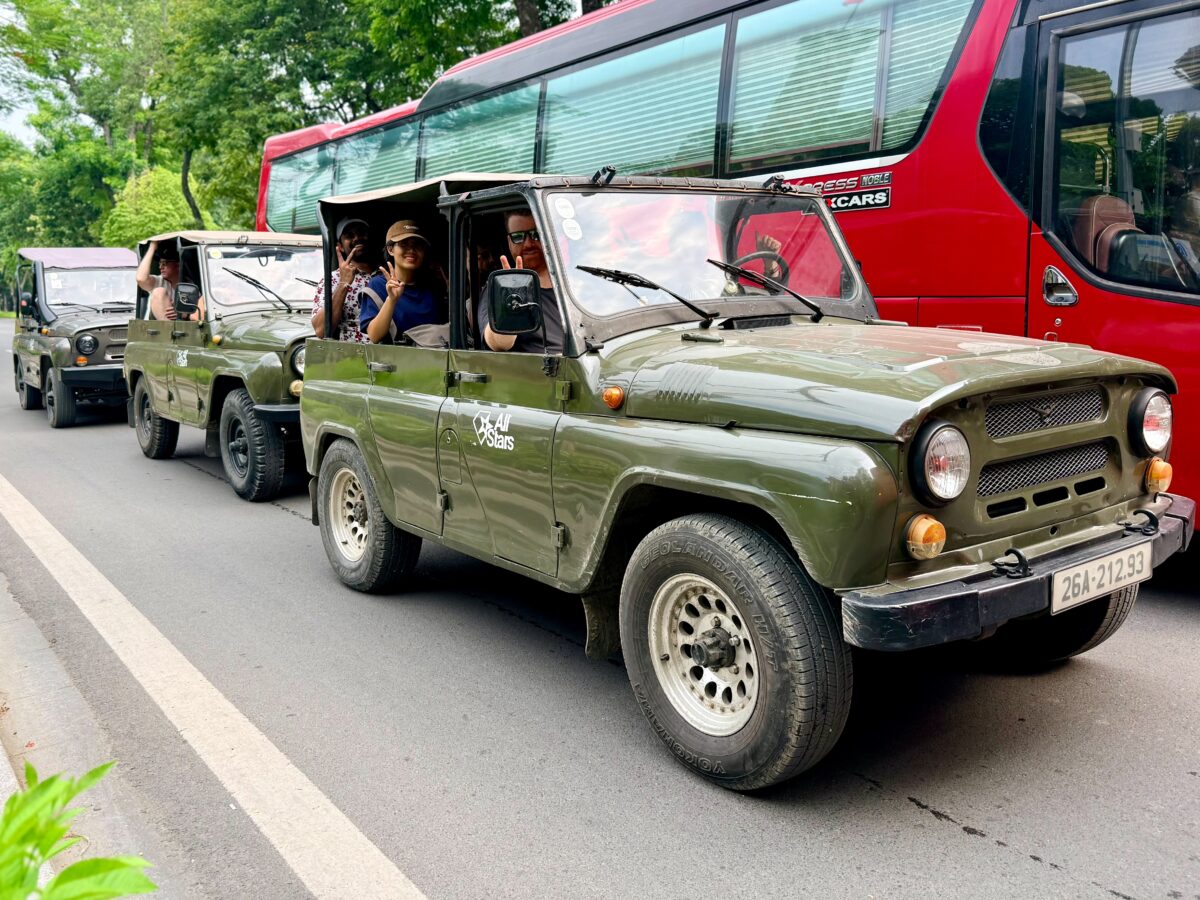
Hanoi Jeep Tour and Vietnamese Street Food: Complete Experience
Hanoi is one of those cities where sightseeing and eating naturally belong together. A historic street can lead directly to a tiny noodle shop, a market can turn into a maze of food stalls, and a quiet neighborhood can suddenly reveal the smell of charcoal-grilled pork or freshly brewed Vietnamese coffee.
That is what makes combining a Hanoi Jeep Tour with Vietnamese street food so appealing. You are not simply moving from one attraction to another. You are seeing the city, learning its stories, and tasting the food that belongs to the neighborhoods you pass through.
Hanoi’s street-food culture remains closely connected to small family businesses, sidewalk kitchens, markets, and specialized food streets. Recent 2026 food guides highlight dishes such as Phở, Bún Chả, Bánh Mì, Chả Cá, Bánh Cuốn, Bún Riêu, Phở Cuốn, and Egg Coffee among the city’s essential culinary experiences.
What Makes a Hanoi Jeep Food Experience Different?
A traditional food tour usually concentrates on eating.
A traditional sightseeing tour concentrates on landmarks.
A Hanoi Jeep Tour with Vietnamese street food combines the two.
You might begin among the narrow streets of the Old Quarter, move toward the French Quarter, pass historic buildings, continue to Long Bien Bridge, explore quieter neighborhoods, and then stop for a bowl of noodles or a Vietnamese coffee.
The city becomes the dining room.
The streets become part of the story.
And the food becomes a way of understanding the places you are visiting.
Why Street Food Is Essential to Experiencing Hanoi
Hanoi’s food culture is not built entirely around restaurants with large dining rooms.
Many important dishes are served from tiny storefronts, sidewalk kitchens, family-run eateries, and specialized food stalls. Recent food guides describe the Old Quarter as one of the city’s most concentrated areas for traditional street food, with different streets associated with different dishes and culinary traditions.
You may sit on a small plastic stool.
You may watch the cook prepare your meal directly in front of you.
You may see herbs being washed, noodles being portioned, meat being grilled, or broth being ladled into a bowl.
This informal setting is part of Hanoi’s culinary identity.
Seeing Hanoi Before You Eat
One advantage of combining sightseeing with food is that you do not spend four hours eating continuously.
The Jeep keeps moving.
Between food stops, you see neighborhoods, architecture, lakes, bridges, markets, and everyday life.
This creates a natural rhythm: ride, explore, taste, ride again, discover, eat again.
For visitors who want more than a restaurant-to-restaurant crawl, that balance can make the experience much more memorable.
Exploring the Old Quarter by Jeep
The Old Quarter is where many visitors first encounter Hanoi’s street-food culture.
Its narrow streets are filled with restaurants, cafés, shops, vendors, old houses, and businesses operating directly from the pavement.
Food guides frequently highlight streets around Hang Buom, Ma May, Hang Dieu, Bat Dan, Cha Ca, and Hang Hanh for different types of food.
Instead of choosing restaurants randomly, traveling with a guide can help you understand what you are looking at.
A particular street may be known for one specialty.
A tiny shop may have been serving the same dish for decades.
A food stall that looks ordinary may actually be one of the places locals return to repeatedly.
Phở: Hanoi’s Most Famous Bowl
No discussion of Hanoi street food can avoid Phở.
Phở Bò, or beef noodle soup, combines rice noodles with a fragrant broth, slices of beef, herbs, and fresh garnishes.
Phở Gà provides a lighter chicken-based alternative.
The important thing is not simply eating a bowl of Phở.
It is seeing how the dish fits into Hanoi’s daily rhythm.
Early in the morning, small noodle shops can already be busy with residents having breakfast before work.
For a first-time visitor, that is a much more interesting experience than simply ordering Phở from a hotel restaurant.
Bún Chả: A Hanoi Specialty
Bún Chả is another essential dish.
Grilled pork is served with rice vermicelli, herbs, and a sweet-savory dipping sauce.
The smoky aroma of the grilled meat is usually the first thing you notice.
Then comes the combination of fresh herbs, noodles, pork, and dipping sauce.
Recent Hanoi food guides consistently identify Bún Chả as one of the city’s signature dishes.
For travelers discovering Vietnamese cuisine for the first time, Bún Chả is often one of the easiest dishes to appreciate.
Bánh Mì: A Vietnamese Street-Food Classic
Bánh Mì demonstrates how Vietnamese cuisine has absorbed outside influences and transformed them into something distinctly Vietnamese.
The crisp baguette is filled with ingredients such as pâté, meats, pickled vegetables, herbs, chili, and sauces.
It is quick, inexpensive, portable, and deeply connected with street life.
The Old Quarter has numerous Bánh Mì shops, and recent food guides continue to feature it among Hanoi’s must-try dishes.
A Jeep food experience makes it easy to stop for a Bánh Mì without turning the entire itinerary into a walking food crawl.
Bánh Cuốn: Delicate and Light
Bánh Cuốn offers a completely different texture.
Thin steamed rice sheets are filled with ingredients such as minced pork and mushrooms and served with dipping sauce, herbs, and toppings.
Watching Bánh Cuốn being made can be as interesting as eating it.
The rice batter is spread into a thin layer, steamed, lifted, filled, and rolled.
It is a good example of how Vietnamese street food can look simple while requiring considerable skill.
Chả Cá: Hanoi’s Turmeric Fish Tradition
Chả Cá is particularly associated with Hanoi.
Fish is seasoned with turmeric and cooked with aromatic herbs, especially dill, then combined with noodles and other accompaniments.
The dish is traditionally associated with Chả Cá Street in the Old Quarter, where the food has become part of the neighborhood’s identity.
For visitors interested in food history, Chả Cá is more than another meal.
It represents the way a dish can become connected so strongly to a particular street that the street itself carries the name of the food.
Phở Cuốn: A Fresh Alternative
Phở Cuốn is made using broad sheets of rice noodle wrapped around beef, herbs, and other fresh ingredients.
It is lighter than a bowl of Phở and particularly enjoyable in warm weather.
The combination of soft rice noodles, fresh herbs, beef, and dipping sauce makes it a useful contrast to grilled and soup-based dishes.
Bún Riêu and Hanoi’s Noodle Culture
Bún Riêu is another dish worth discovering.
Its tomato-based broth has a distinctive sweet and tangy character, often combined with crab, tofu, herbs, and other toppings.
It demonstrates the variety within Hanoi’s noodle culture.
If your only experience of Vietnamese food is Phở, trying Bún Riêu immediately expands your understanding of what Vietnamese noodle soups can be.
Bún Thang: A More Refined Hanoi Specialty
Bún Thang is one of Hanoi’s more elaborate traditional noodle dishes.
It combines rice noodles with a carefully prepared broth and toppings such as chicken, egg, herbs, and other ingredients.
Compared with the stronger flavors of grilled dishes or Bún Chả, Bún Thang can feel more delicate.
It is particularly interesting for travelers who want to explore traditional Hanoi cuisine beyond the most internationally famous dishes.
Egg Coffee: The Hanoi Dessert in a Cup
After savory dishes, it is time for coffee.
Egg Coffee is one of Hanoi’s most recognizable drinks.
Strong Vietnamese coffee is topped with a rich, creamy egg mixture that creates a texture somewhere between coffee and dessert.
The drink is strongly associated with Hanoi’s café culture and is now one of the city’s most recognizable culinary experiences.
Current Jeep itineraries include Vietnamese Egg Coffee or Mango and Caramel Pudding as a sweet ending.
Vietnamese Coffee Culture
Coffee is not simply a beverage in Hanoi.
It is part of social life.
People meet over coffee in the morning.
Friends sit together in the afternoon.
Couples find small cafés hidden inside narrow buildings.
Travelers sit beside the street and watch Hanoi move around them.
A food-focused Jeep Tour gives you the opportunity to experience this culture without having to search for the right café yourself.
Bia Hơi and Hanoi’s Evening Atmosphere
For travelers interested in nightlife, Bia Hơi provides another side of Hanoi’s food culture.
The light draft beer is traditionally enjoyed in casual street-side settings.
People sit together, order simple grilled foods or snacks, and talk for hours.
The experience is less about sophisticated drinking and more about social atmosphere.
A Jeep Food Tour can combine this kind of stop with sightseeing after dark, creating a very different experience from a daytime food walk.
Street Food and Hanoi’s Neighborhoods
The most interesting part of combining food with a Jeep Tour is understanding that dishes are connected to places.
Food does not exist separately from the city.
Bánh Mì belongs to the street.
Bún Chả belongs to small eateries and grills.
Chả Cá is associated with its historic street.
Egg Coffee belongs to Hanoi’s café culture.
Markets provide the ingredients behind countless everyday meals.
This connection between food and geography makes the Jeep experience more meaningful.
From the French Quarter to Street Food
The French Quarter provides an architectural contrast to the Old Quarter.
Broad streets and colonial-era buildings create a different environment.
But food quickly brings you back to everyday Hanoi.
A sophisticated-looking neighborhood can still contain a tiny restaurant serving a traditional Vietnamese dish.
That contrast is part of what makes Hanoi so interesting.
Long Bien Bridge and Food Along the Red River
Long Bien Bridge provides a completely different setting.
The bridge crosses the Red River and offers views toward riverside communities and agricultural areas.
Current Hanoi Jeep itineraries include Long Bien Bridge and the surrounding Red River landscape as part of the city experience.
Stopping for food after traveling through this landscape creates an interesting contrast between Hanoi’s urban center and its riverside environment.
Banana Island: A Surprising Green Landscape
Banana Island is another place where the connection between food, land, and city becomes obvious.
The area contains gardens, farmland, banana trees, and quieter paths.
It feels far removed from the traffic of the Old Quarter.
Yet it remains within Hanoi’s broader urban landscape.
For travelers interested in where food begins, this is an especially interesting part of the journey.
Local Markets and Fresh Ingredients
Markets are where Hanoi’s food culture becomes visible before the cooking begins.
Vegetables, herbs, meat, seafood, fruit, noodles, spices, and other ingredients are arranged for daily trade.
A guide can explain what particular ingredients are used for and how they appear in Vietnamese dishes.
Recent food guides identify markets around the Old Quarter and Dong Xuan area as important parts of Hanoi’s food culture.
For visitors, this can make the dishes they eat later much easier to understand.
Why Eat From Small Food Businesses?
Small food businesses often specialize in one or two dishes.
That specialization can be an advantage.
A vendor who prepares the same dish every day develops a very specific technique.
The broth, grilling time, seasoning, noodle texture, and preparation process become refined over years.
That is one reason Hanoi’s street food can be so distinctive even when the ingredients appear simple.
What Does a Typical Hanoi Jeep Food Experience Look Like?
A typical experience begins with pickup from your hotel or an agreed meeting point.
After a short introduction, you get into the open-air Jeep and begin exploring.
The route may move through the Old Quarter before continuing toward historical landmarks and less-visited neighborhoods.
Along the way, the guide introduces selected Vietnamese dishes and explains their ingredients and cultural background.
The experience then continues through different parts of Hanoi before finishing with coffee, dessert, or another local specialty.
Current Jeep food experiences available in Hanoi typically run around three and a half to four hours, although itineraries and schedules differ between operators.
Why the Open-Air Jeep Changes the Experience
The vehicle is not simply transportation.
Because it is open-air, you remain connected to the street.
You hear traffic.
You smell food cooking.
You see people sitting at sidewalk tables.
You can watch markets and shops as you pass.
You experience the temperature and atmosphere of Hanoi rather than looking at it through a sealed vehicle window.
That makes the journey between food stops part of the adventure.
Daytime or Evening Food Experience?
Both can work, but they feel very different.
During the daytime, you can see architecture, markets, residential streets, lakes, bridges, and neighborhoods more clearly.
The atmosphere is generally more focused on daily life.
In the evening, Hanoi becomes more energetic.
Food stalls become busier, cafés fill up, lights appear across the Old Quarter, and streets around the central districts take on a stronger nightlife atmosphere.
For travelers who want street food plus Hanoi after dark, an evening Jeep experience is particularly attractive.
Why Evening Is Excellent for Food Lovers
Many iconic Hanoi food experiences feel especially atmospheric after sunset.
The Old Quarter becomes brighter and busier.
Grills fill the streets with smoke and aroma.
People gather around tiny tables.
Cafés stay open.
Bia Hơi corners become social meeting points.
A Jeep can connect these places without requiring you to navigate unfamiliar streets on foot.
A Food Tour Without the Walking Marathon
Traditional walking food tours can be excellent, but some travelers find several hours of walking and eating tiring.
The Jeep format offers another solution.
You walk only when needed.
Between stops, you sit comfortably in the Jeep and continue sightseeing.
This makes the experience particularly useful for families, older travelers, couples, and visitors who want to cover more of Hanoi.
Is It Suitable for First-Time Visitors?
Very much so.
First-time visitors often face two challenges: they do not know where to eat and they do not yet understand Hanoi’s geography.
The Jeep Food Tour solves both problems simultaneously.
You discover dishes while moving through different neighborhoods.
By the end, you have a better idea of where the Old Quarter is, where the French Quarter begins, how the Red River relates to central Hanoi, and which foods you want to try again.
What About Vegetarians?
Vietnamese cuisine offers many vegetarian possibilities.
Vegetarian travelers should communicate their dietary requirements when booking rather than waiting until the food stop.
This allows the guide to select suitable dishes and avoid ingredients that the traveler does not eat.
The same principle applies to allergies and other dietary restrictions.
What About Travelers Who Cannot Eat Spicy Food?
Vietnamese food is not automatically spicy.
Many classic Hanoi dishes rely more on herbs, broth, grilled flavors, fish sauce, garlic, pepper, and fresh ingredients than intense chili heat.
However, chili and chili sauce are often available separately.
Tell your guide that you prefer mild food, and the experience can be adjusted accordingly.
Food Safety on a Hanoi Street Food Tour
Street food should be approached with common sense.
Choose busy places where food is being prepared regularly.
Prefer dishes that are cooked thoroughly and served hot.
Pay attention to cleanliness around the preparation area.
Recent Hanoi food guides similarly recommend choosing busy stalls with high turnover and being cautious with foods that have been sitting out for long periods.
A knowledgeable guide can also help travelers understand which foods are appropriate for their preferences and comfort level.
What Should You Wear?
Comfortable clothing is best.
Because the Jeep is open-air, you should consider the weather.
During the daytime, sunglasses and sunscreen are useful.
During cooler months, a light jacket can make the ride more comfortable.
If rain is expected, rain protection is important. Current Hanoi Jeep Tours state that rain ponchos are provided and that their open-air vehicles have retractable protection.
Is the Jeep Tour Private or Group?
Both formats can be available depending on the selected experience.
A group tour is suitable for travelers who enjoy meeting others and want a more economical option.
A private Jeep experience is better if you want greater control over timing, food preferences, photography stops, and the overall pace.
For couples, families, or small groups celebrating a special occasion, private travel can make the food experience more personal.
Why Choose a Women-Led Jeep Food Tour?
A women-led experience adds a personal dimension to the journey.
Female guides who know Hanoi well can explain not only famous landmarks and dishes but also the everyday stories behind them.
They can introduce family-run eateries, neighborhood food traditions, markets, cafés, and the small details that visitors might otherwise miss.
The tours are not women-only.
They are designed for couples, families, solo travelers, and mixed groups who want to experience Hanoi with professional female guides.
Current Hanoi Jeep Tours specifically position their experiences around women-led guiding, culture, food, hidden neighborhoods, and the city’s everyday life.
More Than a Food Tour
The biggest mistake would be to think of this experience as simply a restaurant itinerary with a Jeep in between.
The Jeep is what connects the food to Hanoi.
You might eat Bún Chả after exploring an old neighborhood.
You might drink Egg Coffee after visiting historic streets.
You might enjoy a snack after crossing Long Bien Bridge.
You might pass through a market and then learn how the ingredients you just saw become part of Vietnamese cooking.
The experience becomes a story rather than a list of dishes.
A Complete Hanoi Experience in Four Hours
A well-designed Jeep Food Tour can introduce several sides of Hanoi within one half-day or evening.
You experience the streets.
You see historic landmarks.
You travel through residential areas.
You explore hidden corners.
You taste Vietnamese specialties.
You learn how food connects with history.
You finish with coffee or dessert.
That is why this format works particularly well for travelers with limited time.
Who Should Choose a Hanoi Jeep Food Tour?
This experience is ideal for travelers who want to combine sightseeing and eating rather than dedicating an entire day to either one.
It is particularly suitable for first-time visitors, couples, families, food lovers, photographers, small private groups, and travelers who want to experience Hanoi beyond the major tourist attractions.
If your priority is tasting as many dishes as possible, a dedicated walking food tour may be more appropriate.
But if you want food + history + neighborhoods + scenery + local life, the Jeep format offers a much broader experience.
How Far in Advance Should You Book?
For a normal weekday, booking several days ahead is usually sufficient.
If you want a private Jeep, are traveling with a larger group, or specifically want an evening departure, booking one to two weeks ahead is a safer approach.
This is particularly useful during major holidays and busy travel periods.
Always wait for direct confirmation from the operator rather than assuming that sending a request automatically guarantees the reservation.
Final Thoughts
A Hanoi Jeep Tour and Vietnamese Street Food experience brings together two of the best ways to understand Hanoi.
The Jeep shows you the city from the street.
The food lets you taste its culture.
You move through the Old Quarter, French Quarter, historic neighborhoods, riverside areas, markets, and other parts of Hanoi while stopping to experience dishes that have become part of the city’s identity.
You may start with Phở, discover Bún Chả, try Bánh Mì or Bánh Cuốn, explore a market, cross Long Bien Bridge, visit a quieter neighborhood, and finish with Vietnamese Egg Coffee.
But the real experience is not the number of dishes you taste.
It is the connection between the food, the streets, the people, and the history of Hanoi.
That is what makes a Jeep Food Tour more than dinner on wheels.
It is a complete introduction to Hanoi—one street, one story, and one delicious stop at a time.
Hanoi Jeep Tours – Led by Women
Address: 91 Tho Nhuom Street, Hoan Kiem District, Hanoi, Vietnam
WhatsApp: +84 982 416 518 / +84 981 090 989
Email: toursjeephanoi@gmail.com
Website: Hanoi Jeep Tours – Official Website
Current Hanoi Jeep experiences include city routes with Old Quarter pickup, English-speaking guides, experienced drivers, food and drinks according to the selected itinerary, and rain protection.