
Quy Nhon Guide 2026: Complete Travel Guide to Beaches, Ky Co, Eo Gio, Cham Towers, Seafood and Coastal Experiences
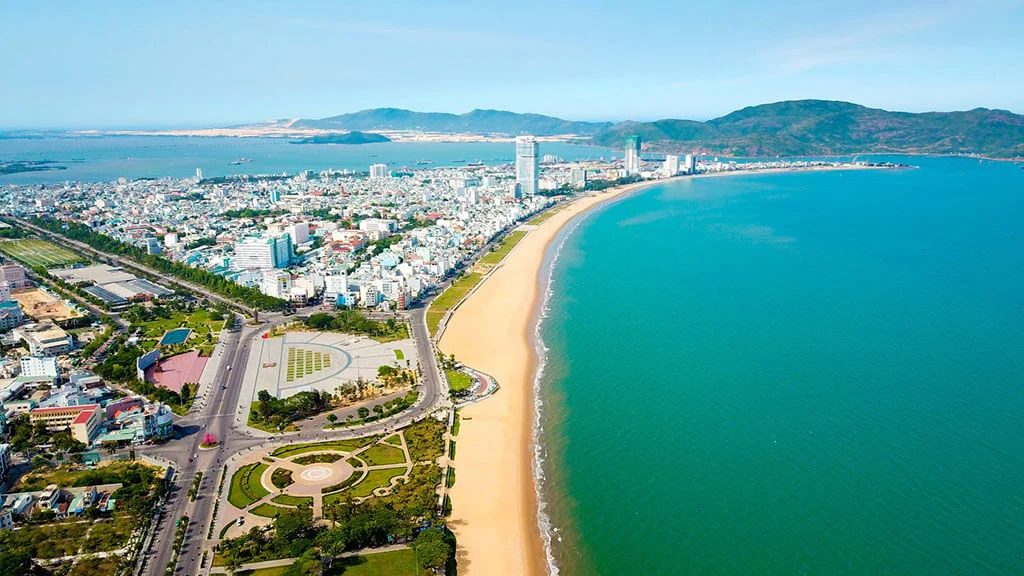
Quy Nhon is one of the most attractive coastal destinations in Central Vietnam for travelers who want beautiful beaches without the scale and intensity of Vietnam’s larger resort cities. The city sits along a broad crescent-shaped bay in Binh Dinh Province, with a long urban beach, a relaxed waterfront, fishing communities, seafood restaurants and a growing selection of hotels and resorts. Beyond the city, the coastline becomes much more dramatic, with Ky Co, Eo Gio, Bai Xep, Phuong Mai Peninsula and offshore islands offering clear water, rocky cliffs and quieter beaches. Quy Nhon is also an important destination for understanding Champa history, with Thap Doi, Banh It Towers and other Cham sites spread throughout the surrounding region. Vietnam’s official tourism website describes Quy Nhon as a relatively quiet section of the Central Vietnamese coast where fishing remains an important part of everyday life.

Where Is Quy Nhon?
Quy Nhon is on Vietnam’s south-central coast, in Binh Dinh Province. It sits roughly between Da Nang to the north and Nha Trang to the south, making it an excellent stop for travelers exploring Central Vietnam by road or domestic flight.
The city itself is built around a long bay, while many of the most spectacular landscapes are outside the urban center. Ky Co and Eo Gio are located around the Nhon Ly and Phuong Mai Peninsula area, while Bai Xep lies south of the city. Banh It Cham Towers are inland and north of the city.
This geography means Quy Nhon is best experienced as a combination of city + beach + countryside + historical sites, rather than simply as a beach resort.
Why Visit Quy Nhon?
Quy Nhon’s appeal comes from the balance between a functioning Vietnamese coastal city and spectacular natural scenery nearby.
You can spend the morning swimming at the city beach, have a seafood lunch, visit a centuries-old Cham tower in the afternoon and finish the day watching fishing boats return to shore.
Unlike some larger beach destinations, the city does not revolve entirely around international tourism. Fishing boats, seafood markets, residential neighborhoods and ordinary Vietnamese restaurants remain part of the landscape.
The region is particularly suitable for travelers who want beaches, seafood, photography, light adventure, cultural heritage and a slower pace.
Quy Nhon Beach
The main Quy Nhon Beach stretches along the city waterfront and is one of the easiest beaches in Vietnam to access.
You do not need a day trip or boat ride to reach the sand. Hotels, cafés, restaurants and the city’s main roads are close by.
Early morning is an excellent time to walk along the beach because residents often exercise, swim and gather along the waterfront.
Late afternoon and sunset are also attractive, especially when the light falls across the bay.
For travelers staying in the city, this beach is ideal for a relaxed morning rather than a full-day excursion.
Quy Nhon Waterfront
The waterfront is one of the best places to understand the character of the city.
The long coastal road connects beaches, parks, cafés, restaurants and hotels, while the bay provides views of fishing boats and the surrounding hills.
Walking along the waterfront after dinner is one of the simplest things to do in Quy Nhon.
The city is particularly pleasant when you are not trying to fill every hour with sightseeing.
Ky Co Beach
Ky Co Beach is the most famous natural attraction around Quy Nhon.
Located on the Phuong Mai Peninsula near Nhon Ly, Ky Co is known for its bright turquoise water, pale sand and rocky mountains surrounding the cove. The beach is approximately 25 kilometres from central Quy Nhon.
The landscape is dramatically different from the main city beach.
Instead of a long urban shoreline, Ky Co is a relatively enclosed coastal cove with steep rocky terrain and clear water.
For many travelers, this is the beach that makes Quy Nhon worth adding to a Vietnam itinerary.
How to Visit Ky Co
A common way to visit Ky Co is to travel to the Nhon Ly area and continue by boat or speedboat.
Boat trips often combine Ky Co and Eo Gio, making it possible to experience both the beach and the dramatic coastal cliffs on the same day.
Road access is also possible, but conditions and access arrangements can change, so travelers should check locally before setting out.
For the best experience, leave Quy Nhon early in the morning.
Ky Co can become much busier later in the day, particularly during weekends and Vietnamese holidays.
Vietnam Airlines currently recommends the March–September period for Ky Co when weather and sea conditions are generally more favorable, while October–February can bring more wind, rain and rougher seas.

Eo Gio
Eo Gio, meaning roughly “Windy Strait” or “Windy Pass,” is another signature attraction near Nhon Ly.
Here, the coastline becomes rocky and dramatic, with cliffs and headlands surrounding clear blue water.
The name is appropriate because strong coastal winds can move through the landscape.
Eo Gio is primarily a viewpoint and coastal walking experience rather than a traditional swimming beach.
The combination of rocky cliffs, open sea and turquoise water makes it one of the best photography locations around Quy Nhon.
The most convenient way to visit is to combine it with Ky Co.
Ky Co and Eo Gio in One Day
A typical private day can work like this:
07:00–08:00: Depart Quy Nhon.
08:00–09:00: Arrive in Nhon Ly and prepare for the boat.
09:00–11:30: Boat trip and Ky Co Beach.
12:00: Seafood lunch.
13:30: Eo Gio.
15:00: Visit a nearby pagoda or fishing village.
16:00–17:00: Return to Quy Nhon.
This leaves the evening free for seafood and a relaxed walk along the waterfront.
Nhon Ly Fishing Village
Nhon Ly is more than simply the departure point for Ky Co.
The village provides an opportunity to see a traditional fishing community surrounded by narrow streets, houses, boats and coastal hills.
Early morning is the most interesting time because fishermen are active and seafood activity begins.
A respectful walking tour can add cultural depth to what might otherwise become a standard beach excursion.
Bai Xep
Bai Xep is a small coastal community south of central Quy Nhon.
The beach is backed by a traditional fishing village, creating an interesting contrast between beach tourism and everyday coastal life.
Bai Xep is especially appealing to travelers who prefer a smaller-scale environment.
It is also a good place for travelers who want to spend a few hours by the sea without taking a boat trip.

Ghenh Rang Tien Sa
Ghenh Rang Tien Sa is a rocky coastal area close to the city.
The landscape combines hills, rocks and sea views and is closely associated with the poet Han Mac Tu, one of Vietnam’s best-known modern poets.
The site provides a combination of natural scenery and cultural history.
It is an easy addition to a half-day city itinerary because it does not require a full-day excursion.
Queen’s Beach
Queen’s Beach, also called Hoang Hau Beach, is located in the Ghenh Rang area.
The beach is famous for rounded stones that resemble eggs, giving it the alternative name “Egg Stone Beach.”
It is more of a scenic and photographic stop than a place where most travelers spend an entire day swimming.
Visit in the morning or late afternoon when the sunlight is softer.
Han Mac Tu’s Resting Place
The area around Ghenh Rang is associated with Han Mac Tu, whose poetry remains important in Vietnamese literature.
For Vietnamese visitors, this adds cultural significance that may not be immediately obvious to international travelers.
If you are interested in Vietnamese literature, history or culture, it is worth having a guide explain the story rather than simply stopping for photographs.
Thap Doi — Twin Cham Towers
Thap Doi, or Twin Towers, is one of the most accessible Cham heritage sites in Quy Nhon because it is located within the city.
The brick towers reflect the architectural traditions of the Champa civilization that flourished across Central and South-Central Vietnam.
They are particularly interesting because their design differs from the better-known Cham architecture of My Son.
A visit takes relatively little time, making Thap Doi easy to include between other city attractions.
Banh It Cham Towers
Banh It Towers are among the most impressive Cham monuments in the wider Quy Nhon region.
The complex consists of brick towers built on a hill, creating a dramatic relationship between architecture and landscape.
The site dates from approximately the 11th–12th centuries and was associated with the Champa kingdom.
The climb to the towers is worthwhile because the elevated location provides wide views over the surrounding countryside.
Banh It is particularly attractive for travelers who want to experience Cham heritage without the visitor numbers associated with Vietnam’s most famous archaeological sites.

Champa Heritage in Binh Dinh
Quy Nhon is an excellent destination for travelers interested in Champa history.
Binh Dinh was an important center of the Champa civilization, particularly during the period when Vijaya served as a major political center.
The remains of Cham towers throughout the province demonstrate the region’s historical importance.
This is one of the major differences between Quy Nhon and many other Vietnamese beach destinations.
You can combine a morning on the beach with a visit to thousand-year-old architectural heritage in the afternoon.
Binh Dinh Museum
The Binh Dinh Museum provides additional context for the province’s history and culture.
If you visit several Cham tower sites, a museum visit can help explain the symbols, architecture and historical periods behind what you are seeing.
It is particularly useful for travelers who want more than simply photographing the towers.
Phuong Mai Peninsula
The Phuong Mai Peninsula is the geographical setting for some of Quy Nhon’s most dramatic coastal attractions.
The peninsula combines mountains, sand dunes, rocky coastline and beaches.
Ky Co and Eo Gio are the best-known stops, but the landscape itself is worth experiencing during the drive.
A private vehicle allows you to stop at viewpoints and fishing communities along the route.
Coastal Road Trips
One of the best ways to explore Quy Nhon is by road.
Instead of moving directly between attractions, allow time for scenic stops.
The roads around the coast pass through fishing villages, hills, beaches and open countryside.
For experienced motorbike riders, this can be an excellent destination for a self-guided coastal ride.
For families and premium travelers, a private car with a driver is more comfortable and safer.
Cu Lao Xanh
Cu Lao Xanh, or Green Island, is an offshore island associated with Quy Nhon.
The island is known for its clear water, fishing communities, coastal scenery and relatively peaceful atmosphere.
An island excursion requires more planning than a city beach visit because boat schedules and sea conditions matter.
If the weather is stable and you have enough time, an overnight or full-day island experience can add another dimension to a Quy Nhon trip.
Seafood in Quy Nhon
Seafood should be one of the main reasons to visit.
Quy Nhon is a working fishing city, so seafood is deeply integrated into the food culture rather than existing only as resort cuisine.
Look for fresh squid, prawns, crab, lobster, oysters, clams, grilled fish and seafood hotpot.
The best meals are often simple: fresh seafood, charcoal grilling, herbs, dipping sauces and cold drinks.
Banh Xeo Tom Nhay
Banh Xeo Tom Nhay, or shrimp crepe, is one of the specialties associated with Binh Dinh.
The small crispy crepe is typically cooked with shrimp and served with herbs and dipping sauce.
Unlike the large southern-style banh xeo found in Ho Chi Minh City, Binh Dinh’s version is generally smaller and crispier.
Try it as part of a food-focused evening rather than ordering only one large meal.
Bun Cha Ca Quy Nhon
Bun Cha Ca is another essential dish.
The noodle soup combines rice noodles, fish cake, broth and herbs.
Because Quy Nhon is a coastal city, fish cakes are particularly important to the local version.
It is inexpensive and works well for breakfast or lunch.
Nem Cho Huyen
Nem Cho Huyen is a famous specialty from Binh Dinh.
It is a fermented pork product associated with the region and is often eaten as a snack or appetizer.
Travelers who enjoy Vietnamese fermented foods should try it, while those unfamiliar with the flavor may prefer to start with a small portion.
Seafood Markets
Morning is the best time to experience seafood markets.
Fresh catches arrive early, and the atmosphere is much more active than later in the day.
For photographers, ask before photographing people at close range.
For food lovers, a market visit can provide insight into what seafood is actually available locally rather than simply reading a restaurant menu.
Quy Nhon Coffee Culture
Quy Nhon has a growing café scene.
The city’s relaxed pace makes cafés a natural part of daily life.
Look for places overlooking the sea, especially around the waterfront, but also explore smaller cafés away from the main tourist streets.
A slow coffee after a morning beach trip is exactly the kind of experience that suits Quy Nhon’s character.
Best Time to Visit Quy Nhon
For beach activities and boat trips, the strongest travel period is generally February to August, with March to May particularly attractive for comfortable weather and relatively favorable sea conditions. Current travel information also identifies September through December as a wetter period, when rough seas can affect coastal excursions.
February–March: Warm, relatively dry and good for sightseeing.
April–May: Excellent balance of sunshine and beach conditions.
June–August: Hotter but excellent for swimming and coastal activities.
September–November: Wetter and more weather-dependent.
December–January: Cooler and potentially rainy, with less reliable boat conditions.
If Ky Co is a major priority, plan around sea conditions rather than simply looking at air temperature.
Quy Nhon in the Dry Season
The dry season is ideal for combining beach time with outdoor sightseeing.
You can comfortably plan:
Ky Co
Eo Gio
Bai Xep
Cu Lao Xanh
Banh It Towers
Coastal motorbike routes
The main issue during the hottest months is midday heat.
Start early and schedule indoor or relaxed activities during the hottest part of the afternoon.
Quy Nhon During the Rainy Season
Rain does not make the entire trip impossible.
The city, seafood restaurants, Cham towers and cafés remain accessible.
However, boat trips should be treated as weather-dependent.
If you are traveling during the wetter months, keep your itinerary flexible and avoid booking a schedule where every day depends on sea conditions.
How to Get to Quy Nhon
Quy Nhon is accessible by domestic flight, train, bus and private car.
The nearest major airport is Phu Cat Airport, which serves Quy Nhon and the surrounding province.
Domestic flights can make Quy Nhon a convenient addition to longer Vietnam itineraries, especially when travelers do not want to spend an entire day traveling by road.
The railway provides another option, with Dieu Tri Station serving the city area.
Long-distance buses connect Quy Nhon with major Vietnamese cities.
For premium travel, flying into Phu Cat and arranging a private airport transfer is usually the most convenient combination.
From Hanoi to Quy Nhon
The most efficient option from Hanoi is generally a domestic flight to Phu Cat, followed by a private transfer into Quy Nhon.
Traveling entirely by road or rail takes considerably longer and makes more sense if the journey itself is part of a longer overland itinerary.
For a premium Vietnam trip, there is little reason to spend a full day on transportation when a flight can connect the destinations efficiently.
From Ho Chi Minh City to Quy Nhon
Quy Nhon is particularly convenient from Ho Chi Minh City because domestic flights make the journey relatively quick.
Travelers can spend several days in Ho Chi Minh City, fly to Quy Nhon for a coastal break and then continue north toward Da Nang or Hanoi.
This is an excellent way to combine urban sightseeing with a quieter beach destination.
From Da Nang to Quy Nhon
The road distance makes Quy Nhon a logical southbound stop after Hoi An or Da Nang.
A private car can turn the journey into a scenic Central Coast road trip.
Alternatively, travelers can use the railway or bus depending on their schedule.
If you are building a premium itinerary, a private vehicle allows you to stop at viewpoints and interesting coastal locations instead of treating the journey simply as transportation.
From Hoi An to Quy Nhon
Hoi An and Quy Nhon make an excellent combination.
Hoi An: historic architecture, lanterns, food, countryside and beaches.
Quy Nhon: quieter coastline, seafood, Cham heritage and dramatic beaches.
A private transfer south can make the route part of the experience.
Getting Around Quy Nhon
Walking: excellent around the city waterfront.
Motorbike: ideal for experienced riders exploring beaches and countryside.
Taxi: useful for individual trips.
Private car: best for families, couples and multi-stop excursions.
Boat: essential for some Ky Co and island experiences.
The main city is relatively easy to navigate, but the best attractions are spread over a large area.
Where to Stay in Quy Nhon
Quy Nhon City Center
Best for first-time visitors who want restaurants, cafés, the main beach and easy evening access.
Waterfront
Ideal for travelers who prioritize beach views and easy access to the promenade.
Bai Xep
Better for travelers looking for a smaller fishing-village atmosphere and a quieter beach environment.
Nhon Ly
Convenient for travelers focusing on Ky Co and Eo Gio.
Resort Areas
Suitable for couples and travelers who want a more private beach holiday with pools, restaurants and spa services.
How Many Days Do You Need in Quy Nhon?
2 days: enough for the city, seafood and one major coastal excursion.
3 days: ideal for first-time visitors.
4 days: better if you want Ky Co, Eo Gio, Cham towers, Bai Xep and a slower beach day.
5 days: excellent for a relaxed premium coastal holiday or for adding Cu Lao Xanh.
The biggest mistake is trying to visit everything in one day.
Quy Nhon is better when you leave time for swimming, seafood and simply enjoying the coast.
Quy Nhon 2-Day Itinerary
Day 1: Arrive in Quy Nhon and check into your hotel. Spend the afternoon walking along Quy Nhon Beach and the waterfront, then visit Ghenh Rang Tien Sa and Queen’s Beach. Return to the city for a seafood dinner and evening walk along the coast.
Day 2: Leave early for Nhon Ly and take a boat excursion to Ky Co Beach. Swim, relax and explore the coastline before lunch. Continue to Eo Gio in the afternoon and return to Quy Nhon before sunset. Finish with Bun Cha Ca, Banh Xeo Tom Nhay or a seafood dinner.
Quy Nhon 3-Day Itinerary
Day 1: Explore the city at a relaxed pace with Quy Nhon Beach, the waterfront, Thap Doi and Ghenh Rang Tien Sa. Spend the evening trying seafood and walking along the promenade.
Day 2: Start early for Ky Co and Eo Gio. Spend the morning swimming and exploring Ky Co before enjoying seafood near Nhon Ly. Continue to Eo Gio in the afternoon and return to the city around sunset.
Day 3: Visit Banh It Cham Towers in the morning, followed by a countryside drive and lunch. Continue toward Bai Xep in the afternoon for a quieter coastal experience. Return to Quy Nhon for a final seafood dinner.
Quy Nhon 4-Day Itinerary
Day 1: Arrive and explore Quy Nhon city, including the beach, waterfront, Thap Doi and Ghenh Rang.
Day 2: Take a full-day Ky Co and Eo Gio excursion, including boat travel, swimming, photography and seafood.
Day 3: Visit Banh It Towers and explore the surrounding countryside before continuing south to Bai Xep. Spend the afternoon relaxing by the sea.
Day 4: Keep the final day flexible. Choose Cu Lao Xanh if sea conditions are excellent, or enjoy a slower beach day, seafood lunch, café visits and shopping in Quy Nhon.
Quy Nhon 5-Day Itinerary
Five days allows you to experience the region without turning the trip into a checklist.
Day 1: Quy Nhon city and beach.
Day 2: Ky Co and Eo Gio.
Day 3: Cham heritage and Banh It Towers.
Day 4: Bai Xep and coastal countryside.
Day 5: Cu Lao Xanh or a relaxed resort and seafood day.
This schedule works particularly well for couples and premium travelers because there is enough flexibility to adjust outdoor activities according to sea conditions.
Quy Nhon for Couples
Quy Nhon is an excellent destination for couples who want a quieter alternative to larger resort cities.
A romantic trip can combine:
Beachfront accommodation
Private Ky Co boat trip
Sunset at Eo Gio
Seafood dinner
Private coastal drive
Bai Xep
Couples’ spa treatment
Private island excursion
The destination works especially well for couples who prefer scenery and relaxation over nightlife.
Quy Nhon for Families
Families can enjoy Quy Nhon without needing a packed schedule.
Children will usually enjoy Ky Co, swimming, boat trips, seafood, beaches and short sightseeing stops.
For younger children, avoid combining too many remote attractions in one day.
A better schedule is one major excursion followed by a relaxed afternoon.
Quy Nhon for Adventure Travelers
The region provides opportunities for:
Snorkeling
Swimming
Boat trips
Coastal hiking
Motorbike exploration
Island excursions
Photography
Light trekking
Ky Co and Eo Gio are the obvious starting points, but experienced riders can explore the wider coastal roads around Binh Dinh.
Quy Nhon for History Lovers
Quy Nhon should be considered by travelers who are interested in Champa history.
The combination of Thap Doi, Banh It Towers and other Cham monuments makes Binh Dinh one of the most interesting areas in Vietnam for exploring the later history of Champa.
A guide is particularly valuable because the architectural remains can be difficult to interpret without historical context.
Quy Nhon for Food Lovers
Food should be a central part of the trip.
A good food itinerary includes:
Bun Cha Ca
Banh Xeo Tom Nhay
Nem Cho Huyen
Fresh grilled squid
Grilled fish
Prawns
Shellfish
Seafood hotpot
Vietnamese coffee
The best restaurants do not necessarily have the most sophisticated interiors.
Look for places busy with Vietnamese diners, especially during the evening seafood rush.
Quy Nhon for Photographers
Quy Nhon offers a strong combination of coastal and cultural photography.
Sunrise: Quy Nhon Beach.
Morning: fishing villages.
Midday: Ky Co’s turquoise water.
Afternoon: Banh It Towers.
Golden hour: Eo Gio.
Evening: fishing boats and waterfront lights.
The contrast between red-brick Cham towers and blue coastal scenery creates particularly strong photographs.

Da Nang is larger, more developed and has a broader range of international restaurants, nightlife and urban facilities.
Quy Nhon is quieter and more relaxed, with a stronger feeling of a working coastal city.
Choose Da Nang if you want a major city with beaches and extensive infrastructure.
Choose Quy Nhon if you want beaches, seafood, Cham heritage and a slower atmosphere.
Quy Nhon vs Nha Trang
Nha Trang has a much more developed tourism industry, extensive resort infrastructure and a larger nightlife scene.
Quy Nhon is better for travelers who prefer a less intense destination with a stronger connection to fishing communities and regional food culture.
The two cities can also be combined in a longer Central Vietnam itinerary.
Quy Nhon vs Hoi An
Hoi An is primarily a heritage destination.
Quy Nhon is primarily a coastal and food destination with important Cham heritage.
Hoi An is better for architecture, lanterns and historical streets.
Quy Nhon is better for beaches, seafood, coastal landscapes and a quieter city experience.
What to Pack for Quy Nhon
For a beach-focused trip, pack:
Swimwear
Light clothing
Sunscreen
Hat
Sunglasses
Comfortable sandals
Walking shoes
Light rain jacket
Waterproof phone pouch
Small daypack
If you are visiting Cham towers, bring comfortable shoes and clothing suitable for walking in the sun.
Quy Nhon Travel Safety
Quy Nhon is generally straightforward for travelers, but coastal excursions require common-sense precautions.
Always check sea conditions before boat trips.
Wear a life jacket during boat transfers when provided.
Use sunscreen because reflected sunlight from the sea can be intense.
Be careful on wet rocks around beaches and coastal cliffs.
If riding a motorbike, avoid speeding on unfamiliar coastal roads.
During the rainy season, heavy rain can change road and sea conditions quickly.
Responsible Travel in Quy Nhon
The region’s appeal depends heavily on its coastline, fishing communities and natural landscapes.
Avoid leaving plastic waste on beaches.
Do not remove coral, shells or marine life.
Do not disturb fishing equipment or boats.
Ask permission before photographing residents closely.
When visiting Cham monuments, respect religious and archaeological sites.
Choose smaller responsible operators where possible and avoid activities that damage marine environments.
Quy Nhon Travel Tips
Visit Ky Co early. Morning conditions are usually more comfortable and crowds are smaller.
Combine Ky Co and Eo Gio. They are close enough to make a natural day trip.
Stay at least three nights. This gives you time for both beach and culture.
Try Banh Xeo Tom Nhay. It is one of Binh Dinh’s signature foods.
Eat seafood at night. The evening atmosphere is excellent.
Visit Banh It Towers. It adds historical depth to the beach holiday.
Explore Bai Xep. It offers a different coastal atmosphere.
Check the sea before booking island trips. Boat schedules can depend on weather.
Do not spend the entire trip at the hotel. The surrounding coastline is the main attraction.
Consider a private car. The best sights are spread across the region.
Is Quy Nhon Worth Visiting?
Yes. Quy Nhon is particularly worthwhile for travelers who want to experience a different side of Vietnam’s Central Coast.
Its strongest combination is beautiful beaches + seafood + Cham heritage + fishing villages + dramatic coastline.
The city itself is relaxed enough for a few days, while the surrounding region provides enough variety to justify a longer stay.
If you only have two days, prioritize Ky Co, Eo Gio and the city beach.
With three days, add Banh It Towers and Bai Xep.
With four or five days, slow down and include an island trip, countryside drive or additional beach time.
Quy Nhon is not a destination that needs to be rushed. Its appeal lies in having a seafood lunch after a morning at the beach, driving through coastal villages, watching fishing boats offshore and discovering that some of Vietnam’s most impressive historical monuments are only a short drive from the sea.
Explore Quy Nhon With Vietnam Women Travel
Vietnam Women Travel – Premium Private Tours Led by Women can create private journeys through Quy Nhon that combine beaches, seafood, Cham heritage and the surrounding coastline according to your preferred pace.
A private Quy Nhon experience can include Quy Nhon Beach, Ky Co Beach, Eo Gio, Nhon Ly Fishing Village, Ghenh Rang Tien Sa, Queen’s Beach, Thap Doi, Banh It Cham Towers, Bai Xep, coastal villages, seafood markets and private boat excursions.
For couples, the focus can be on private beach experiences, boutique resorts, sunset cruises and seafood dinners. Families can enjoy Ky Co, easy coastal sightseeing and cultural experiences without an exhausting schedule. History lovers can focus on the Cham heritage of Binh Dinh, while photographers can build a route around sunrise beaches, fishing villages, coastal cliffs and ancient towers.
Quy Nhon also fits naturally into a longer private Central Vietnam itinerary:
Hanoi → Hue → Da Nang → Hoi An → Quy Nhon → Nha Trang → Ho Chi Minh City
or:
Hanoi → Hoi An → Quy Nhon → Da Lat → Ho Chi Minh City
For a premium journey, private transportation, carefully selected hotels, domestic flights and private guides can be combined to create a comfortable route without spending unnecessary time on long transfers.
Vietnam Women Travel – Premium Private Tours Led by Women
Website: https://vietnamwomentravel.com/
Hotline / WhatsApp: +84 988 402 008 | +84 982 416 518 | +84 981 090 989
Email: info@vietnamwomentravel.com
Quy Nhon Guide | Quy Nhon Travel Guide | Quy Nhon Vietnam | Quy Nhon Beach | Ky Co Beach | Eo Gio | Bai Xep | Nhon Ly | Banh It Cham Towers | Thap Doi | Ghenh Rang Tien Sa | Cu Lao Xanh | Quy Nhon Seafood | Banh Xeo Tom Nhay | Bun Cha Ca Quy Nhon | Quy Nhon Itinerary | Quy Nhon 2026 | Vietnam Travel Guide 2026