
Da Lat Guide 2026: Complete Travel Guide to Vietnam’s Cool Highland City
Da Lat is one of the most distinctive destinations in Vietnam, a mountain city where cool weather, pine forests, flower gardens, lakes, waterfalls, coffee farms and old French-influenced architecture come together in a landscape that feels very different from the tropical beaches and busy lowland cities elsewhere in the country. Located in Vietnam’s Central Highlands at roughly 1,500 metres above sea level, Da Lat has long been associated with its mild climate and relaxed atmosphere. The city attracts couples, families, photographers, food lovers, coffee enthusiasts and outdoor travelers, but its greatest appeal is simply the combination of scenery and climate. You can walk around a lake in the morning, explore a waterfall in the afternoon and sit outside a café wearing a jacket after sunset.

Where Is Da Lat?
Da Lat is located in Lam Dong Province in Vietnam’s Central Highlands, surrounded by rolling hills, pine forests, agricultural valleys and mountain landscapes. Its elevated position gives it a much cooler climate than Vietnam’s major lowland cities.
The city is approximately 300 kilometres from Ho Chi Minh City by road, while Nha Trang and Mui Ne are also within practical driving distance. Da Lat’s airport is around 30 kilometres south of the city and provides connections with major destinations in Vietnam. Travelers can also arrive by sleeper bus or private vehicle from Ho Chi Minh City and neighboring destinations.
The geography is important when planning a Da Lat trip. The central city is compact and relatively easy to explore, while many of the most interesting attractions are spread across the surrounding hills and countryside. A private car, motorbike or organized private tour therefore becomes useful if you want to see waterfalls, farms, viewpoints and lakes outside the center.
Why Visit Da Lat?
Da Lat offers something that is difficult to find elsewhere in Vietnam: cool mountain weather combined with a surprisingly wide variety of landscapes and activities.
The city has lakes in the center, pine forests on the surrounding hills, flower farms, strawberry farms, coffee plantations, waterfalls and mountain trails. It also has a strong architectural identity influenced by its history as a French-era hill station, with villas, churches, schools, hotels and public buildings scattered throughout the city.
Da Lat is also a destination where you do not need to spend every day visiting formal attractions. Sitting beside Xuan Huong Lake, drinking Vietnamese coffee, walking through the market, visiting a bakery or driving through the pine forests can be just as memorable as visiting a major tourist site.
Best Time to Visit Da Lat
Da Lat is famous for its mild climate throughout the year, but the seasons still matter.
November to March is generally cooler and drier, with clearer skies and crisp mornings. January can be particularly chilly, especially after sunset, so travelers should bring warm layers.
April to October is generally wetter, with more rainfall and cloud cover. The rain does not necessarily prevent travel, but outdoor activities should be planned with flexibility.
Vietnam Tourism currently describes April–October as the wetter, warmer and cloudier period, while November–May is generally cooler, drier and clearer.
For travelers who want the classic cool-weather Da Lat experience, November through March is a strong choice. For travelers who do not mind occasional rain and want greener landscapes, the wetter months can also be rewarding.
Da Lat Weather: Four Seasons in One Day
Da Lat’s weather is one of the reasons people fall in love with the city.
A typical day can begin with cool, misty air, become pleasantly warm around midday, turn cloudy or rainy during the afternoon and become chilly again after sunset.
This means you should not pack only summer clothes even if you are traveling to Vietnam.
Bring a light jacket, long trousers, comfortable walking shoes, sunscreen and a compact umbrella or rain jacket.
The temperature difference between daytime and evening can be particularly noticeable when you are staying outside the city center or visiting higher mountain areas.
Xuan Huong Lake
Xuan Huong Lake is the geographical and emotional center of Da Lat.
The lake sits in the heart of the city and is surrounded by gardens, cafés, historic buildings and roads that make it easy to explore on foot or by bicycle. The official Da Lat tourism information describes it as the city’s central landmark and notes that visitors can walk around the lake or use bicycles and pedal boats.
Early morning is one of the best times to visit.
Mist sometimes hangs above the water, local residents exercise around the lake and the surrounding streets are relatively quiet.
Late afternoon is another good period when the sunlight becomes softer and the surrounding hills begin to take on warmer colors.
You do not need to rush around the lake. Take your time, stop for coffee and enjoy the atmosphere.
Da Lat Flower Gardens
Flowers are one of the defining elements of Da Lat.
The city’s highland climate and agricultural conditions have made flower cultivation an important part of the local economy and identity.
You will see flowers throughout the city, from gardens and markets to farms and roadside greenhouses.
The Da Lat Flower Park beside Xuan Huong Lake is one of the easiest places to experience this side of the city.
For travelers interested in agriculture, however, visiting a commercial flower farm outside the center can be even more interesting because you can see how flowers are cultivated rather than simply viewing them in a landscaped garden.
Da Lat Flower Market
The flower market is particularly interesting in the early morning when fresh flowers and agricultural products are being brought into the city.
Da Lat supplies flowers to many parts of Vietnam, and the variety can be impressive.
If you are photographing the market, arrive early and be respectful of vendors who are working rather than posing for tourists.
Da Lat Market
Da Lat Market is the center of the city’s shopping and food scene.
During the day, you can find fresh produce, dried fruit, flowers, coffee, tea, jams, snacks and souvenirs.
In the evening, the surrounding streets become much livelier with food stalls and casual restaurants.
This is one of the best places to experience Da Lat’s everyday atmosphere rather than only its tourist attractions.
Da Lat Night Market
Da Lat’s night market becomes especially busy after sunset.
Expect street food, warm drinks, clothing, souvenirs, dried fruit, strawberries, grilled snacks and other products associated with the highlands.
The cooler evening temperatures make the market particularly enjoyable compared with night markets in hotter Vietnamese cities.
Try some of the grilled foods and hot drinks while walking around, but do not feel that you need to buy everything you see.
Da Lat Food
Da Lat’s food culture reflects its cool climate and fertile agricultural environment.
You will find an abundance of vegetables, strawberries, flowers, artichokes, coffee and other highland products.
The city’s most popular street foods are often simple, inexpensive and designed for cool evenings.
Important dishes and drinks to try include Banh Trang Nuong, grilled sweet potatoes, grilled corn, hot soy milk, artichoke tea, Vietnamese coffee, strawberries, avocado dishes and local vegetables.
Banh Trang Nuong
Banh Trang Nuong is often called Vietnamese pizza by international travelers.
A thin rice paper base is grilled and topped with ingredients such as egg, dried shrimp, scallions, sausage and sauces.
It is crispy, savory and particularly enjoyable in Da Lat’s cool evening weather.
You will find it around the night market and other busy food areas.
Da Lat Artichoke Tea
Artichokes are strongly associated with Da Lat and the surrounding highlands.
Artichoke tea is commonly sold in markets and shops and makes a good souvenir because it is lightweight and easy to transport.
If you enjoy herbal drinks, try it both hot and chilled.
Da Lat Coffee
Coffee is one of Da Lat’s most important agricultural products.
Coffee plantations cover the surrounding highlands, and the city has developed a strong café culture around locally produced beans.
Coffee is not simply something to drink between sightseeing stops. In Da Lat, cafés are part of the experience.
Look for cafés overlooking pine forests, valleys or hills, especially outside the central area.
Vietnam Tourism highlights coffee as an integral part of Da Lat’s heritage and notes that coffee is grown on the slopes around the city.

Coffee Farms Around Da Lat
A coffee farm visit provides a better understanding of why Da Lat and the surrounding Central Highlands are so important to Vietnam’s coffee industry.
A good experience can include walking through the plantation, learning about different coffee varieties, seeing processing methods and tasting freshly roasted beans.
For travelers who normally associate Vietnam only with traditional robusta coffee, a farm visit provides a broader perspective on Vietnamese coffee production.
Crazy House
The Crazy House, officially known as Hang Nga Guesthouse, is one of Da Lat’s most unusual architectural attractions.
Its organic shapes, unusual stairways, caves, animal-inspired rooms and surreal structures make it look more like a fantasy landscape than a conventional building.
It is particularly popular with photographers and families.
Do not expect traditional Vietnamese architecture here. The attraction is deliberately unconventional.
Da Lat Railway Station
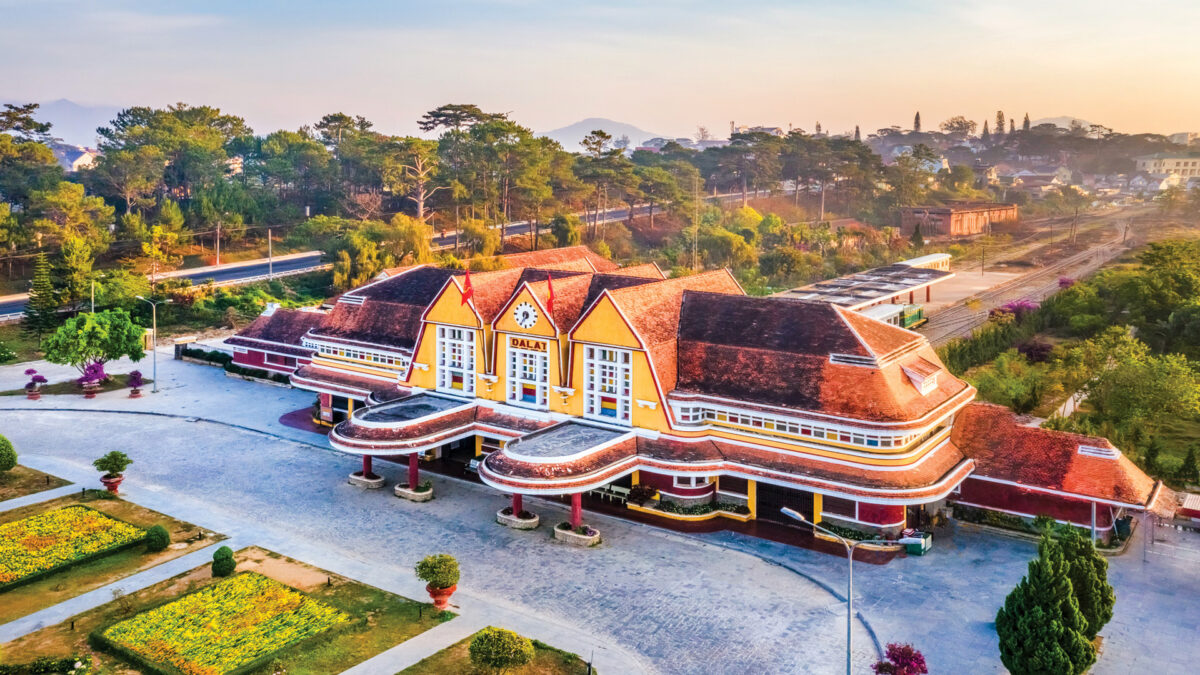
Da Lat Railway Station is one of the city’s most recognizable architectural landmarks.
The station reflects French-era design and is notable for its distinctive facade and historical character.
Although Da Lat is no longer connected to Vietnam’s main north-south railway network, visitors can take a short heritage railway journey toward Trai Mat, where they can visit Linh Phuoc Pagoda. Vietnam Tourism identifies this as one of the city’s characteristic experiences.
The station is worth visiting even if you do not take the train because its architecture and setting provide excellent photographic opportunities.
Linh Phuoc Pagoda
Linh Phuoc Pagoda in Trai Mat is famous for its elaborate mosaic decoration.
The temple complex contains intricate ceramic and glass artwork, colorful religious sculptures and detailed architectural features.
It is one of the most visually distinctive pagodas around Da Lat.
Combining the railway station with Linh Phuoc Pagoda makes a convenient half-day excursion.
Domaine de Marie Church
Domaine de Marie Church is one of Da Lat’s most recognizable churches.
The pinkish-red architecture, steep roof and surrounding gardens create a distinctive appearance.
The church reflects Da Lat’s historical connection with French Catholic institutions and is particularly attractive in the soft light of morning or late afternoon.
Visitors should remember that it remains a religious site and dress appropriately.
Da Lat Cathedral
Da Lat Cathedral, commonly called the Chicken Church because of the rooster on its tower, is another important example of the city’s French-influenced architecture.
It is located relatively close to the center and can easily be included in a city sightseeing route.
French Colonial Architecture
One of Da Lat’s most interesting characteristics is the number of old villas and institutional buildings scattered around the city.
French planners developed Da Lat as a hill station, and the architectural legacy remains visible in churches, villas, hotels, schools and public buildings.
Vietnam Tourism describes the city as having a strong collection of European-inspired architecture, including art-deco hotels and colonial-era villas.
For travelers interested in architecture, do not limit your sightseeing to famous buildings. Driving or walking through residential areas can reveal beautifully situated old villas surrounded by pine trees.
Bao Dai’s Summer Palace
The Bao Dai Summer Palace provides insight into Vietnam’s royal history during the final years of the Nguyen Dynasty.
The residence is associated with Emperor Bao Dai and contains rooms, furnishings and objects connected with the royal family.
It is a relatively compact attraction and can be combined with other central Da Lat landmarks.
Da Lat Palace
The historic Dalat Palace hotel reflects the city’s old resort identity.
Even if you are not staying there, the architecture and location demonstrate how Da Lat was designed as a highland retreat.
For travelers interested in history and classic luxury, afternoon tea or a drink in a historic hotel can be a pleasant alternative to another busy sightseeing attraction.
Da Lat’s Pine Forests
Pine forests are central to Da Lat’s visual identity.
They surround the city and line many roads leading into the countryside.
Driving through the pine forests is one of the simplest ways to appreciate Da Lat’s landscape.
Early morning is especially beautiful when mist hangs between the trees.
Tuyen Lam Lake
Tuyen Lam Lake is one of the most peaceful natural areas around Da Lat.
The lake is surrounded by pine-covered hills and is suitable for walking, boating, kayaking and simply enjoying the scenery.
Vietnam Tourism describes Tuyen Lam as a roughly 350-hectare lake surrounded by pine forests and notes that visitors can explore it by boat or kayak.
This is an excellent destination for travelers who want to escape the city for several hours without committing to a difficult hike.

Truc Lam Zen Monastery
Truc Lam Zen Monastery sits above Tuyen Lam Lake and is one of the most peaceful places to visit around Da Lat.
The monastery complex is surrounded by gardens and pine forests, while the elevated position provides views toward the lake.
Visitors should treat the monastery as a functioning religious site rather than simply a viewpoint.
The combination of gardens, architecture and mountain scenery makes this one of the strongest cultural stops outside the city center.
Da Lat Cable Car
The cable car provides a scenic connection between the area around Robin Hill and Truc Lam.
Rather than spending the entire journey by road, taking the cable car can add another perspective on the pine forests and surrounding mountains.
It is particularly enjoyable on clear mornings.
Cloudy weather can reduce visibility, so check conditions before going.
Datanla Waterfall
Datanla Waterfall is one of the most accessible waterfalls near Da Lat.
It is located approximately 5 kilometres south of the city center on Prenn Pass. The waterfall drops around 20 metres and the surrounding area includes forest, cliffs and adventure activities.
One of the best-known attractions here is the 1,000-metre alpine coaster, which provides a fast and entertaining way to travel through the forest toward the waterfall.
Datanla is particularly suitable for travelers who want nature without a long trek.
Datanla Canyoning
For adventure travelers, Datanla also offers canyoning activities involving combinations of abseiling, climbing, swimming and sliding.
This should be done with professional guides and appropriate safety equipment.
It is not an activity to improvise independently.
For families with young children, simply visiting the waterfall and surrounding area is a better option.
Pongour Waterfall
Pongour Waterfall is farther from central Da Lat but is one of the most impressive waterfalls in the wider region.
Its broad rock formations create a large cascade during periods of stronger water flow.
Because it requires more driving, Pongour is better suited to a full-day countryside itinerary rather than a quick city excursion.
Elephant Falls
Elephant Falls is another well-known waterfall in the Da Lat region.
The environment is more rugged than Datanla, making it more appealing to travelers interested in natural landscapes and less formal sightseeing.
Conditions can become slippery after rain, so appropriate footwear is important.
Langbiang Mountain
Langbiang Mountain is one of Da Lat’s most famous natural landmarks.
The mountain rises above the surrounding plateau and offers panoramic views over the highlands.
For travelers who want a simple viewpoint experience, vehicles can take visitors toward the accessible areas.
More adventurous travelers can hike through forested terrain.
Vietnam Tourism highlights Langbiang as one of the area’s key outdoor destinations, alongside hiking, mountain biking and other activities.
Langbiang Hiking
A hike on Langbiang is more rewarding than simply arriving at a viewpoint if you enjoy outdoor activities.
The route involves elevation gain and can become muddy during rainy periods.
Wear proper hiking shoes and carry sufficient water.
If you are not familiar with the terrain, use a professional guide rather than following an unfamiliar trail alone.
Valley of Love
The Valley of Love is one of Da Lat’s long-established attractions.
It combines landscaped gardens, viewpoints and recreational activities in a green valley setting.
It is particularly popular with couples and families.
Travelers looking for completely natural landscapes may prefer Tuyen Lam, Langbiang or the countryside, while visitors interested in classic Da Lat tourist attractions may enjoy the Valley of Love.
Mong Mo Hill
Mong Mo Hill offers gardens, landscaped areas and views associated with Da Lat’s romantic tourism image.
It can be combined with the Valley of Love in a half-day sightseeing route.
Da Lat Countryside
The countryside is where Da Lat becomes especially interesting.
Beyond the city center, the landscape changes into greenhouses, vegetable farms, coffee plantations, flower farms, pine forests and mountain roads.
A private countryside tour allows you to stop whenever something catches your attention.
This is much better than simply driving from one tourist attraction to another.
Strawberry Farms
Strawberries are one of the agricultural products most strongly associated with Da Lat.
Visitors can find farms where strawberries are cultivated under controlled conditions and, depending on the farm, participate in harvesting or purchase fresh produce.
For families, a farm visit can be a fun addition to a sightseeing itinerary.
Vegetable Farms
Da Lat’s highland agriculture supplies vegetables to many parts of Vietnam.
The surrounding farms produce lettuce, cabbage, herbs, flowers and other crops.
A guided farm experience is especially useful because you can understand how altitude, climate and modern greenhouse techniques shape Da Lat’s agricultural economy.
Da Lat for Nature Lovers
Nature should be one of the central themes of a Da Lat trip.
Instead of spending three days moving between cafés and commercial attractions, reserve at least one full day for lakes, waterfalls, forests and countryside.
A good nature-focused day could be:
Tuyen Lam Lake → Truc Lam Zen Monastery → Datanla Waterfall → countryside coffee farm → sunset viewpoint
Da Lat for Couples
Da Lat has long been associated with romance.
The cool weather, misty mornings, pine forests, lakes and cafés make it particularly attractive for couples.
A romantic day could start with coffee overlooking the hills, continue with a walk around Xuan Huong Lake, include a private countryside excursion in the afternoon and end with dinner followed by a walk around the night market.
For couples, the best Da Lat itinerary is often not the busiest one.
Leave time to sit together, take photographs and enjoy the weather.
Da Lat for Families
Families can easily spend several days in Da Lat.
Children usually enjoy waterfalls, cable cars, farms, train rides, unusual architecture and the night market.
A good family itinerary should alternate between outdoor activities and slower periods.
For example:
Morning – waterfall
Lunch – city
Afternoon – farm or lake
Evening – market
This prevents children from becoming exhausted by continuous sightseeing.
Da Lat for Adventure Travelers
Da Lat is one of Vietnam’s strongest destinations for outdoor activities.
Options include:
Canyoning
Hiking
Mountain biking
Kayaking
Waterfalls
Forest trekking
Motorbike routes
The surrounding terrain provides significantly more opportunities than the city center alone.
Professional guides are recommended for technical activities such as canyoning.
Da Lat for Photographers
Da Lat provides excellent photography throughout the day.
Early morning: mist, lakes and pine forests.
Mid-morning: flowers, architecture and countryside.
Afternoon: farms, waterfalls and mountain landscapes.
Golden hour: Xuan Huong Lake and surrounding hills.
Night: Da Lat Market, street food and illuminated buildings.
The strongest photographs often come from leaving the center.
A road through pine forests, a greenhouse valley or a coffee plantation can produce more distinctive images than another photograph of the night market.

Da Lat for Coffee Lovers
Coffee should be a major part of a Da Lat itinerary.
Spend one morning visiting a plantation, then return to the city and try different cafés.
You can compare traditional Vietnamese coffee with modern specialty coffee and learn how highland-grown beans are processed.
For travelers who love coffee, Da Lat can easily justify an extra night.
Da Lat for Food Lovers
The cool climate encourages a different style of eating from coastal Vietnam.
Hot dishes, grilled foods, soups, baked goods and warm drinks are particularly enjoyable after sunset.
Try Banh Trang Nuong, grilled corn, grilled sweet potato, hot soy milk, chicken hotpot, artichoke tea and local vegetables.
For a more substantial meal, look for restaurants serving highland vegetables, grilled meats and hotpot.
Da Lat Chicken Hotpot
Chicken hotpot is a popular choice for cool evenings.
A steaming pot shared around the table is particularly satisfying when temperatures fall after sunset.
Order it as a group rather than individually.
Da Lat Avocado
Avocado is another product associated with the highlands.
You will see it used in drinks, desserts and sweet dishes.
The combination of avocado with condensed milk and ice is popular in Vietnam and worth trying if you enjoy sweet desserts.
Da Lat Night Food
Da Lat is particularly enjoyable after sunset because the temperature becomes cool.
Street vendors sell grilled corn, grilled sweet potatoes, rice-paper snacks, sausages and hot drinks.
The combination of warm food and chilly mountain air is one of the city’s simplest pleasures.
Da Lat at Night
Da Lat’s nightlife is not primarily about nightclubs.
It is about cafés, street food, markets, live music, illuminated streets and quiet walks.
The central market area becomes the natural gathering point after dark.
For travelers who prefer something more sophisticated, the city also has wine bars, boutique cafés and hotel lounges.
Da Lat’s Architecture
Architecture is one of the easiest aspects of Da Lat to overlook.
Do not simply visit the famous buildings.
Spend time driving through the older neighborhoods and looking for villas surrounded by pine trees.
The combination of sloping streets, gardens, old roofs and mountain vegetation gives Da Lat an architectural identity unlike Hanoi, Hue or Hoi An.
Da Lat Golf
Da Lat also has a long golf tradition.
The Dalat Palace Golf Club dates back to 1933 and is one of Vietnam’s historic golf courses. Its highland setting combines rolling terrain and pine forests.
Golf travelers can therefore combine a cultural holiday with a round or two in a cooler mountain environment.
How Many Days Do You Need in Da Lat?
2 days: enough for the city center and one nature excursion.
3 days: ideal for a first visit.
4 days: better if you want waterfalls, farms, lakes and countryside.
5 days: excellent for a slower premium holiday.
If you have only two days, do not try to visit every waterfall and mountain.
Choose one city route and one countryside route.
Da Lat 2-Day Itinerary
Day 1: Start around Xuan Huong Lake in the morning and continue to Da Lat Market, the Cathedral, the old railway station and several French-influenced buildings. Have lunch in the city and spend the afternoon visiting Crazy House and another architectural attraction. After sunset, explore Da Lat Market and try grilled street food, hot soy milk and Banh Trang Nuong.
Day 2: Leave the city after breakfast for Tuyen Lam Lake and Truc Lam Zen Monastery. Continue to Datanla Waterfall and enjoy the surrounding forest and optional adventure activities. Return toward the city through the pine-covered hills and finish the day at a scenic café or restaurant.
Da Lat 3-Day Itinerary
Day 1: Explore central Da Lat, beginning with Xuan Huong Lake, the flower gardens, Da Lat Market, the Cathedral and the old railway station. Visit a traditional café in the afternoon and explore the night market after dark.
Day 2: Spend the day in nature with Tuyen Lam Lake, Truc Lam Zen Monastery and Datanla Waterfall. Add a cable-car ride or adventure activity if conditions are suitable. Return to the city in the late afternoon and enjoy a relaxed dinner.
Day 3: Explore the countryside around Da Lat, including a coffee farm, flower or vegetable greenhouse and selected viewpoints. Depending on your interests, continue toward Langbiang for mountain scenery or visit a strawberry farm before returning to the city.
Da Lat 4-Day Itinerary
Day 1: Discover central Da Lat through Xuan Huong Lake, the flower gardens, market, cathedral, old railway station and historic architecture. Spend the evening eating street food and exploring the night market.
Day 2: Visit Tuyen Lam Lake, Truc Lam Zen Monastery, Datanla Waterfall and the surrounding pine forests. Return to the city for a relaxed evening.
Day 3: Take a countryside route through coffee plantations, flower farms, vegetable greenhouses and rural villages. Stop at scenic cafés and viewpoints instead of rushing between attractions.
Day 4: Choose Langbiang and a hiking experience, or spend a slower day visiting Linh Phuoc Pagoda, Trai Mat and additional city attractions. Finish with a final evening beside Xuan Huong Lake or at the night market.
Da Lat 5-Day Itinerary
Five days allows you to slow the itinerary down considerably.
Day 1: Central Da Lat, Xuan Huong Lake, flower gardens, architecture and market.
Day 2: Tuyen Lam Lake, Truc Lam Zen Monastery and Datanla Waterfall.
Day 3: Coffee plantations, flower farms, vegetable gardens and countryside villages.
Day 4: Langbiang Mountain, hiking or outdoor activities.
Day 5: Trai Mat, Linh Phuoc Pagoda, cafés, shopping and free time.
This schedule is particularly good for couples and premium travelers because there is enough free time to enjoy the hotel, cafés and mountain scenery instead of spending every hour in a vehicle.
How to Get to Da Lat
Da Lat is accessible by air and road.
By air: Lien Khuong Airport is around 30 kilometres south of the city and connects Da Lat with major Vietnamese cities.
From Ho Chi Minh City: Sleeper buses are common, while private cars provide more flexibility.
From Nha Trang: The road journey takes several hours and passes through mountainous landscapes.
From Mui Ne: Da Lat can be combined with Mui Ne in a Central-Southern Vietnam itinerary.
For premium travel, flying into Da Lat and using private vehicles for local sightseeing is generally the most comfortable solution.
Getting Around Da Lat
Private car: Best for families, couples and premium travelers visiting multiple attractions.
Motorbike: Excellent for experienced riders who want to explore mountain roads independently.
Taxi: Convenient for individual journeys.
Walking: Good for the central area around Xuan Huong Lake and the market.
Because many attractions are outside the center, travelers who want to see waterfalls, farms and lakes should not rely exclusively on walking.
Where to Stay in Da Lat
Da Lat City Center
Best for first-time visitors who want restaurants, cafés, markets and easy access to Xuan Huong Lake.
Around Xuan Huong Lake
Ideal for travelers who want scenic views and convenient access to central attractions.
Quiet Hillside Areas
Better for couples and travelers looking for boutique hotels, villas and panoramic views.
Tuyen Lam Lake
Best for resort-style stays, nature and privacy.
Countryside
Suitable for travelers who want agricultural landscapes, pine forests and a slower atmosphere.
Luxury Da Lat
Da Lat is particularly good for boutique luxury rather than huge beachfront-style resorts.
Look for properties with:
Mountain views
Pine forest surroundings
Fireplaces or warm interiors
Large gardens
Private villas
Spa facilities
High-quality restaurants
A luxury Da Lat itinerary should include plenty of free time because the destination’s appeal is its atmosphere.
Da Lat for a Romantic Escape
A premium couple’s itinerary could start with a private airport transfer, followed by a boutique hotel overlooking the pine forests.
Spend the first morning walking around Xuan Huong Lake, have lunch at a carefully selected restaurant and spend the afternoon visiting Tuyen Lam Lake.
The following day can focus on a private coffee farm, flower garden and countryside road.
At night, have dinner in the city and finish with hot drinks at a quiet café.
Da Lat and Nha Trang
Da Lat and Nha Trang make a strong combination because the climates and landscapes are completely different.
Da Lat: cool mountains, pine forests, lakes, waterfalls and agriculture.
Nha Trang: warm coastal weather, beaches, islands and seafood.
A traveler can spend several nights in Da Lat followed by several nights by the sea.
Da Lat and Mui Ne
Da Lat and Mui Ne are also easy to combine by road.
The contrast is again attractive:
Da Lat: cool highlands and pine forests.
Mui Ne: tropical coastline, sand dunes and warmer weather.
This combination works particularly well for travelers arriving from Ho Chi Minh City.
Da Lat and Ho Chi Minh City
A common route is:
Ho Chi Minh City → Da Lat → Ho Chi Minh City
However, travelers continuing north can also fly onward from Da Lat to Hanoi or other major Vietnamese cities.
For a premium itinerary, combining domestic flights with private local transportation reduces unnecessary long road journeys.
What to Pack for Da Lat
Bring more layers than you might expect.
Light jacket
Long trousers
Comfortable walking shoes
Rain jacket or umbrella
Sunscreen
Hat
Small backpack
Camera
Extra layer for evening
If you plan to hike Langbiang or explore waterfalls, bring proper shoes rather than sandals.
Da Lat Travel Safety
Da Lat is generally easy to explore, but the mountain environment requires some additional caution.
Roads outside the city can be steep and winding.
If riding a motorbike, only use routes appropriate to your experience.
Waterfalls become slippery after rain.
Canyoning should only be done with professional operators and safety equipment.
Weather can change quickly, particularly in the mountains.
At night, keep valuables secure around busy market areas.
Responsible Travel in Da Lat
Da Lat’s natural environment and agricultural landscapes are central to its tourism appeal.
Avoid leaving plastic waste in forests, lakes or waterfalls.
Do not damage flowers or crops when visiting farms.
Ask before photographing farmers or workers.
When visiting villages, treat residents with respect and avoid turning private homes into photo opportunities.
If visiting coffee or agricultural farms, choose experiences that provide genuine information about cultivation rather than simply selling packaged products.
Da Lat Travel Tips
Bring a jacket even in summer. Evening temperatures can feel surprisingly cool.
Start outdoor activities early. Morning weather is often calmer and cooler.
Leave room for rain. Afternoon showers can affect waterfall and mountain plans.
Stay at least three nights if you want to explore both the city and countryside.
Visit Tuyen Lam Lake. It provides one of the most peaceful landscapes around Da Lat.
Try a coffee farm. Da Lat’s coffee culture is more interesting when you understand where the beans come from.
Eat at the night market. Cool evenings make street food particularly enjoyable.
Explore beyond the center. The countryside is a major part of Da Lat’s appeal.
Do not overpack your itinerary. Da Lat is a destination for slowing down.
Use a private vehicle for multiple attractions. Distances between the countryside sites can add up quickly.
Is Da Lat Worth Visiting?
Da Lat is absolutely worth adding to a Vietnam itinerary if you want something different from the country’s major coastal and urban destinations.
Its strength is not one spectacular monument.
It is the combination of cool weather, pine forests, lakes, flowers, coffee, waterfalls, architecture, food and mountain scenery.
The city is particularly attractive after spending time in hot destinations such as Ho Chi Minh City or the coastal regions.
For first-time visitors, three nights is a strong minimum. Four or five nights allows you to experience the countryside, waterfalls, coffee farms and mountain scenery without constantly rushing back to the city.
The best Da Lat trip is not necessarily the one with the most attractions. It is the one that leaves enough time to wake up in the cool mountain air, drink good coffee, drive through pine forests, watch the mist settle over a lake and enjoy the city after sunset.
Explore Da Lat With Vietnam Women Travel
Vietnam Women Travel – Premium Private Tours Led by Women can design a private Da Lat journey around your preferred pace and interests, combining the city’s architecture, food, coffee culture and surrounding highlands.
A private Da Lat experience can include Xuan Huong Lake, Da Lat Market, the Flower Gardens, Da Lat Railway Station, Linh Phuoc Pagoda, Crazy House, Domaine de Marie Church, Bao Dai’s Summer Palace, Tuyen Lam Lake, Truc Lam Zen Monastery, Datanla Waterfall, Langbiang Mountain, coffee plantations, flower farms, vegetable gardens and countryside villages.
For couples, the itinerary can focus on boutique hotels, mountain views, coffee farms, lakes and romantic countryside experiences. Families can combine farms, waterfalls, the railway experience and easy sightseeing. Adventure travelers can add hiking, mountain biking or canyoning with appropriate professional support.
Da Lat also works particularly well as part of a longer private Vietnam journey:
Hanoi → Hue → Da Nang → Hoi An → Da Lat → Ho Chi Minh City
or:
Hanoi → Da Nang → Hoi An → Da Lat → Ho Chi Minh City → Mekong Delta
With private transportation and carefully planned domestic flights, the itinerary can combine Vietnam’s northern culture, Central Vietnam’s heritage, Da Lat’s highlands and the energy of southern Vietnam without wasting unnecessary days on long road journeys.
Vietnam Women Travel – Premium Private Tours Led by Women
Website: https://vietnamwomentravel.com/
Hotline / WhatsApp: +84 988 402 008 | +84 982 416 518 | +84 981 090 989
Email: info@vietnamwomentravel.com
Da Lat Guide | Da Lat Travel Guide | Da Lat Vietnam | Da Lat Weather | Da Lat Itinerary | Da Lat Attractions | Xuan Huong Lake | Tuyen Lam Lake | Langbiang Mountain | Datanla Waterfall | Linh Phuoc Pagoda | Da Lat Railway Station | Da Lat Coffee | Da Lat Flower Gardens | Da Lat Night Market | Da Lat Food Guide | Da Lat Countryside | Da Lat Waterfalls | Da Lat Travel 2026 | Vietnam Travel Guide 2026