
Phong Nha Guide 2026: Complete Travel Guide to Caves, Jungles, Trekking, Rivers and Adventure
Phong Nha is one of the most remarkable nature destinations in Central Vietnam, but it is important to understand that Phong Nha is not simply a cave attraction. It is a small rural gateway to the vast Phong Nha–Ke Bang National Park, a landscape of limestone mountains, underground rivers, forests, valleys and hundreds of caves. The area is best known for extraordinary cave systems including Phong Nha Cave, Paradise Cave, Dark Cave, Hang En and Son Doong, but visitors can also spend time cycling through the countryside, kayaking on rivers, hiking through jungle, swimming at natural springs and exploring villages around the national park. Current 2026 travel information continues to recommend spending at least two nights in the area if you want to experience more than one cave and have time for the countryside.

Where Is Phong Nha?
Phong Nha is located in Quang Binh Province in Central Vietnam, with Son Trach serving as the main village and tourism base for visitors exploring Phong Nha–Ke Bang National Park. The town sits along the Son River and is surrounded by karst mountains and agricultural countryside.
The nearest major transport hub is Dong Hoi, approximately 45–50 km from Phong Nha. From Dong Hoi, travelers can continue by private car, taxi or other road transportation to Son Trach. The drive normally takes around 45–90 minutes depending on traffic and the exact destination.
Phong Nha is positioned conveniently for travelers moving between Hue and Northern Central Vietnam, although it is not a destination that should be squeezed into a few hours. The caves and national park are spread across a large area, so staying overnight is essential if you want to experience the region properly.
Why Is Phong Nha Famous?
Phong Nha became internationally famous because of its extraordinary cave systems. The limestone landscape developed over hundreds of millions of years, and water gradually created enormous underground passages, chambers, rivers and geological formations.
The national park contains hundreds of known caves, but only a relatively small number are accessible to ordinary visitors. Some caves can be visited independently or through standard sightseeing arrangements, while the more demanding expedition caves require specialist guides, safety equipment and multi-day programs.
The scale varies enormously. You can spend two hours walking along a wooden pathway inside Paradise Cave, take a boat into Phong Nha Cave, zipline and swim through Dark Cave, or spend several days trekking through jungle to reach some of the more remote cave systems.
That range is what makes Phong Nha suitable for both casual travelers and serious adventure enthusiasts.
Phong Nha–Ke Bang National Park
Phong Nha–Ke Bang National Park is the natural heart of the region. The landscape combines ancient limestone karsts, dense forests, underground rivers, caves and valleys.
The park’s significance is not limited to the caves. The forests provide habitat for diverse plant and animal species, while the karst formations create one of the most unusual landscapes in Vietnam.
For ordinary visitors, you do not need to trek deep into the wilderness to appreciate the park. Even the roads leading toward the major caves pass through impressive mountain scenery.
If you have more time, however, moving beyond the main attractions reveals a much quieter side of Phong Nha, with forest trails, agricultural land, streams and rural roads.
Phong Nha vs Paradise Cave
This is one of the most common decisions first-time visitors face.
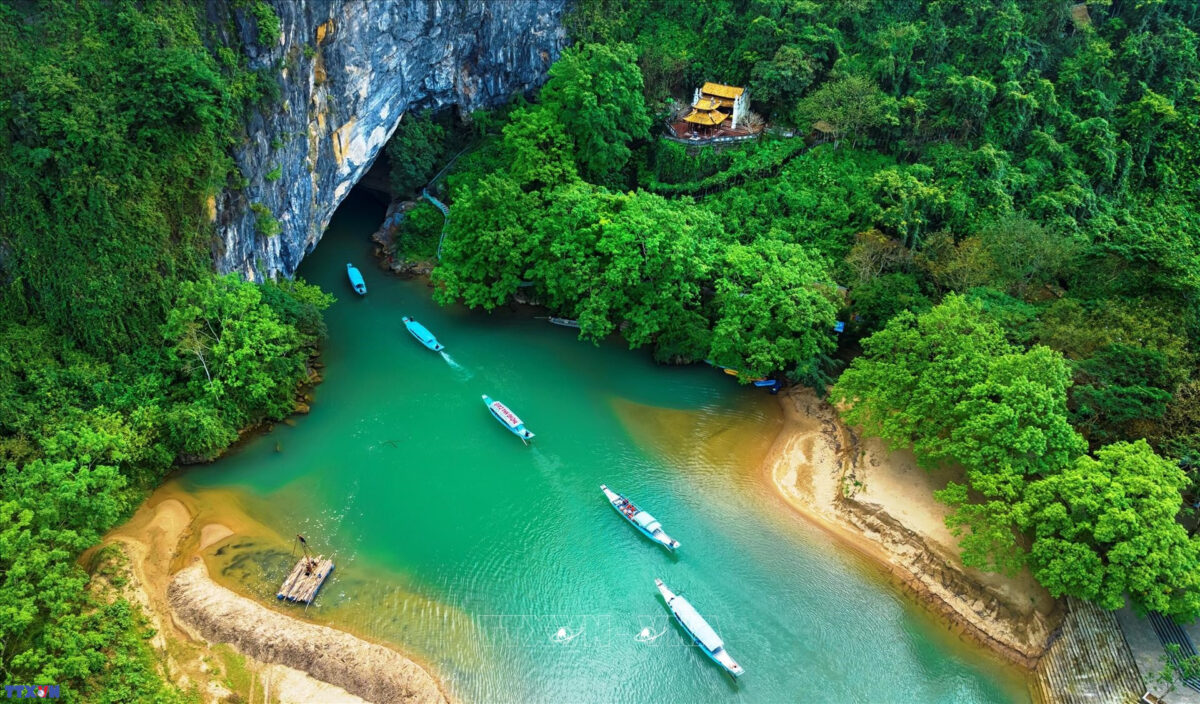
Phong Nha Cave is reached by boat along the Son River. The boat gradually moves into the cave entrance, where the river continues underground. The experience is atmospheric because the journey begins outdoors and transitions directly into the enormous underground environment.
Paradise Cave is a dry cave and is experienced mainly on foot. A long wooden walkway passes through enormous chambers filled with stalactites and stalagmites. It is easier to appreciate the scale and detail of the formations because you are walking through the cave rather than viewing it primarily from a boat. Current 2026 information lists Paradise Cave at approximately 31 km in total length, although only a section is open to ordinary visitors.
If you only have time for one, Paradise Cave is generally the stronger choice for travelers primarily interested in spectacular cave formations, while Phong Nha Cave is better if you specifically want the river-and-boat experience.
If you have a full day, visiting both is possible.

Phong Nha Cave
Phong Nha Cave is the cave that gave the destination its name and remains one of the easiest major cave experiences for first-time visitors.
The journey begins on the Son River, where a boat carries passengers toward the cave entrance. As the boat approaches the limestone cliffs, the river disappears beneath the rock and the atmosphere changes dramatically.
Inside, the boat moves through underground sections before passengers explore parts of the cave on foot, depending on the current route and operating conditions.
The experience is not physically demanding, which makes it suitable for couples, families and older travelers.
The boat ride is arguably as important as the cave itself. You see the landscape from the river before entering the darkness, creating a gradual transition from rural Vietnam to the underground world.
Current 2026 ticket information lists the cave entrance separately from the boat arrangement, so visitors should check the latest pricing and boat-sharing arrangements before traveling.
Paradise Cave
Paradise Cave, or Thien Duong Cave, is one of the most visually impressive caves available to regular visitors.
The cave extends for approximately 31 km, although the standard tourist route covers only the accessible section. A wooden walkway allows visitors to move through enormous chambers while viewing stalactites, stalagmites and other limestone formations.
Unlike Phong Nha Cave, there is no underground river carrying you through the main tourist route. The focus is entirely on the cave’s architecture and geological formations.
The standard visit usually takes around two to three hours, including transportation from the entrance area to the cave depending on the arrangement.
The cave involves walking and stairs, but it is accessible to a much broader range of travelers than the serious expedition caves.
For first-time visitors who have never seen a major Southeast Asian cave system, Paradise Cave is one of the strongest choices in Phong Nha.
Dark Cave
Dark Cave, or Hang Toi, offers a completely different experience.
This is not primarily about standing inside a beautifully illuminated chamber and looking at geological formations. Instead, the attraction combines ziplining, kayaking, swimming, caving and mud bathing.
The adventure begins with a zipline across the river, followed by entry into the dark cave. Visitors then move through the cave with headlamps and participate in activities depending on the current operating program.
Because the experience involves water, mud and physical movement, you should wear clothing and footwear suitable for getting wet and dirty.
Dark Cave is best for travelers who want an adventure rather than a conventional sightseeing experience. It can be particularly enjoyable for teenagers and active families, provided they are comfortable with darkness, water and confined spaces. Current 2026 guides place the standard experience in roughly the three-to-four-hour range.

Tien Son Cave
Tien Son Cave is located close to Phong Nha Cave but offers a different geological experience because it is a dry cave.
Visitors must climb steps to reach the entrance, after which a pathway leads through chambers filled with limestone formations.
Tien Son is generally less demanding than the expedition caves but requires more physical effort than simply taking the boat into Phong Nha Cave.
If you already plan to visit Phong Nha Cave and Paradise Cave, Tien Son is optional rather than essential. It is more suitable for travelers who have a strong interest in caves and want to see another geological environment.
Hang En Cave
Hang En, or En Cave, is a serious step up from the standard tourist caves.
The experience requires trekking through jungle and mountain terrain before reaching the enormous cave system. Overnight camping is part of the experience, with travelers spending the night in the cave environment rather than returning to a hotel.
Hang En is frequently considered one of the most realistic alternatives to Son Doong for travelers who want a major expedition without committing to the full Son Doong experience.
The trip requires reasonable fitness because the journey involves walking over uneven terrain, crossing streams and dealing with changing conditions.
Current 2026 travel information describes Hang En as a multi-day experience, generally around two days, and significantly more demanding than Paradise, Phong Nha or Dark Cave.
Son Doong Cave
Son Doong Cave is the destination that made Phong Nha famous around the world.
It is widely recognized as the world’s largest known cave passage, with enormous chambers, underground rivers, forests and geological formations on a scale that is difficult to compare with ordinary caves.
But Son Doong is not a normal sightseeing attraction.
The expedition involves several days of trekking through jungle and cave terrain, river crossings, camping and physically demanding sections. It requires advance booking through the authorized expedition system and is designed for travelers who are physically prepared for a serious adventure.
The cost is also dramatically higher than standard Phong Nha attractions. Current 2026 travel guides place the expedition around US$3,000, with limited annual capacity and advance reservations.
You should not build a normal Vietnam itinerary around the assumption that you can arrive in Phong Nha and book Son Doong the following morning.
If Son Doong is your primary objective, plan the entire trip around the expedition well in advance.
Son Doong vs Hang En
If you are fascinated by large caves but are not ready for the full Son Doong expedition, Hang En is the more practical alternative.
Son Doong requires significantly more time, money, physical preparation and advance planning.
Hang En still provides an overnight jungle-and-cave experience, including camping in an extraordinary cavern environment, but it is considerably shorter.
For many travelers, Hang En offers a good compromise between a standard tourist cave and a major expedition.
Tu Lan Cave System
The Tu Lan Cave System is another option for travelers interested in multi-day cave trekking.
Located outside the immediate tourist core of Phong Nha, the system involves jungle trekking, cave exploration, river crossings and camping.
The experience is significantly more demanding than visiting Paradise Cave or Phong Nha Cave.
If your main goal is adventure rather than sightseeing, Tu Lan can be more appropriate than trying to add every standard cave to your itinerary.
Adventure caves such as Son Doong, Hang En and Tu Lan should be booked through properly authorized operators and should never be attempted independently.
Best Time to Visit Phong Nha
Weather is one of the most important factors when planning Phong Nha.
February to August is generally the most reliable period for cave visits and outdoor activities, with lower river levels and better conditions for accessing many attractions. Current 2026 travel information consistently identifies the dry period as the preferred travel window.
February–April can be particularly comfortable for trekking because temperatures are generally more manageable.
May–August is hotter, but the conditions can be excellent for swimming, kayaking and outdoor adventure when the weather is stable.
September–November is the period requiring the most caution. Heavy rain can raise river levels significantly, and some caves or activities may close because of flooding.
December can be unpredictable, with cooler conditions and residual wet-season effects.
If your primary goal is cave exploration, March–August is a particularly practical period to consider.

Phong Nha During the Rainy Season
Rain does not automatically mean you should cancel your entire trip.
The important issue is water level.
Some attractions can continue operating during light rain, while river caves become much more sensitive to rising water. Phong Nha Cave, for example, depends on conditions on the Son River.
Heavy rainfall can also affect roads, trekking paths and adventure caves.
If traveling during the wetter months, keep your itinerary flexible and avoid scheduling a non-refundable onward flight immediately after an adventure expedition.
How to Get to Phong Nha From Hanoi
For travelers starting in Hanoi, the most convenient option for a premium itinerary is generally to fly to Dong Hoi, then continue by private car to Phong Nha.
Dong Hoi is the nearest airport and rail hub, while Phong Nha is approximately 45–50 km away.
The alternative is an overnight train or long-distance bus, but the journey takes considerably longer.
For a premium private itinerary, flying to Dong Hoi and using a private transfer is the most efficient approach.
If you have enough time and want to experience Central Vietnam overland, you can instead travel south from Hanoi by road or rail, but this should be planned as part of a broader itinerary rather than simply as transportation to Phong Nha.
Phong Nha From Hue
Hue is one of the most convenient destinations to combine with Phong Nha.
The road journey between the two destinations takes approximately four to five hours, depending on traffic, stops and weather.
A private car is particularly useful because you can stop at viewpoints and countryside areas along the way.
This combination works very well in a Central Vietnam itinerary:
Hue → Phong Nha → Hoi An
or the reverse:
Hoi An → Hue → Phong Nha
If you are building a premium itinerary, private transportation is preferable because it avoids the restrictions of fixed bus schedules.
Phong Nha From Da Nang
Da Nang is farther away than Hue, but the destinations can still be combined.
The journey generally takes several hours by road and is best treated as a full transportation day if you are using a private vehicle.
For travelers with limited time, flying into Dong Hoi is more efficient.
Dong Hoi Airport to Phong Nha
The airport at Dong Hoi is the closest aviation gateway.
A private car is the most convenient option for travelers arriving by air because the driver can meet you at the airport and take you directly to your hotel in Son Trach.
This is particularly useful if you arrive in the afternoon because you can check into your accommodation without dealing with multiple transfers.
Where to Stay in Phong Nha
Most travelers should stay around Son Trach, the main village along the Son River.
This area provides the easiest access to restaurants, cafés, tour operators, bicycle rentals and the boat departure area for Phong Nha Cave.
For a more peaceful experience, choose accommodation farther along the river or in the surrounding countryside.
There are several types of accommodation:
Budget homestays are practical for backpackers and independent travelers.
Mid-range hotels provide private rooms, swimming pools and restaurant facilities.
Eco-lodges and boutique retreats are better for couples and premium travelers who want scenery, privacy and a more relaxing atmosphere.
Location matters more than a property’s star rating. A beautiful retreat far from the main road may require additional transportation for every cave excursion.
Phong Nha Homestays
Homestays are one of the best ways to experience the countryside around Phong Nha.
Many properties are small family-run accommodations near the river or surrounded by gardens and rice fields.
Some provide bicycles, allowing guests to explore the surrounding roads without arranging transportation.
The atmosphere is generally much quieter than in major Vietnamese tourist cities.
Phong Nha Eco-Lodges
Eco-lodges are particularly attractive for travelers who want nature without sacrificing comfort.
Many properties use gardens, pools, wooden architecture and views over the mountains to create a relaxed environment.
For couples and families, a comfortable lodge can be just as important as the cave excursions because you will likely return tired after a day outdoors.
Phong Nha Food
Food in Phong Nha is generally simpler than in major Vietnamese cities, but that is part of the attraction.
Restaurants around Son Trach serve Vietnamese dishes, seafood, grilled meats, rice dishes, noodles and international options.
For a genuine countryside experience, try regional dishes using ingredients from Quang Binh and the surrounding area.
After a full day of trekking or caving, a substantial Vietnamese dinner is particularly welcome.
Travelers with allergies should communicate them clearly because smaller restaurants may have fewer menu alternatives than restaurants in Hanoi or Hoi An.
Bong Lai Valley
The Bong Lai Valley is one of the best areas for experiencing the countryside around Phong Nha.
The valley contains farms, small roads, rivers, gardens and rural properties where travelers can stop for food or drinks.
It is particularly suitable for cycling because the roads are much quieter than those in large cities.
You do not need a full-day organized tour to appreciate the area. A half-day cycling trip can be enough to experience the agricultural landscape.

Cycling Around Phong Nha
Cycling is one of the easiest ways to experience Phong Nha beyond the caves.
The roads around Son Trach and Bong Lai Valley pass through rice fields, farms, small villages and mountain scenery.
Early morning is the best time for cycling during hot months.
If you are not comfortable cycling long distances, many accommodations can provide bicycles or arrange alternative transportation.
An electric bicycle can also be useful for travelers who want the freedom of cycling without the physical effort of a full day ride.
Kayaking in Phong Nha
Kayaking is possible on selected rivers and outdoor areas depending on current conditions and tour arrangements.
It is particularly attractive for travelers who want to experience the landscape from the water rather than simply walking through caves.
However, water conditions vary considerably according to season, so activities can be adjusted or canceled after heavy rainfall.
Mooc Spring
Nuoc Mooc Spring is a popular natural attraction within the Phong Nha area, known for clear water surrounded by forest and limestone scenery.
It is particularly attractive during hot weather when swimming and water-based activities provide relief from the heat.
Kayaking and other activities may be available depending on conditions.
Mooc Spring is a good addition to a cave-focused itinerary because it provides an entirely different experience: instead of underground darkness, you spend time in a forested outdoor environment.
Chay River
The Chay River runs through the Phong Nha area and is associated with outdoor activities including kayaking and adventure excursions.
The river scenery provides a good contrast with the underground cave environment.
Combining a cave visit with a river activity is one of the easiest ways to create a balanced Phong Nha day.
Phong Nha Botanical Garden
The Botanical Garden provides another option for travelers who want to experience the forest without committing to a major expedition.
Walking routes pass through vegetation and natural scenery, with opportunities to see waterfalls and forest landscapes.
It is particularly suitable for travelers who have already visited the main caves and want something quieter.
Phong Nha for Families
Phong Nha can be excellent for families, but the activities should be chosen according to the children’s ages.
Phong Nha Cave is one of the easiest options because the boat eliminates most of the difficult walking.
Paradise Cave is also suitable for families who are comfortable with stairs and walking.
Dark Cave is better for older children and teenagers because it involves ziplining, water and physical activity.
Serious cave expeditions should only be considered for families with physically capable older teenagers who meet the operator’s requirements.
A private car is highly recommended for families because it makes it easier to adjust the schedule around children’s energy levels.
Phong Nha for Couples
Couples can combine adventure with relaxation.
A typical day could include Paradise Cave in the morning, lunch at a countryside restaurant, cycling through Bong Lai Valley in the afternoon and dinner beside the river.
For a more adventurous couple, add Dark Cave or a guided trek.
For a honeymoon, choose a boutique eco-lodge and spend at least two nights so that the trip does not feel like a rushed cave excursion.
Phong Nha for Older Travelers
Older travelers can enjoy Phong Nha without undertaking strenuous trekking.
Phong Nha Cave is particularly suitable because the main approach is by boat.
Paradise Cave requires walking and stairs, but it is manageable for many travelers with reasonable mobility.
Avoid adventure caves requiring long jungle treks unless you are accustomed to hiking.
A private itinerary allows the walking distance and schedule to be adjusted according to your fitness level.
Phong Nha for Adventure Travelers
Adventure travelers can spend an entire week in the region without running out of activities.
A possible combination includes:
Paradise Cave → Dark Cave → kayaking → Bong Lai Valley cycling → Tu Lan expedition → Hang En expedition
Serious cavers can plan around Son Doong.
The key is to avoid trying to complete every activity. Cave expeditions require recovery time, and the physical demands of several consecutive adventure days can be considerable.
Phong Nha for Photographers
Photographers will find two completely different environments.
Above ground, the limestone mountains, rice fields, rivers and villages provide wide landscapes.
Underground, caves offer dramatic compositions of stalactites, chambers, rivers and shadows.
For countryside photography, early morning and late afternoon provide the best natural light.
For cave photography, conditions depend on the lighting installed along the visitor route. A tripod may not be practical during standard tours, so a camera with good low-light performance can be more useful.
Always follow restrictions concerning photography equipment and flash use.
What to Pack for Phong Nha
Your packing list depends heavily on the activities you choose.
For standard sightseeing:
- Comfortable walking shoes
- Lightweight clothing
- Sunscreen
- Sunglasses
- Hat
- Small backpack
- Reusable water bottle
For Dark Cave, kayaking or swimming:
- Swimwear
- Quick-drying clothes
- Waterproof phone pouch
- Sandals or water shoes
For trekking:
- Proper hiking shoes
- Lightweight long trousers
- Insect repellent
- Rain jacket
- Small first-aid kit
- Extra socks
For serious expeditions, the operator will normally provide or specify specialized equipment, so do not assume that your normal travel luggage is sufficient.
How Fit Do You Need to Be?
It depends entirely on which cave you choose.
Phong Nha Cave: low physical difficulty.
Paradise Cave: low to moderate because of walking and stairs.
Dark Cave: moderate because of ziplining, swimming and moving through the cave.
Hang En: moderate to challenging because of multi-day trekking.
Tu Lan: moderate to challenging depending on the specific route.
Son Doong: demanding multi-day expedition requiring good physical preparation.
This is why you should choose the cave based on your fitness level rather than simply choosing the one with the biggest reputation.
Phong Nha Safety
The most important safety issue is not crime but nature and terrain.
Cave floors can be slippery.
Rivers can rise quickly after heavy rain.
Mountain paths can become muddy.
Weather can change rapidly.
Adventure activities should always be completed with qualified guides.
Do not attempt to enter restricted caves independently simply because you see an entrance on a map. Many cave systems are remote, complex and potentially dangerous.
Responsible Travel in Phong Nha
Phong Nha’s natural environment is extremely sensitive.
Do not touch or damage stalactites and stalagmites.
Never remove rocks, fossils or cave formations.
Do not leave plastic or food waste in caves, forests or rivers.
Avoid loud behavior that disturbs wildlife.
When cycling through villages, slow down and respect residents and agricultural activities.
Choose responsible tour operators that follow park regulations and conservation requirements.
The extraordinary condition of Phong Nha’s caves is one of the reasons the destination is so special, and preserving them should be a priority for every visitor.
Phong Nha Travel Costs
Phong Nha can be relatively affordable compared with major Vietnamese destinations, but costs vary dramatically depending on the cave experience.
A basic day involving a simple hotel, food, bicycle rental and one standard cave can remain relatively inexpensive.
Premium travel becomes more expensive when you add private transportation, boutique accommodation, private guides and specialist cave expeditions.
The biggest price difference comes from the cave itself. Standard attractions such as Phong Nha Cave and Paradise Cave cost a small amount compared with multi-day expeditions such as Hang En, Tu Lan or Son Doong. Current 2026 sources confirm this very wide price range.
How Many Days Should You Spend in Phong Nha?
1 day: enough for one major cave, but too short to understand the destination.
2 days / 1 night: possible for the highlights, but still quite rushed.
3 days / 2 nights: the best balance for most first-time visitors.
4–5 days: ideal if you want caves plus cycling, countryside, rivers and adventure activities.
6 days or more: appropriate for serious cave expeditions.
For a standard premium Vietnam itinerary, three days and two nights is an excellent choice.
Phong Nha 2-Day 1-Night Itinerary
Day 1: Fly from Hanoi to Dong Hoi and transfer by private car to Phong Nha. After checking into your accommodation, have lunch and spend the afternoon visiting Paradise Cave or Phong Nha Cave depending on your interests and current operating conditions. Return to Son Trach in the late afternoon, enjoy dinner beside the river and relax at your hotel or eco-lodge.
Day 2: Start early with a countryside cycling or walking experience around Bong Lai Valley, passing rice fields, farms and rural roads. Continue with a second attraction such as Dark Cave, Mooc Spring or another suitable activity depending on your fitness and weather. Have lunch before transferring back to Dong Hoi for your onward flight or continuing by private vehicle toward Hue.
Phong Nha 3-Day 2-Night Itinerary
Day 1: Fly from Hanoi to Dong Hoi and travel by private car to Phong Nha. Check into a boutique lodge or comfortable riverside hotel and enjoy lunch. Spend the afternoon exploring Paradise Cave, then return to the village for dinner and a relaxed evening.
Day 2: Dedicate the morning to Phong Nha Cave and the Son River boat journey. After lunch, choose an outdoor experience such as Dark Cave, kayaking or Nuoc Mooc Spring depending on the weather and your preferred level of activity. Return to your accommodation in the late afternoon and enjoy a quiet evening.
Day 3: Spend the morning cycling or walking through Bong Lai Valley and surrounding countryside, with time to stop for coffee or a countryside lunch. Afterward, check out and transfer privately to Dong Hoi, Hue or another destination in Central Vietnam.
Phong Nha 4-Day Adventure Itinerary
Day 1: Travel from Hanoi to Dong Hoi and transfer to Phong Nha, then settle into your accommodation and explore the riverside village.
Day 2: Visit Paradise Cave and Phong Nha Cave, combining the dry cave experience with the underground river journey.
Day 3: Spend the day on an outdoor adventure such as Dark Cave, kayaking, Mooc Spring or a guided countryside trek.
Day 4: Cycle through Bong Lai Valley in the morning, enjoy lunch and transfer onward to Hue or Dong Hoi.
For serious adventurers, replace the standard sightseeing days with an appropriate multi-day cave expedition.
Phong Nha and Hue
Phong Nha and Hue make one of the strongest combinations in Central Vietnam.
Hue provides imperial history, temples and architecture, while Phong Nha provides caves, mountains and adventure.
A private car can connect the two destinations in approximately four to five hours, allowing you to avoid the inconvenience of changing buses.
A good itinerary is:
Hanoi → Hue → Phong Nha → Hoi An
This gives you three very different experiences within one section of Vietnam.
Phong Nha and Hoi An
Phong Nha and Hoi An can also be combined, although the road journey is longer.
For travelers with sufficient time, this route provides an excellent contrast:
Phong Nha: caves, jungle and adventure.
Hoi An: architecture, food, beaches and cultural experiences.
If you are traveling on a premium schedule, use private transportation or carefully coordinated flights rather than trying to combine several long bus journeys.
Phong Nha Photography Spots
Some of the best photographs are not actually inside the caves.
The Son River around Son Trach provides beautiful morning views.
Bong Lai Valley offers rice fields, rural roads and limestone mountains.
The roads around the national park provide dramatic views of karst formations.
Inside Paradise Cave, use the walkway and chamber scale to show how enormous the formations are.
For cave photography, avoid excessive editing. The natural contrast between darkness and illuminated formations is part of what makes the environment impressive.


Phong Nha With a Private Guide
A private guide becomes particularly valuable when you want more than simply entering a cave.
A knowledgeable guide can explain the geological development of the karst landscape, identify different formations, organize transportation and adjust the itinerary when weather changes.
For standard caves, a guide is not always essential. For trekking and expedition caves, however, specialist guides are necessary.
Private guiding is especially useful for families and travelers who want to control the pace instead of following a fixed group schedule.
Should You Rent a Motorbike in Phong Nha?
Motorbikes are a popular way to explore the countryside around Phong Nha.
The roads around Son Trach and Bong Lai Valley can be enjoyable for experienced riders.
However, mountain roads and changing weather require caution. Travelers should only ride if legally permitted and genuinely comfortable operating a motorbike in Vietnam.
For a premium itinerary, a private driver provides greater comfort and allows everyone to enjoy the scenery without worrying about navigation or road conditions.
Phong Nha for First-Time Visitors
If this is your first trip, do not try to visit every cave.
A good first-time combination is:
Paradise Cave + Phong Nha Cave + Bong Lai Valley
If you want adventure, replace one of the standard caves with Dark Cave.
If you are physically fit and have several days, consider Hang En or another guided expedition.
Only choose Son Doong if you are specifically planning a serious cave expedition and are prepared to build your itinerary around it.
The Best Phong Nha Experience
The strongest Phong Nha itinerary combines one major cave, one outdoor activity and one countryside experience.
For example:
Paradise Cave → Dark Cave → Bong Lai Valley
or:
Phong Nha Cave → Nuoc Mooc Spring → countryside cycling
This approach prevents the trip from becoming a repetitive sequence of caves and allows you to experience the landscape above ground as well as below it.
Phong Nha Travel Tips
Stay at least two nights. The journey is too long for a meaningful same-day visit from Hanoi.
Choose your cave according to your fitness. The biggest cave is not automatically the best cave for you.
Visit during the drier months when possible. February–August generally provides better access to major attractions.
Keep rainy-season plans flexible. Water levels can affect river caves and adventure activities.
Fly to Dong Hoi if starting in Hanoi. This saves significant travel time.
Use a private car for premium travel. It makes the connection between Dong Hoi, Phong Nha and Hue much easier.
Stay near Son Trach if you want convenience. Stay farther into the countryside if peace and scenery are more important.
Bring proper footwear. Cave floors and trekking paths can be slippery.
Carry cash. Rural facilities may have fewer card-payment options.
Do not enter restricted caves independently. Remote cave systems can be dangerous.
Allow time to relax. Phong Nha is much more enjoyable when you do not spend every hour moving between attractions.
Is Phong Nha Worth Visiting?
Absolutely, particularly for travelers who enjoy nature, geology, adventure and rural landscapes.
Phong Nha is different from the more conventional destinations of Central Vietnam. There are no major urban shopping districts or long lists of historical monuments. Instead, the attraction is the environment itself: enormous underground spaces, jungle-covered mountains, rivers, rice fields and quiet countryside roads.
For a normal Vietnam trip, three days and two nights is a strong amount of time. It allows you to visit two major attractions, add an outdoor activity and experience the countryside without rushing.
If caves are your passion, you can stay considerably longer and organize a multi-day expedition.
The key is to choose the right level of adventure for your own fitness, budget and available time.
Explore Phong Nha With Vietnam Women Travel
Vietnam Women Travel – Premium Private Tours Led by Women can arrange private Central Vietnam journeys beginning in Hanoi and incorporating Phong Nha according to your travel dates, interests and preferred level of adventure.
A private itinerary can include flights to Dong Hoi, private airport transfers, premium accommodation, Paradise Cave, Phong Nha Cave, Dark Cave, Nuoc Mooc Spring, Bong Lai Valley, countryside cycling and guided adventure experiences. For travelers seeking a more challenging journey, specialized multi-day cave expeditions can also be incorporated subject to availability and operator requirements.
For couples, families and private groups, Phong Nha is particularly effective as part of a longer Hanoi – Hue – Phong Nha – Hoi An journey. The combination of Vietnam’s historic capital areas, imperial heritage, spectacular cave landscapes and Hoi An’s distinctive architecture creates a much more varied Central Vietnam experience.
Vietnam Women Travel – Premium Private Tours Led by Women
Website: https://vietnamwomentravel.com/
Hotline / WhatsApp: +84 988 402 008 | +84 982 416 518 | +84 981 090 989
Email: info@vietnamwomentravel.com
Phong Nha Guide | Phong Nha Travel Guide | Phong Nha Vietnam | Phong Nha Ke Bang National Park | Phong Nha Cave | Paradise Cave | Dark Cave | Son Doong Cave | Hang En Cave | Tu Lan Cave | Phong Nha Trekking | Phong Nha Caving | Things to Do in Phong Nha | Best Time to Visit Phong Nha | Phong Nha From Hanoi | Phong Nha From Hue | Vietnam Travel Guide 2026