
Mui Ne Guide: Complete Travel Guide to Sand Dunes, Beaches, Seafood and Coastal Adventures
Mui Ne is one of Vietnam’s most distinctive seaside destinations, where a long sandy coastline meets red and white dunes, fishing villages, coconut palms, seafood restaurants and strong coastal winds. Unlike destinations that focus mainly on beaches and resorts, Mui Ne offers a combination of desert-like landscapes, water sports, fishing culture, countryside and relaxed coastal life within a relatively compact area. The main traveler zone stretches along the coast between Phan Thiet and Mui Ne, with Ham Tien providing the largest concentration of accommodation, restaurants, cafés and tour services.

Why Visit Mui Ne?
Mui Ne is particularly attractive because you can experience several completely different landscapes in a single day. Start before sunrise among enormous white sand dunes, visit a fishing village as boats return with their catch, walk barefoot through a shallow stream surrounded by colorful rock formations, relax beside the sea in the afternoon and finish the evening with fresh seafood.
The destination is also one of Asia’s best-known kitesurfing locations because of its reliable seasonal winds. The main kitesurfing season generally runs from November to April, with the strongest and most consistent conditions during the middle of the season.
Mui Ne works particularly well for couples, families, photographers, beach lovers, adventure travelers, food lovers and travelers looking for a slower alternative to Vietnam’s larger coastal cities.
Understanding Mui Ne
Mui Ne is part of the wider Phan Thiet area in Binh Thuan Province. The name Mui Ne is commonly used for the coastal resort area, although the destination is geographically spread out rather than organized around one compact town center.
For visitors, the easiest way to understand the area is to think of it as several connected zones.
Ham Tien is the main tourist strip, with restaurants, resorts, cafés, spas and tour operators.
Mui Ne fishing village is farther east and provides a much stronger connection with traditional fishing life.
Hon Rom and the northern coastline offer beaches and resorts away from the busiest central strip.
The Red Sand Dunes are close to the main resort area.
The White Sand Dunes and Bau Trang are farther north and require a longer excursion.
This geography matters when choosing your hotel because Mui Ne is spread along the coast rather than concentrated in one small neighborhood.
Ham Tien
Ham Tien is the most convenient base for most travelers.
The main coastal road is lined with resorts, restaurants, cafés, bars, massage shops, tour operators and kitesurfing schools.
If this is your first visit and you want to walk to restaurants and have easy access to tour pickups, Ham Tien is usually the most practical area.
It is also convenient for travelers who want to divide their time between the beach and excursions.
Mui Ne Fishing Village
The fishing village is one of the most authentic experiences in the area.
The best time to visit is very early in the morning, when fishing boats return and seafood is brought ashore for sorting and selling.
You can see the famous round Vietnamese basket boats, fishermen unloading their catch and buyers negotiating over fresh seafood.
This is not simply a tourist attraction. It remains part of the working fishing economy of Mui Ne. Vietnam Tourism recommends visiting just after dawn when activity is at its busiest.

When Should You Visit the Fishing Village?
Arrive around 5:00–6:00 AM if you want to see the most activity.
By later morning, much of the day’s catch has already been distributed.
Bring a camera, but avoid blocking working areas or getting too close to fishermen and buyers.
If you are traveling with a private guide, early morning is also the best time to combine the fishing village with the dunes.
Red Sand Dunes
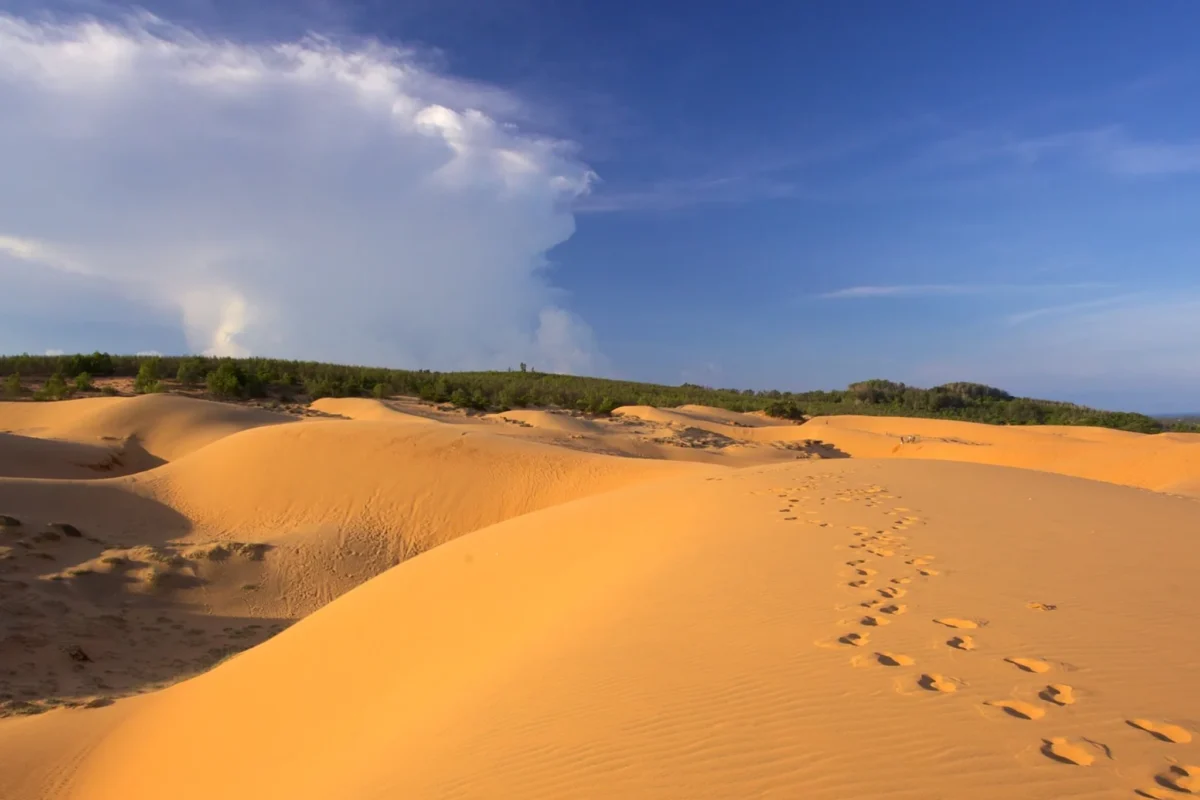
The Red Sand Dunes are among Mui Ne’s most recognizable landscapes.
The dunes rise beside the coastal road and are particularly attractive when the sunlight turns the sand deep orange and red.
The best time to visit is generally late afternoon and sunset, when the lower angle of the sun creates stronger colors and shadows.
You can walk across the dunes, photograph the landscape or try sand sliding on simple plastic boards.
The Red Sand Dunes are relatively easy to visit because they are much closer to the main resort area than the White Sand Dunes.
White Sand Dunes
The White Sand Dunes, often associated with Bau Trang, are the most dramatic dune landscape around Mui Ne.
The scale is much greater than at the Red Sand Dunes, with broad white and golden slopes extending toward lakes and vegetation.
The contrast between desert-like sand and water makes this one of the most unusual landscapes in Vietnam.
Vietnam’s tourism authorities describe Bau Trang as a striking sand-dune landscape surrounding large lakes, with lotus flowers appearing seasonally.

White Sand Dunes at Sunrise
Sunrise is the ideal time for the White Sand Dunes.
The temperature is more comfortable, the sand is cooler and the changing light creates long shadows across the dunes.
A private jeep or suitable local transfer is much more comfortable than trying to walk long distances across soft sand.
For photographers, arrive before sunrise and wait for the first light rather than arriving after the sun is already high.
Bau Trang Lakes
The dunes surrounding Bau Trang are particularly unusual because large bodies of freshwater sit among the sand.
The combination of water, dunes, vegetation and sky creates scenery that looks completely different from the typical tropical image of Vietnam.
During the right season, lotus flowers add another layer of color.
This is one of the strongest reasons to travel beyond the Red Sand Dunes.
Fairy Stream
Fairy Stream, or Suoi Tien, is a shallow natural stream flowing through a landscape of red, orange, white and cream-colored sedimentary formations.
Visitors traditionally remove their shoes and walk barefoot through the shallow water.
The walk is easy and does not require serious hiking.
The scenery changes gradually as you move upstream, with unusual rock formations on one side and vegetation on the other. Vietnam Tourism describes the stream as a gentle, ankle-deep waterway bordered by red clay and limestone formations.

How Long Does Fairy Stream Take?
You do not need a full day for Fairy Stream.
Around 45 minutes to 1.5 hours is normally enough depending on how far you walk and how much time you spend taking photographs.
Visit early in the day or combine it with other attractions rather than treating it as a standalone excursion.
Mui Ne Beach
Mui Ne’s beaches are long and attractive, but the destination is better understood as a beach-and-dunes destination rather than a pure swimming resort.
Wind conditions can influence the sea, particularly during the kitesurfing season.
Some beachfront resorts have quieter sections of sand and better swimming conditions than others.
If swimming is your primary priority, ask your hotel about current sea conditions and beach access rather than assuming every stretch is equally calm.
Kitesurfing in Mui Ne
Kitesurfing is one of Mui Ne’s defining activities.
The northeast monsoon generally produces strong and reliable winds from November through April, making the area particularly attractive to experienced riders and beginners taking lessons.
You do not need previous experience to try it.
Professional schools provide introductory lessons, equipment and instructors.
If you are completely new to the sport, plan for several hours or multiple lessons rather than expecting to master it immediately.
Best Time for Kitesurfing
The strongest period is generally December through February, while November and March–April can also provide good conditions.
For experienced riders, stronger winds can be exciting.
For beginners, conditions can sometimes be challenging, so follow your instructor’s recommendations rather than choosing a lesson purely according to the strongest forecast.

Windsurfing and Other Water Sports
Kitesurfing receives the most attention, but Mui Ne also supports other wind and water activities.
Depending on seasonal conditions, visitors may find:
Windsurfing
Stand-up paddleboarding
Surfing
Kayaking
Swimming
The wind is one of Mui Ne’s defining natural characteristics, so conditions can change significantly between seasons and even during the same day.
Hon Rom
Hon Rom lies northeast of the main Mui Ne resort area and offers a quieter coastal landscape.
The area is known for sandy beaches, rocky sections and open coastal scenery.
It can be a good choice for travelers who want more space and fewer commercial businesses around their accommodation.
Hon Rom also works well as part of a private coastal road trip toward the White Sand Dunes.
Po Shanu Cham Towers
The Po Shanu Cham Towers sit on a hill overlooking the Phan Thiet area.
These historic Cham structures provide an important cultural contrast to Mui Ne’s beaches and resorts.
The towers are connected to the ancient Champa civilization that once controlled large parts of Central and Southern Vietnam.
Visit in the morning or late afternoon when the light is softer.
The elevated location also provides views toward the surrounding coastal plain.
Phan Thiet
Phan Thiet is the larger urban center associated with Mui Ne.
The city provides a more everyday Vietnamese environment, with markets, restaurants, fishing activity and local neighborhoods.
If you spend several days in Mui Ne, consider dedicating half a day to Phan Thiet.
The contrast between the resort strip and the city is useful for understanding how tourism fits into the wider region.
Van Thuy Tu Temple
Van Thuy Tu Temple in Phan Thiet is associated with the coastal fishing community and worship of Nam Hai, a sea deity represented by the whale.
Whales have historically held an important place in the spiritual traditions of Vietnamese fishing communities.
The temple provides insight into the cultural relationship between fishermen and the sea.
It is especially worthwhile for travelers interested in local history rather than spending the entire trip around beaches and resorts.
Fish Sauce and Mui Ne
Fish sauce is deeply connected with the culinary identity of the Phan Thiet area.
The coastal region has a long tradition of producing nuoc mam, using anchovies and salt.
If you enjoy Vietnamese cuisine, learning about fish sauce production helps explain why the ingredient is so important in everyday cooking.
The strongest fish sauce is not simply salty; it provides depth and umami to dishes throughout Vietnamese cuisine.
Dragon Fruit Farms
The countryside around Phan Thiet and Binh Thuan is famous for dragon fruit.
Rows of dragon fruit plants extend across the dry agricultural landscape, creating a distinctive countryside scene.
Depending on the season, you may see farmers working among the plants or fields illuminated at night to encourage flowering.
A private countryside excursion can combine dragon fruit farms with other rural attractions.
Ta Cu Mountain
Ta Cu Mountain is one of the most worthwhile excursions beyond Mui Ne for travelers who want to add a cultural and nature experience.
The mountain is known for its pagoda complex and large reclining Buddha statue.
A cable car makes the mountain easier to access, while the surrounding forest provides a welcome change from the hot coastal environment.
Allow several hours if you plan to visit Ta Cu rather than trying to squeeze it into a short morning.
Ke Ga Lighthouse
Ke Ga Lighthouse is located along the coast south of Phan Thiet.
The historic lighthouse stands on a rocky offshore area and has become a popular photography destination.
The coastline around Ke Ga is much quieter than central Mui Ne.
It is best suited to travelers staying several days or taking a private coastal excursion.
Mui Ne Seafood
Seafood is one of the biggest culinary attractions.
The fishing community provides access to:
Prawns
Crab
Squid
Clams
Oysters
Fish
Scallops
You can find everything from simple seafood stalls to sophisticated beachfront restaurants.
For the freshest experience, look for restaurants with high turnover and ask about the day’s catch.
Banh Can Phan Thiet
Banh Can is a small rice-flour cake cooked in round molds and served with toppings and dipping sauces.
The Phan Thiet version is particularly associated with seafood and regional condiments.
It is inexpensive, filling and worth trying as a breakfast or evening snack.
Banh Re
Banh Re is a traditional sweet snack associated with the region.
It is made from thin strands of sweet potato or cassava that are fried into a crisp texture.
It is commonly sold as a packaged snack and makes a simple souvenir for food lovers.
Goi Ca Mai
Goi Ca Mai is a regional fish salad associated with the Phan Thiet area.
Fresh fish is combined with herbs, vegetables, roasted peanuts and a flavorful dressing.
It is a good choice for adventurous travelers who want to explore local seafood beyond grilled dishes.
Seafood Hotpot
A seafood hotpot is ideal for groups.
Fresh seafood, vegetables and noodles are cooked together in a flavorful broth.
Order one for dinner and combine it with grilled squid or prawns for a relaxed coastal meal.
Best Time to Visit Mui Ne
Mui Ne is one of Vietnam’s drier coastal destinations.
The period from November to April is generally the most attractive for travelers seeking dry weather and strong wind conditions, while the wetter period from approximately May to October can still provide plenty of sunshine between showers.
The best month depends on what you want to do.
Beach holiday: November–April.
Kitesurfing: November–April, especially December–February.
Dunes and photography: November–April for generally drier conditions.
Lower-season travel: May–October can be quieter and greener.
Mui Ne in the Dry Season
The dry period is ideal for outdoor activities.
The dunes are easier to explore, cycling is more comfortable and the probability of rain interfering with sunrise or sunset excursions is generally lower.
The trade-off is stronger wind during the peak kitesurfing months and potentially more visitors.
Mui Ne in the Wet Season
The rainy season does not mean constant rain.
Short showers can occur, often followed by sunshine.
The landscape can look greener, and accommodation may be quieter.
If you visit during this period, keep outdoor schedules flexible and avoid booking every activity at a precise time.
Sunrise or Sunset?
For the White Sand Dunes, choose sunrise.
For the Red Sand Dunes, sunset is particularly attractive.
This gives you two very different dune experiences without visiting both at the same time of day.
A good private itinerary can combine:
Early morning fishing village → White Sand Dunes → Breakfast → Fairy Stream → Beach → Red Sand Dunes at sunset
This is one of the most efficient ways to experience Mui Ne.
How Many Days in Mui Ne?
1 day: possible, but rushed.
2 days: enough for the main attractions.
3 days: ideal for first-time visitors.
4–5 days: better for combining beaches, kitesurfing and day trips.
If you are traveling from Ho Chi Minh City, two nights is a good minimum because the journey takes several hours each way.
Mui Ne 2-Day Itinerary
Day 1: Arrive from Ho Chi Minh City, check into your hotel and spend the afternoon relaxing on the beach. Visit the Red Sand Dunes around sunset, then enjoy fresh seafood for dinner along the coastal road.
Day 2: Leave before sunrise for the White Sand Dunes and Bau Trang. Continue to the fishing village, then visit Fairy Stream before lunch. Spend the afternoon at the beach or take a kitesurfing lesson before enjoying a final seafood dinner.
Mui Ne 3-Day Itinerary
Day 1: Travel from Ho Chi Minh City to Mui Ne by private car. Check into your resort, relax on the beach and visit the Red Sand Dunes at sunset. Finish with a seafood dinner and a quiet evening.
Day 2: Start before sunrise at the White Sand Dunes and Bau Trang, followed by the fishing village and Fairy Stream. Return to the resort for lunch and relaxation. Spend the late afternoon swimming, enjoying a spa treatment or trying a water sport.
Day 3: Visit Po Shanu Cham Towers and Phan Thiet, explore a local market and enjoy a regional lunch before returning toward Ho Chi Minh City or continuing to your next destination.
Mui Ne 4-Day Itinerary
Day 1: Ho Chi Minh City to Mui Ne by private car, hotel check-in, beach relaxation and Red Sand Dunes at sunset.
Day 2: White Sand Dunes sunrise, Bau Trang, fishing village and Fairy Stream, followed by an afternoon at the resort.
Day 3: Private kitesurfing lesson or relaxed beach morning, then Phan Thiet, Po Shanu Cham Towers and a seafood dinner.
Day 4: Choose Ta Cu Mountain, Ke Ga Lighthouse or a relaxed final beach morning before continuing your Vietnam journey.
Mui Ne for Couples
Mui Ne is one of the easier beach destinations in Vietnam for a romantic short escape.
Couples can combine:
Beachfront resort
Private dune tour
Sunset at Red Sand Dunes
Seafood dinner
Couples’ spa
Private coastal drive
Sunrise at Bau Trang
A private car allows couples to avoid the fixed schedule of large group tours.
Mui Ne for Families
Families can enjoy Mui Ne, especially if the hotel has a swimming pool and direct beach access.
Children usually enjoy the dunes, sand sliding, boat experiences and fruit farms.
For younger children, schedule outdoor activities early because the sand becomes extremely hot later in the day.
A private vehicle is more comfortable than moving between attractions independently with children.
Mui Ne for Adventure Travelers
Mui Ne is one of the strongest destinations in Vietnam for travelers who want outdoor activities.
Options include:
Kitesurfing
Windsurfing
Sandboarding
Dune exploration
Cycling
Beach activities
Hiking at Ta Cu Mountain
The wind makes Mui Ne especially different from Vietnam’s other beach destinations.
Mui Ne for Photographers
Photography is one of the strongest reasons to visit.
The destination gives you:
Fishing boats at dawn
White dunes at sunrise
Red dunes at sunset
Colorful Fairy Stream formations
Dragon fruit farms
Cham towers
Coastal roads
Kitesurfers against the sea
For the best results, avoid midday photography whenever possible.
The early morning and late afternoon provide softer light and stronger colors.

Where to Stay in Mui Ne
Ham Tien
Best for first-time visitors, restaurants, nightlife and convenience.
Central Resort Area
Good for travelers seeking larger beachfront properties, swimming pools and full-service facilities.
Eastern Mui Ne
Better for travelers who want stronger access to the fishing village and kitesurfing areas.
Hon Rom
A quieter option for travelers who want more space and a less commercial atmosphere.
For couples and families, a beachfront resort is usually the most comfortable choice.
For independent travelers who want restaurants within walking distance, Ham Tien is more practical.
Luxury Travel in Mui Ne
Mui Ne has several high-end beachfront resorts suitable for travelers who want privacy and comfort.
A premium trip can include:
Private airport transfer
Private car from Ho Chi Minh City
Luxury beachfront resort
Private sunrise dune excursion
Private fishing village visit
Private countryside tour
Kitesurfing lesson
Spa treatment
Private seafood dinner
The advantage of a private itinerary is that you can leave the dunes when you want, spend longer photographing the landscape and return to the hotel without waiting for other travelers.
Getting to Mui Ne
Most international travelers reach Mui Ne through Ho Chi Minh City and continue by road.
The road connection has become significantly more convenient with newer expressway infrastructure, although actual travel time depends on traffic, departure point and road conditions. Current travel sources generally place the journey at several hours by road.
Private car is the most comfortable option for couples, families and premium travelers.
Sleeper buses can be useful for budget travelers.
There is no major commercial airport in Mui Ne itself, so travelers normally arrive by road from Ho Chi Minh City or other destinations.
Mui Ne from Da Lat
Mui Ne and Da Lat make an excellent combination.
Da Lat provides cool mountain air, pine forests, waterfalls, coffee farms and French-influenced architecture.
Mui Ne provides beaches, dunes, seafood and warm coastal weather.
The contrast between the two destinations makes the route particularly attractive.
A private car is the easiest way to travel between them because you can stop at viewpoints and countryside locations along the way.
Mui Ne from Nha Trang
Mui Ne can also be combined with Nha Trang.
Nha Trang offers a more urban beach experience with islands, diving, restaurants and nightlife.
Mui Ne feels smaller, windier and more focused on dunes and water sports.
Travelers with a longer Central and Southern Vietnam itinerary can include both.
Mui Ne from Ho Chi Minh City
The classic southern route is:
Ho Chi Minh City → Mui Ne → Da Lat
This combines:
Big-city culture → beaches and dunes → cool mountain scenery
Another strong route is:
Ho Chi Minh City → Mekong Delta → Mui Ne → Da Lat
This gives you an unusually diverse southern Vietnam experience.
Getting Around Mui Ne
The coastal road is long, so walking is only practical if your hotel, restaurants and beach are close together.
Useful options include:
Taxi
Ride-hailing where available
Hotel transfers
Motorbike
Private car
For a full-day sightseeing itinerary, a private vehicle is much more comfortable because the dunes and countryside attractions are spread out.
What to Pack for Mui Ne
Bring:
Light clothing
Swimwear
Comfortable sandals
Walking shoes
Sunglasses
Hat
High-SPF sunscreen
Reusable water bottle
Light rain jacket
Insect repellent
For the dunes, sunglasses are particularly useful because wind can blow sand into your eyes.
A scarf or light long-sleeved shirt can also be useful during sunrise excursions.
Mui Ne Travel Safety
The main risks are related to sun, heat, wind, traffic and water activities.
Drink plenty of water.
Avoid walking barefoot on very hot sand around midday.
Use sunscreen repeatedly.
Follow instructors carefully when kitesurfing.
Check sea conditions before swimming.
Be cautious when riding a motorbike, particularly on unfamiliar roads.
At the dunes, stay hydrated and avoid unnecessary physical activity during the hottest hours.
Responsible Travel in Mui Ne
Mui Ne’s beaches, dunes and fishing communities are important parts of the destination’s identity.
Do not leave plastic or food waste on the dunes.
Do not damage vegetation around the sand formations.
Respect fishermen and avoid interfering with the morning seafood trade.
Ask before photographing people at close range.
Choose responsible tour operators and avoid activities that damage natural landscapes.
When visiting Cham religious sites, dress appropriately and respect ceremonies.
Mui Ne Travel Tips
Visit the White Sand Dunes at sunrise.
Visit the Red Sand Dunes around sunset.
Visit the fishing village before breakfast.
Book a private car if traveling with family.
Stay at least two nights if coming from Ho Chi Minh City.
Carry plenty of water on dune excursions.
Do not underestimate the heat of the sand.
Try fresh seafood rather than only international restaurant food.
Check wind conditions before booking kitesurfing lessons.
Combine Mui Ne with Da Lat if you have additional time.
Leave flexibility in your itinerary during the rainy season.
Is Mui Ne Worth Visiting?
Yes, especially if you want something different from a conventional Vietnamese beach holiday.
Mui Ne’s biggest strength is the combination of sea and desert-like landscapes.
Few places in Vietnam allow you to watch fishing boats at sunrise, walk through a red-rock stream, photograph enormous white dunes, watch kitesurfers over the ocean and eat fresh seafood on the same day.
It is not the best destination for travelers who want a dense city of museums, historic monuments and shopping malls.
It is much better for travelers who appreciate nature, beaches, outdoor activities, photography, seafood and a relaxed coastal atmosphere.
For most visitors, two or three nights provides enough time to experience the main attractions without rushing.
Explore Mui Ne With Vietnam Women Travel
Vietnam Women Travel – Premium Private Tours Led by Women offers private journeys to Mui Ne for travelers who want a more comfortable and flexible alternative to standard group excursions.
A private Mui Ne experience can begin in Hanoi, continue by domestic flight to southern Vietnam and then connect by private car to Ho Chi Minh City and Mui Ne. Your itinerary can include the White Sand Dunes, Bau Trang, Red Sand Dunes, Fairy Stream, Mui Ne Fishing Village, Phan Thiet, Po Shanu Cham Towers, dragon fruit farms, Ta Cu Mountain and Ke Ga Lighthouse, depending on the time available.
For couples, we can focus on luxury beachfront accommodation, private sunset experiences, seafood dining and relaxed beach time. Families can have private transportation and flexible sightseeing schedules, while adventure travelers can add kitesurfing and other outdoor activities.
Mui Ne also works beautifully as part of a longer southern Vietnam journey:
Hanoi → Ho Chi Minh City → Mekong Delta → Mui Ne → Da Lat
or:
Hanoi → Da Nang → Hoi An → Ho Chi Minh City → Mui Ne → Phu Quoc
For a complete Vietnam journey:
Hanoi → Ha Long Bay → Hue → Hoi An → Ho Chi Minh City → Mekong Delta → Mui Ne → Da Lat → Phu Quoc
Every Vietnam Women Travel – Premium Private Tours Led by Women journey is private, personalized and designed around your preferred pace, accommodation level, interests and travel style.
Vietnam Women Travel – Premium Private Tours Led by Women
Website: https://vietnamwomentravel.com/
Hotline / WhatsApp: +84 988 402 008 | +84 982 416 518 | +84 981 090 989
Email: info@vietnamwomentravel.com
Mui Ne Guide | Mui Ne Travel Guide | Mui Ne Vietnam | Phan Thiet Guide | Mui Ne Sand Dunes | White Sand Dunes | Red Sand Dunes | Fairy Stream | Mui Ne Fishing Village | Mui Ne Kitesurfing | Mui Ne Beach | Mui Ne Seafood | Bau Trang | Mui Ne Itinerary | Mui Ne Travel Tips | Southern Vietnam Travel Guide