Mekong Delta Guide: Complete Travel Guide to Rivers, Floating Markets, Fruit Orchards and Riverside Life
The Mekong Delta is one of the most distinctive regions in Vietnam, a vast network of rivers, canals, islands, orchards, rice fields, fishing communities and small towns in the country’s southwest. Instead of monumental landmarks or dramatic mountain scenery, the Delta’s appeal comes from its rhythm of life: boats moving along narrow waterways, fruit being transported by river, families working in gardens, traditional food prepared in small kitchens and houses built beside canals. The region is made up of many different destinations, so a good Mekong Delta trip should not be treated as a single attraction or a quick stop. Can Tho, Ben Tre, Cai Be, Chau Doc, Tra Vinh, Sa Dec and the surrounding countryside each offer a different experience.

What Is the Mekong Delta?
The Mekong Delta is the southernmost part of Vietnam where the Mekong River divides into numerous branches and waterways before reaching the South China Sea. The landscape is extremely fertile, supporting rice cultivation, tropical fruit, vegetables, fishing and aquaculture.
The river system has shaped almost every part of life in the region. Roads are important today, but waterways remain central to transportation, agriculture, commerce and culture.
This is why the Mekong Delta feels so different from Hanoi, Hue, Hoi An or Ho Chi Minh City.
You are not simply visiting a collection of tourist attractions. You are entering a region where the river itself is part of everyday life.
Why Visit the Mekong Delta?
The Mekong Delta is ideal for travelers who want to experience a slower and more rural side of Vietnam.
You can wake before sunrise to travel by boat through a floating market, eat breakfast on the water, cycle through fruit orchards, travel through narrow canals shaded by coconut palms, visit traditional workshops and finish the day beside a quiet river.
The region is particularly rewarding for travelers interested in food, photography, nature, agriculture, traditional culture and slow travel.
It is also one of the best places in Vietnam to combine a private countryside experience with comfortable accommodation.
Can Tho
Can Tho is the most practical base for a first Mekong Delta trip.
Located on the Hau River, Can Tho is a substantial city, but the surrounding countryside quickly becomes green and peaceful. The city combines riverside hotels, restaurants and cafés with easy access to canals, orchards and villages. Vietnam Tourism recommends Can Tho as an ideal base for experiencing Delta life, while the city is also home to the famous Cai Rang Floating Market.
For a first visit, spending two nights in Can Tho allows you to experience the city without rushing.
Ninh Kieu Wharf
Ninh Kieu Wharf is Can Tho’s best-known riverside area.
The waterfront becomes particularly pleasant in the evening, when the temperature drops and the riverfront comes alive.
It is a convenient starting point for boat trips and a good place to take an evening walk after returning from the countryside.
For travelers staying in Can Tho, choose accommodation within easy reach of the river and arrange your morning boat departure in advance.
Cai Rang Floating Market
Cai Rang Floating Market is the signature experience of Can Tho and one of the most famous floating markets in Vietnam.
The market operates on the Cai Rang River, where boats gather to trade agricultural products, fruit, food and drinks.
The most important point is timing.
Go early.
The official Can Tho tourism information recommends visiting around 5:00–8:00 in the morning, when trading activity is at its busiest. The market is about 30 minutes by boat from Ninh Kieu Wharf.

What Makes Cai Rang Special?
The most interesting feature is not simply the number of boats.
Look at how products are advertised.
Large boats often hang examples of their products from long bamboo poles, allowing buyers to see what is available from a distance. This traditional trading method is one of the visual characteristics of the floating market.
Smaller boats move between the larger vessels selling coffee, fruit, breakfast and drinks.
A private early-morning boat allows you to move slowly through the market instead of following a large tour group.
Breakfast on the River
One of the best ways to experience Cai Rang is to eat breakfast on the water.
Order a bowl of Hu Tieu or another noodle dish, have Vietnamese coffee and watch the boats move around you.
The experience is simple but memorable.
The combination of food, river traffic, early sunlight and the sound of boat engines captures the atmosphere of the Delta much better than simply photographing the market from a pier.
Smaller Canals Around Can Tho
After Cai Rang, do not immediately return to the city.
Ask your boat operator to continue into the smaller canals.
The atmosphere changes quickly.
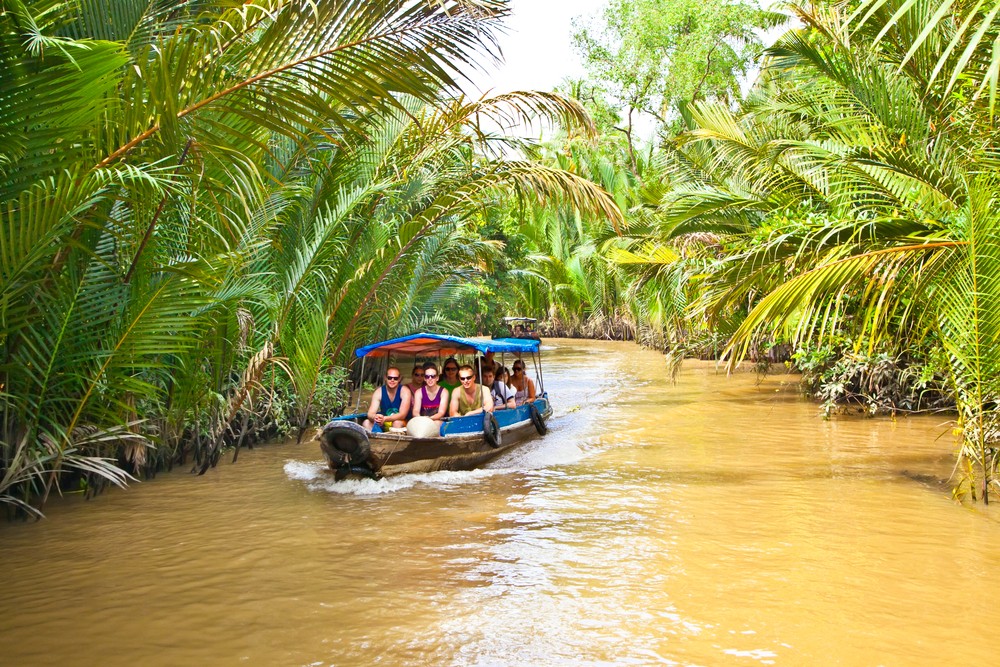
Large commercial boats disappear, the waterways become narrower and vegetation closes in around the boat.
This is where you begin to see gardens, small bridges, houses, fishing equipment and everyday river life.
For many travelers, these smaller waterways are more memorable than the floating market itself.
Fruit Orchards
The Mekong Delta is one of Vietnam’s great agricultural regions.
Depending on the season, orchards can contain:
Mango
Pomelo
Rambutan
Durian
Mangosteen
Longan
Jackfruit
Coconut
Visiting an orchard is more enjoyable when the experience includes walking through the garden, learning about cultivation and tasting fruit directly rather than simply stopping at a shop.
Binh Thuy Ancient House
The Binh Thuy Ancient House near Can Tho provides a completely different experience from the floating markets.
Built in 1870, the house belonged to the Duong family and combines French architectural influences with traditional Vietnamese design.
The house is particularly useful for understanding how prosperous families lived in the Delta during an earlier period.
Its combination of architecture, furniture and garden makes it an excellent photography stop.
Ben Tre
Ben Tre is often described as the coconut capital of the Mekong Delta.
The province is characterized by coconut plantations, waterways, small islands and villages.
If Can Tho is the best place to experience the region’s major floating market, Ben Tre is particularly good for coconut groves, narrow canals, cycling and small-scale countryside experiences.
A private boat and bicycle combination is one of the best ways to explore the area.
Coconut in Ben Tre
Coconut is deeply connected with Ben Tre’s economy and cuisine.
You will see coconut palms lining canals and roads, while local businesses use coconut to produce food, sweets, cooking ingredients and handicrafts.
Try:
Coconut candy
Fresh coconut water
Coconut milk desserts
Coconut-based dishes
A visit to a traditional coconut candy workshop can show how the fruit is processed from raw coconut into finished products.
Ben Tre Boat Trips
Boat trips in Ben Tre are generally quieter than the larger river routes around Can Tho.
The most enjoyable experiences take you from larger waterways into narrow canals.
The boat passes coconut palms, gardens and small houses while the engine moves slowly through the water.
Do not expect dramatic scenery.
The attraction is the peaceful rhythm.
Mekong Delta Cycling
Cycling is one of the best ways to experience the Delta at ground level.
The countryside has narrow roads and paths passing through:
Fruit orchards
Rice fields
Coconut plantations
Canals
Small villages
Family farms
A bicycle allows you to stop frequently, speak with residents and photograph landscapes without being trapped inside a vehicle.
For premium travelers, a private cycling excursion can be arranged with a support vehicle nearby.
Cai Be
Cai Be in Tien Giang Province is another historic Delta destination.
The town is associated with waterways, orchards, traditional houses and the former Cai Be Floating Market.
Today, the market is much less active as a large commercial floating market than it once was, so travelers should not visit expecting another Cai Rang.
Instead, Cai Be is better approached as a riverside cultural and countryside destination.
A private boat, orchard visit and traditional house experience can make a much more rewarding itinerary.
Cai Be Ancient Houses
The historic houses around Cai Be reflect the wealth of merchant families who once benefited from river commerce.
Some combine Vietnamese architectural traditions with French and Chinese influences.
For travelers interested in architecture, Cai Be is particularly interesting because the houses help explain how river trade influenced the development of communities.
Sa Dec
Sa Dec is one of the Mekong Delta’s most atmospheric towns.
The city is famous for its flower-growing industry, traditional houses and connections to French colonial history.
The surrounding area has a strong agricultural identity.
If you enjoy photography, Sa Dec is worth adding to a longer itinerary.
Sa Dec Flower Village
The flower-growing area around Sa Dec becomes especially colorful during the period leading up to Tet, when growers prepare enormous quantities of flowers for the Vietnamese New Year.
Rows of flowers stretch through the countryside, with growers working around raised beds and waterways.
The landscape is especially photogenic.
Visit early in the morning when temperatures are comfortable and the light is softer.
Huynh Thuy Le Ancient House
Sa Dec is also associated with the Huynh Thuy Le Ancient House, a historic residence connected to the French-Vietnamese-Chinese cultural history of the town.
The house became internationally known because of its connection to French writer Marguerite Duras and her autobiographical novel The Lover.
It is one of the most interesting stops for travelers interested in architecture and colonial-era history.
Chau Doc
Chau Doc is located in An Giang Province near the Cambodian border.
It has a very different atmosphere from Can Tho and Ben Tre.
The town combines river culture, floating fish farms, Cham communities, temples, markets and access to Tra Su Cajuput Forest.
Chau Doc is particularly good for travelers who want to explore the cultural diversity of the Mekong Delta, rather than focusing only on agriculture and floating markets.
Chau Doc Floating Village
The floating village on the Hau River consists of houses built on rafts, many of which are connected with fish farming.
Catfish and other freshwater species are raised beneath floating structures.
A boat trip through the village provides an opportunity to see how families have adapted their lives to the river.
This is an excellent experience for travelers interested in the relationship between agriculture, aquaculture and waterways.
Cham Villages in Chau Doc
Chau Doc is home to important Cham communities.
Across the Hau River, areas such as Chau Phong and Chau Giang contain Cham villages, mosques and traditional stilt houses.
The community follows Sunni Islam, making the cultural landscape quite different from many other parts of Vietnam. Vietnam Tourism highlights the mosques, stilt houses and weaving traditions of these communities as important cultural experiences around Chau Doc.
Visitors should dress respectfully and behave appropriately when visiting religious sites.
Mubarak Mosque
The Mubarak Mosque is one of the best-known Cham religious landmarks in the Chau Doc area.
Its architecture and religious traditions provide a reminder that the Mekong Delta is culturally diverse.
A knowledgeable guide is particularly useful here because the significance of the mosque and surrounding community goes far beyond its appearance.
Tra Su Cajuput Forest
Tra Su Cajuput Forest is one of the most beautiful nature experiences in the Mekong Delta.
The protected wetland contains cajuput trees, waterways and abundant birdlife.
Visitors travel through the flooded forest by small motorized boat, passing beneath a canopy of trees and across water covered with floating vegetation.
Vietnam Tourism notes that the forest is home to more than 70 bird species.

Best Time for Tra Su Forest
The forest is particularly attractive during the high-water period, generally around August to November.
The waterways become fuller, allowing boats to travel deeper through the wetland landscape.
The official tourism information also notes that August to November is a high-water period in Chau Doc.
If nature photography is your priority, this seasonal variation can make a significant difference.
Sam Mountain
Sam Mountain, or Nui Sam, rises above the plains near Chau Doc.
The mountain is covered with temples, pagodas and religious sites.
The elevated position provides views over the surrounding countryside and, in some areas, toward the Cambodian border.
Visit in the late afternoon when the light is softer and the heat has eased.
Ba Chua Xu Temple
Ba Chua Xu Temple is one of the most important religious sites in southern Vietnam.
Located at the foot of Sam Mountain, the temple attracts large numbers of pilgrims, particularly during major religious festivals.
For travelers visiting outside festival periods, the atmosphere is generally easier to appreciate without the largest crowds.
Khmer Culture in the Mekong Delta
The Mekong Delta is also home to significant Khmer communities, particularly in provinces such as Soc Trang and Tra Vinh.
Their temples and cultural traditions add another layer to the region.
If you have four or five days, adding Soc Trang or Tra Vinh can make the trip more culturally diverse.
Khmer Temples
Khmer Buddhist temples in the Delta often feature colorful architecture, ornate roofs and elaborate decorative details.
They look very different from typical Vietnamese pagodas.
Travelers should dress respectfully and avoid disturbing ceremonies or worshippers.
A local guide can explain the symbolism behind the architecture.
Mekong Delta Food
Food is one of the strongest reasons to spend more than one day in the region.
The fertile environment provides abundant rice, vegetables, tropical fruit and freshwater fish.
Southern Vietnamese cuisine tends to be generous with herbs, sweetness and fresh ingredients.
Important dishes to try include:
Hu Tieu
Bun Ca
Ca Kho To
Lau Mam
Banh Xeo
Elephant Ear Fish
Grilled Snakehead Fish
Coconut Candy
Tropical Fruit
Hu Tieu
Hu Tieu is one of the classic southern noodle dishes.
It can be served as soup or in a dry version, with pork, shrimp, seafood and vegetables depending on the restaurant.
Eating Hu Tieu on or near the water in the early morning is particularly appropriate in the Mekong Delta.
Can Tho’s floating market is famous for breakfast dishes served directly from boats.
Bun Ca Chau Doc
Bun Ca Chau Doc is one of the signature dishes of the western Delta.
The fish noodle soup is commonly made with freshwater fish and a turmeric-colored broth.
In Chau Doc, it is often served with herbs and seasonal ingredients such as dien dien flowers.
It is a dish worth trying when visiting the western part of the Delta.
Ca Kho To
Ca Kho To is caramelized fish slowly cooked in a clay pot.
The sauce is rich, savory and slightly sweet.
It is usually served with steamed rice and fresh vegetables.
The dish represents the style of southern Vietnamese home cooking particularly well.
Lau Mam
Lau Mam is a strongly flavored southern hotpot based on fermented fish paste.
It can contain freshwater fish, seafood, eggplant, mushrooms, vegetables and noodles.
It is not necessarily the first dish international travelers should try if they dislike fermented flavors, but adventurous food lovers should definitely experience it.
Elephant Ear Fish
Ca Tai Tuong, or elephant ear fish, is commonly associated with Mekong Delta cuisine.
The fish is often fried whole and served with rice paper, herbs, noodles and dipping sauce.
You assemble each roll yourself, combining fish with fresh vegetables and herbs.
It is an excellent shared meal.
Mekong Delta Fruit
Do not leave the Delta without trying fresh tropical fruit.
Depending on the season, you may find:
Rambutan
Mangosteen
Pomelo
Longan
Durian
Mango
Jackfruit
Coconut
Fruit tasting is best at an orchard where you can sample several varieties directly from the garden.
Best Time to Visit the Mekong Delta
The Mekong Delta can be visited throughout the year, but conditions vary significantly between the dry and rainy periods.
Generally, December to April is drier and easier for cycling and road travel, while the wetter months can create greener landscapes and higher water levels.
For Tra Su Forest and floating-water landscapes, the high-water period can be especially attractive.
For comfortable cycling and road-based exploration, the drier months are easier.
Can Tho’s official tourism information notes that December and January are among the cooler months, while rainfall becomes more regular from July to November.
Mekong Delta During the Dry Season
December through April is a good period for:
Cycling
Village walks
Orchard visits
Boat trips
Photography
Long road journeys
The weather can still be hot, so early mornings remain the best time for outdoor activities.
Mekong Delta During the Rainy Season
May through November brings more rainfall.
Do not automatically avoid the Delta during this period.
Rain can make the vegetation exceptionally green, and high-water conditions can improve certain wetland experiences.
The main consideration is flexibility.
Boat trips and outdoor activities can be affected by heavy rain or storms.
Mekong Delta During Flood Season
The rising waters between roughly August and November can transform parts of the Delta.
Channels become fuller and wetland areas become more active.
Tra Su Forest is particularly attractive during high-water conditions.
This period can be excellent for travelers interested in nature and photography, provided they accept changing weather.
How Long Should You Spend in the Mekong Delta?
1 day: enough for a basic introduction from Ho Chi Minh City, but rushed.
2 days: good for Ben Tre or Can Tho.
3 days: much better for combining countryside and river experiences.
4 days: ideal for Can Tho plus Chau Doc or another western destination.
5 days: excellent for slow travel across several parts of the Delta.
If you have the time, avoid treating the Mekong Delta as only a day trip.
Mekong Delta One-Day Trip
A one-day excursion from Ho Chi Minh City normally focuses on the closest destinations, especially My Tho and Ben Tre.
This is convenient for travelers with limited time, but the journey includes substantial road travel.
You can experience:
Boat trip
Coconut canals
Fruit tasting
Traditional workshops
Vietnamese lunch
Return to Ho Chi Minh City in the evening.
It is an introduction rather than a complete Delta experience.
Mekong Delta 2-Day Itinerary
Day 1: Leave Ho Chi Minh City in the morning and travel toward Ben Tre. Take a private boat through the waterways, visit coconut plantations and small canals, enjoy lunch in the countryside and cycle through villages in the afternoon. Stay overnight at a riverside hotel or high-quality homestay.
Day 2: Continue toward Can Tho. Explore the countryside and smaller waterways before arriving in the city. Enjoy a riverside dinner and an early night because the following morning begins before sunrise.
Mekong Delta 3-Day Itinerary
Day 1: Travel from Ho Chi Minh City to Ben Tre and explore the coconut-growing countryside by private boat and bicycle. Stay overnight beside the river.
Day 2: Continue to Can Tho and visit orchards, canals and Binh Thuy Ancient House. Enjoy a relaxed evening around Ninh Kieu Wharf.
Day 3: Wake before sunrise for a private boat to Cai Rang Floating Market. Have breakfast on the river, continue through smaller canals and return to Can Tho before traveling back to Ho Chi Minh City.
Mekong Delta 4-Day Itinerary
Day 1: Ho Chi Minh City to Ben Tre with private boat, coconut plantations, village cycling and riverside accommodation.
Day 2: Travel through the countryside toward Can Tho, visiting orchards and traditional workshops before enjoying an evening along Ninh Kieu Wharf.
Day 3: Early-morning Cai Rang Floating Market, breakfast on the water, smaller canals and Binh Thuy Ancient House.
Day 4: Continue west to Chau Doc, visit the floating fish village and Cham community, then explore Sam Mountain or travel onward depending on your schedule.
This is a much more complete introduction to the Delta than a single-day excursion.
Mekong Delta 5-Day Itinerary
Day 1: Ho Chi Minh City to Ben Tre with a private countryside and river experience.
Day 2: Explore Ben Tre’s coconut plantations, canals and villages at a relaxed pace.
Day 3: Continue to Can Tho, explore Binh Thuy and enjoy a riverside evening.
Day 4: Cai Rang Floating Market before sunrise, followed by smaller waterways, orchards and traditional food experiences.
Day 5: Continue toward Chau Doc, visit Tra Su Cajuput Forest, explore Cham culture and finish around Sam Mountain.
This itinerary is ideal for travelers who want to see several distinct sides of the Mekong Delta rather than rushing between attractions.
Mekong Delta for Couples
The Delta is particularly good for couples who enjoy slow travel.
Stay in a riverside property, take a private boat through narrow canals, cycle through orchards and have dinner overlooking the water.
A premium couple’s itinerary can avoid crowded group excursions and focus on private boats, boutique accommodation, countryside dining and relaxed sightseeing.
Mekong Delta for Families
Families should avoid overly ambitious itineraries.
Choose comfortable hotels, private transportation and shorter boat rides.
Children generally enjoy:
Boat trips
Fruit orchards
Coconut workshops
Cycling
Fishing villages
Animal and bird watching
A two- or three-night itinerary is usually easier for families than a packed one-day tour.
Mekong Delta for Photographers
The Delta is a dream for photographers.
Before sunrise: Cai Rang Floating Market.
Morning: boats, markets and orchards.
Late morning: village life.
Afternoon: canals and countryside.
Sunset: riverside towns.
The best photographs often come from ordinary scenes rather than major attractions: a farmer transporting fruit, a wooden boat moving through a canal, children cycling across a bridge or fishermen working beside a river.
Mekong Delta for Food Lovers
Food-focused travelers should consider spending several days here.
A strong culinary itinerary could include:
Hu Tieu breakfast
Fresh tropical fruit
Banh Xeo
Elephant ear fish
Ca Kho To
Lau Mam
Coconut candy
Fresh river fish
The Delta’s food is closely connected to its environment, which makes eating here part of understanding the region.
Private Boat vs Group Boat
A private boat is strongly recommended if your budget allows.
You can control the departure time, avoid unnecessary stops and spend longer in the smaller canals.
Group tours are cheaper and can be suitable for budget travelers, but they often operate on fixed schedules.
For couples, families and premium travelers, private boats provide a significantly more relaxed experience.
Homestay vs Hotel
A traditional homestay can provide more direct interaction with rural life.
However, not every homestay offers the same standard of accommodation.
For travelers who want comfort, privacy and good facilities, choose a riverside boutique hotel or resort and arrange private countryside excursions during the day.
The best choice depends on whether you value cultural immersion or hotel comfort more.
Getting to the Mekong Delta
Most international travelers begin in Ho Chi Minh City.
From there, private cars, buses and organized tours connect to the main Delta destinations.
Can Tho also has an airport, located about 20 minutes from the city center according to Vietnam Tourism.
For Chau Doc, travelers can fly to Can Tho and continue by road, while Ho Chi Minh City also has direct road connections.
For a premium itinerary, private road transfers are usually the most comfortable option.
Ho Chi Minh City to Ben Tre
Ben Tre is one of the easiest Delta destinations to reach from Ho Chi Minh City.
It works particularly well for a one- or two-day excursion.
The journey allows you to move quickly from urban Vietnam into coconut plantations, canals and countryside.
Ho Chi Minh City to Can Tho
Can Tho is farther away, so a day trip requires an early start and a late return.
If Cai Rang Floating Market is important to you, stay overnight in Can Tho.
That way, you can take a boat before sunrise rather than spending several hours traveling from Ho Chi Minh City in the middle of the night.
Ho Chi Minh City to Chau Doc
Chau Doc is considerably farther west.
It makes more sense as part of a multi-day itinerary.
Combine it with Can Tho and Tra Su Forest rather than trying to visit it as a rushed day trip.
What to Pack
Bring:
Light breathable clothing
Comfortable walking shoes
Sandals
Sun protection
Insect repellent
Hat
Sunglasses
Rain jacket
Small backpack
Reusable water bottle
For early-morning boat trips, a light jacket can be useful because the river can feel surprisingly cool before sunrise.
Mekong Delta Travel Safety
The Delta is generally easy to explore, but boats and waterways require normal caution.
Wear a life jacket when instructed.
Do not stand suddenly in small boats.
Be careful when stepping between boats and piers.
Use sunscreen because the reflection from the water increases sun exposure.
During heavy rain, follow your boat operator’s safety instructions.
If cycling, use quiet roads and follow your guide’s directions around bridges and traffic.
Responsible Travel in the Mekong Delta
The Delta is an environmentally sensitive region.
Avoid throwing plastic into waterways.
Do not disturb birds or wildlife in wetlands.
Do not pick fruit without permission.
Support family-run businesses and responsible community tourism.
Respect religious sites.
Ask before photographing people closely.
Choose operators that prioritize safety and avoid overcrowded boats.
The best Mekong Delta experience should benefit the communities that make the region special.
Common Mekong Delta Travel Mistakes
One of the biggest mistakes is trying to see everything in one day.
The Delta is large.
Another mistake is visiting a floating market too late.
Cai Rang is fundamentally a morning market, so arriving around midday misses its most interesting trading period.
A third mistake is spending the entire trip on large waterways.
The smaller canals and countryside often provide a much more intimate experience.
Finally, do not spend all your time taking photographs.
Sit down, eat something, talk to your guide and watch the river.
That is where the Delta’s character becomes clear.
Is the Mekong Delta Worth Visiting?
Yes, particularly if you want to experience a side of Vietnam that is completely different from its major cities and beach destinations.
The Mekong Delta is not about spectacular monuments.
It is about waterways, agriculture, food, fruit orchards, floating markets, boats, temples, villages and the relationship between people and the river.
For first-time visitors, three days is a good minimum.
Four or five days allows you to combine Ben Tre, Can Tho and Chau Doc while traveling at a much more comfortable pace.
If you only have one day, visit the Delta anyway, but understand that you are seeing only a small part of a much larger region.
Explore the Mekong Delta With Vietnam Women Travel
Vietnam Women Travel – Premium Private Tours Led by Women offers private Mekong Delta journeys designed for travelers who want more than a standard one-day bus tour.
A private itinerary can begin in Hanoi, continue by domestic flight to southern Vietnam, and then connect with Ho Chi Minh City, Ben Tre, Can Tho and Chau Doc by private transportation. Depending on the length of your journey, the itinerary can include private boat trips, Cai Rang Floating Market, coconut plantations, fruit orchards, cycling through villages, traditional workshops, Binh Thuy Ancient House, Tra Su Cajuput Forest, Cham communities and riverside dining.
For couples, the focus can be on private boats, boutique riverside accommodation and relaxed countryside experiences. Families can have flexible schedules and private transportation. Food lovers can build the itinerary around regional specialties, markets and cooking experiences. Photography travelers can schedule early-morning departures and spend more time in the smaller waterways where everyday Delta life is most visible.
A premium southern Vietnam journey can combine the Mekong Delta with:
Hanoi → Ho Chi Minh City → Mekong Delta → Phu Quoc
or:
Hanoi → Central Vietnam → Ho Chi Minh City → Mekong Delta → Phu Quoc
For a longer private Vietnam journey:
Hanoi → Ha Long Bay → Hue → Hoi An → Ho Chi Minh City → Mekong Delta → Phu Quoc
Every Vietnam Women Travel – Premium Private Tours Led by Women itinerary is private, personalized and designed around your preferred pace, accommodation level, food interests and travel style.
Vietnam Women Travel – Premium Private Tours Led by Women
Website: https://vietnamwomentravel.com/
Hotline / WhatsApp: +84 988 402 008 | +84 982 416 518 | +84 981 090 989
Email: info@vietnamwomentravel.com
Mekong Delta Guide | Mekong Delta Travel Guide | Mekong Delta Vietnam | Can Tho Guide | Ben Tre Guide | Cai Rang Floating Market | Chau Doc Guide | Tra Su Forest | Mekong Delta Floating Markets | Mekong Delta Boat Tours | Mekong Delta Food | Mekong Delta Itinerary | Mekong Delta Travel Tips | Southern Vietnam Travel Guide