
Pu Luong Guide 2026: Complete Travel Guide to Rice Terraces, Trekking, Villages and Mountain Retreats
Pu Luong is one of Northern Vietnam’s best destinations for travelers who want mountain scenery, rice terraces and village life without the urban development found in more famous destinations. Located in Thanh Hoa Province, roughly four hours from Hanoi by road, Pu Luong Nature Reserve covers a large landscape of limestone mountains, forests, valleys, streams and terraced rice fields. The area is home to Thai and Muong communities, with traditional stilt houses and agricultural landscapes forming an important part of the scenery. Unlike a destination built primarily around monuments or attractions, Pu Luong is about walking through the landscape, staying in a peaceful mountain property, watching farming activities and experiencing a slower rhythm of travel.

Where Is Pu Luong?
Pu Luong is in Thanh Hoa Province in northern-central Vietnam, southwest of Hanoi. The reserve sits within a mountainous landscape between Mai Chau and other protected forest areas, creating a combination of limestone peaks, dense vegetation and agricultural valleys. The road distance from Hanoi is roughly 160–170 km depending on the exact destination inside the reserve, but the journey normally takes around 4–5 hours because the final section follows winding mountain roads.
Pu Luong is not one compact town. Instead, accommodation and villages are spread throughout different valleys and mountain roads. This matters when planning transportation because a hotel described simply as being “in Pu Luong” may be quite far from another property or trekking starting point.
The main areas travelers encounter include Don Village, Uoi Village, Lan Village, Hieu Village, Kho Muong and the Pho Doan area. Choosing the right base can make a major difference to how much time you spend trekking rather than traveling between activities.
Why Visit Pu Luong?
Pu Luong appeals to travelers who prefer landscapes and experiences rather than large numbers of attractions. The scenery changes according to the agricultural season, with rice terraces moving from freshly planted green fields to deeper green during the growing period and eventually turning golden around harvest time.
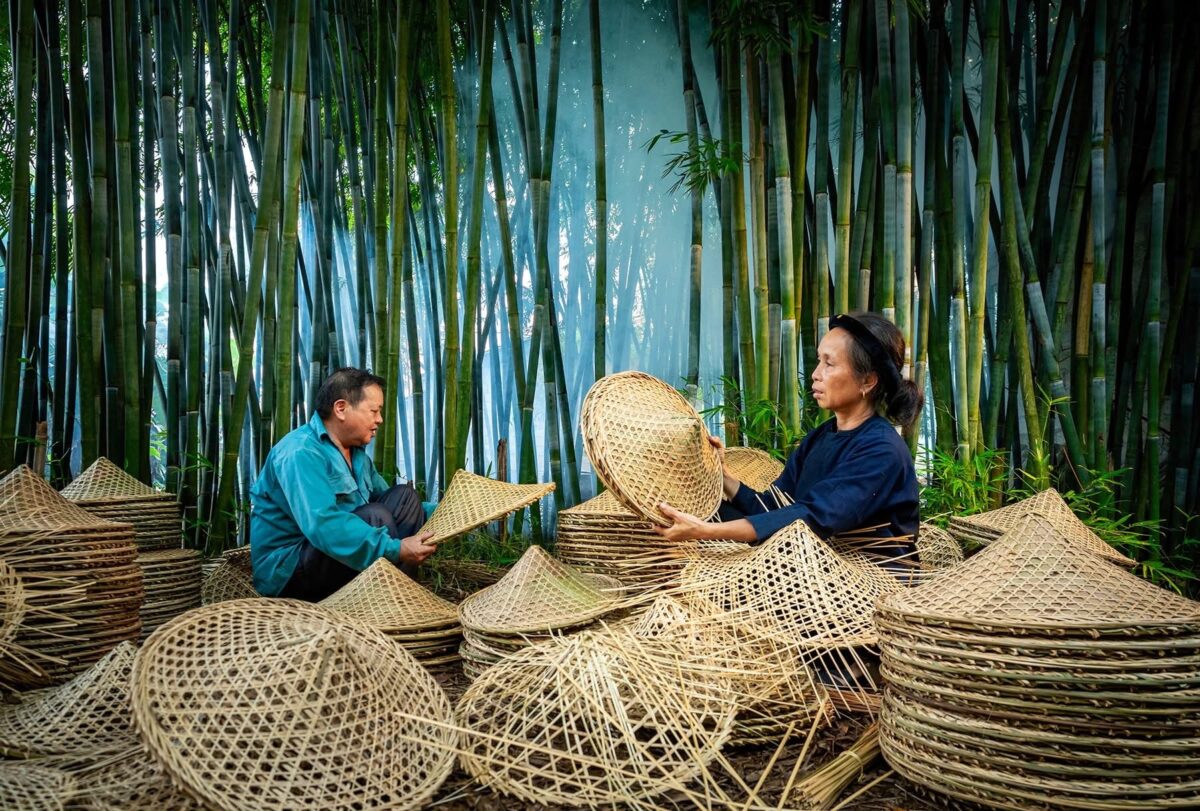
The reserve is also famous for its traditional bamboo water wheels, which are used to move water from streams toward agricultural fields. Combined with wooden stilt houses, narrow footpaths, bamboo forests and limestone mountains, these features create the landscape most visitors associate with Pu Luong.
The destination is particularly good for travelers who want to spend several hours walking each day rather than rushing between sightseeing stops. You can trek from one village to another, stop for lunch, continue through rice fields and return to your accommodation in the afternoon without needing a packed schedule.
Pu Luong vs Sapa
Pu Luong and Sapa are often compared because both offer mountain scenery, rice terraces and trekking. The experience, however, is quite different.
Sapa has a larger tourism infrastructure, more hotels, restaurants, shops and major attractions, including Fansipan and the cable car system. It is easier for travelers who want a combination of mountain scenery and developed tourism facilities.
Pu Luong is smaller in scale and more rural. The main attractions are the rice terraces, villages, trekking paths, forests, water wheels and mountain lodges. There is less emphasis on urban sightseeing and much more on spending time outdoors.
If you want dramatic high-altitude scenery, a developed mountain town and easy access to major attractions, Sapa may suit you better. If you want quiet valleys, gentle-to-moderate trekking, traditional villages and a slower countryside experience, Pu Luong is often the better choice.

Best Time to Visit Pu Luong
Pu Luong can be visited throughout the year, but the appearance of the rice terraces changes dramatically according to the agricultural calendar.
Late May to June is one of the most beautiful periods for green landscapes. Young rice fills the terraces, creating bright green patterns across the mountainsides. Water is also an important part of the scenery during this period because the fields are being cultivated and irrigated.
September to October is another excellent period. Rice terraces gradually turn golden as the harvest approaches, creating some of the most photogenic landscapes in the reserve. The temperatures are also generally more comfortable for trekking than during the hottest months.
July and August are hot, humid and wetter. The landscape remains lush, but heavy rain can make some trails muddy or slippery.
November to February is cooler and generally quieter. The rice fields may not have the vivid green or golden appearance seen during the main agricultural seasons, but this period can be appealing to travelers who prioritize peaceful trekking and cooler temperatures.
If your priority is rice terrace photography, target late May–June or September–October. If your priority is comfortable outdoor activity, September and October are particularly attractive.
Pu Luong Weather
Pu Luong’s mountain environment means temperatures can differ from Hanoi, particularly in the mornings and evenings. During summer, daytime conditions can be hot and humid, while winter mornings may feel surprisingly cool.
Rain is an important consideration because trekking paths often cross agricultural areas and unpaved sections. A short shower may simply make the scenery greener, but prolonged rain can turn dirt paths into slippery trails.
The weather also affects visibility. On clear mornings, mountain ridges and rice terraces can be sharply defined. Misty mornings create a completely different atmosphere, with valleys gradually appearing as the sun rises.
For trekking, early morning is generally the most comfortable time of day, particularly from May through August.
How to Get From Hanoi to Pu Luong
The easiest way to reach Pu Luong is by road.
A private car is the most comfortable option for couples, families and private groups. The journey generally takes around four to five hours, depending on the starting point, traffic and destination within Pu Luong. A private vehicle also allows you to stop at scenic viewpoints and adjust the schedule.
A limousine shuttle is another practical option. These services generally provide a more comfortable journey than standard buses and may offer pickup in central Hanoi.
A motorbike journey is possible for experienced riders, but the route becomes more demanding as you approach the mountainous sections. Riders should be comfortable with winding roads, changing weather and limited services in rural areas.
For a premium itinerary, a private car is the most convenient choice.
Should You Visit Pu Luong as a Day Trip?
Technically, it is possible, but it is not recommended.
The road journey from Hanoi takes roughly four to five hours each way. A same-day trip therefore leaves very little time for meaningful trekking and means spending most of the day in transportation.
At least two days and one night is much more sensible.
A three-day trip is even better because it allows you to experience one longer trek, spend time in a village, enjoy the accommodation and explore without constantly watching the clock.
How Many Days Do You Need in Pu Luong?
2 days / 1 night works for travelers with limited time.
3 days / 2 nights is the best balance for most visitors.
4 days or more is appropriate if trekking is a major purpose of the trip or if you want to combine several villages, waterfalls, cycling routes and longer walks.
The destination rewards slower travel. Adding another night often improves the experience more than adding another attraction.
Don Village
Don Village is one of the best-known areas for accommodation and trekking in Pu Luong. It is surrounded by rice terraces and mountains, with numerous walking routes beginning nearby.
The village is particularly convenient for first-time visitors because several trekking routes can be reached without long transportation.
Morning walks around the rice fields are especially beautiful when sunlight begins to reach the valley.
Uoi Village
Uoi Village sits in a valley surrounded by rice terraces and mountains. Walking between Uoi and nearby villages is one of the classic Pu Luong experiences.
The trails pass through agricultural landscapes rather than being a single formal tourist attraction. This means the scenery changes according to the season and farming activity.
Uoi is particularly attractive during the green rice period when the terraces create layers across the valley.
Lan Village
Lan Village is another popular trekking area and is closely associated with traditional Thai stilt houses and rice fields.
A walk through the village provides an opportunity to see how houses, gardens, rice paddies and streams are integrated into the landscape.
Travelers staying nearby can combine Lan Village with Uoi and other valleys for a half-day or full-day walking route.
Hieu Village and Hieu Waterfall
Hieu Village is located in another scenic part of the reserve and is known for its waterfall and surrounding forested landscape.
The waterfall is especially attractive during periods when water levels are good. After heavy rain, the flow can become much stronger, while during drier periods the experience may be more subdued.
The journey to Hieu is worth considering if you have at least three days because it adds a different landscape to the classic rice-terrace valleys.

Kho Muong Village
Kho Muong is one of Pu Luong’s more remote and visually impressive villages. The valley is surrounded by limestone mountains and forest, giving it a more isolated atmosphere than some of the better-known trekking areas.
Reaching Kho Muong involves mountain roads and trekking, so it is better suited to travelers who enjoy outdoor activities.
The surrounding scenery is particularly dramatic because the valley is enclosed by karst mountains.
Kho Muong Cave
Kho Muong Cave is another interesting geological feature in the area. The cave lies beneath the limestone landscape and can be incorporated into trekking routes around Kho Muong.
Conditions inside caves can be wet and slippery, so proper footwear is important.
Do not enter unfamiliar cave sections independently. Water levels and conditions can change after rainfall.
Pu Luong Trekking
Trekking is the main reason many travelers visit Pu Luong.
Unlike destinations where a major viewpoint is the objective, Pu Luong trekking is about moving through a complete landscape: rice terraces, streams, bamboo groves, farms, houses and forested hills.
Routes range from short walks lasting a couple of hours to full-day hikes. Some paths are relatively gentle, while others include steep climbs and descents.
The difficulty can also change depending on weather. A trail that is easy during dry conditions may become considerably more challenging after heavy rain.
For longer or unfamiliar routes, hiring a knowledgeable guide is strongly recommended because trail markings are limited in parts of the reserve.
Pu Luong Trekking Routes
One of the most popular approaches is to connect Don, Uoi and Lan villages, allowing travelers to walk through several rice-terrace valleys in one outing.
Another option is to explore the Hieu Valley and combine trekking with the waterfall.
More adventurous travelers can choose routes around Kho Muong, where the terrain becomes more mountainous and remote.
Rather than choosing a route solely based on distance, consider the elevation changes, weather, trail surface and your fitness level.
A four-hour trek with moderate elevation changes can feel much harder than a longer walk on flat terrain.
Is Pu Luong Trekking Difficult?
Pu Luong offers trekking suitable for a wide range of abilities.
Easy routes can involve relatively gentle paths through villages and rice fields.
Moderate routes may include hills, uneven surfaces and longer distances.
More demanding routes can involve steep climbs, slippery trails, forest paths and extended walking.
You do not need to be an experienced mountaineer for the majority of popular routes, but comfortable walking shoes and reasonable fitness are important.
Families can also trek in Pu Luong by choosing shorter routes and arranging transportation between villages when necessary.
Cycling in Pu Luong
Cycling is an excellent alternative to trekking for travelers who want to cover more distance.
The quieter roads through valleys provide opportunities to cycle between villages, rice fields and accommodation areas.
However, some routes contain steep sections, and bicycles are not ideal for every part of the reserve.
An e-bike can be useful for travelers who want to cycle without committing to a full day of physical effort.
Bamboo Water Wheels
The bamboo water wheels of Pu Luong are among the most recognizable features of the region.
These traditional structures use the movement of flowing water to lift water toward agricultural fields. Their design is simple but remarkably effective.
The wheels are especially interesting during the growing season when irrigation is essential for rice farming.
Because they are part of an agricultural system rather than a theme-park attraction, visitors should observe them respectfully and avoid climbing on or interfering with the structures.

Traditional Thai Stilt Houses
Traditional Thai stilt houses are an important part of Pu Luong’s cultural landscape.
Many houses are elevated above the ground, with open spaces beneath and living areas above. The design is well adapted to the mountainous environment and traditional agricultural lifestyle.
Some have been converted into homestays, allowing travelers to stay overnight in the same style of structure.
A homestay does not necessarily mean sacrificing comfort. Some modern properties combine traditional architecture with private bathrooms, comfortable beds and attractive views over the valley.
Pu Luong Homestays
Staying in a traditional-style homestay is one of the best ways to experience Pu Luong.
Simple homestays may provide shared sleeping areas and basic facilities, while higher-end properties offer private rooms, modern bathrooms, pools and panoramic views.
For couples and travelers looking for comfort, there are also boutique lodges and mountain retreats built around the landscape.
When selecting accommodation, pay attention to its exact location, not simply whether it is described as being in Pu Luong. A property deep in one valley may be beautiful but inconvenient if you want to visit attractions in another part of the reserve.
Pu Luong Luxury Resorts and Retreats
Pu Luong has developed a growing collection of eco-friendly retreats that emphasize architecture, views and tranquility.
Some properties are built on hillsides overlooking rice terraces, while others are integrated into traditional village environments.
A premium stay can include private bungalows, infinity pools, spa treatments and high-quality dining while maintaining traditional design elements.
The best properties are those that make the landscape the focus rather than constructing large buildings that dominate the valley.
Pu Luong Food
Food in Pu Luong reflects the agricultural environment and traditional cooking of the communities living in the area.
Meals may include grilled pork, chicken, bamboo shoots, vegetables, rice, mountain herbs and freshwater or regional ingredients, depending on the season and accommodation.
Traditional communal meals are particularly enjoyable after a day of trekking.
If you have dietary restrictions, tell your accommodation before arrival because food choices in rural areas are more limited than in Hanoi.
What to Pack for Pu Luong
Pack for outdoor activity rather than city sightseeing.
You should bring comfortable trekking shoes, lightweight clothing, sunscreen, insect repellent, a hat, a reusable water bottle, a rain jacket and a small backpack.
For May through August, breathable clothing is important because temperatures can become high during the day.
For November through February, bring layers and a light jacket for cooler mornings and evenings.
If trekking after rain, shoes with good grip are essential.
Pu Luong for Couples
Pu Luong is particularly attractive for couples who want a quiet break from cities.
A private bungalow overlooking rice terraces, a morning walk through the valley, lunch at a traditional house and an afternoon by the pool can create a relaxing itinerary without requiring constant sightseeing.
Couples who enjoy photography should consider visiting during the green or golden rice seasons.
For a honeymoon or anniversary, combine Pu Luong with Hanoi and another premium destination rather than trying to fill every day with activities.
Pu Luong for Families
Families can enjoy Pu Luong, but the itinerary should be adjusted to the children’s ages.
Short village walks, cycling, traditional houses and waterfalls can be more suitable than long mountain treks.
Choose accommodation with private rooms and comfortable facilities if traveling with young children.
A private vehicle is also valuable because it allows you to shorten or change the schedule when children become tired.
Pu Luong for Older Travelers
Pu Luong can work well for older travelers who enjoy nature but do not want demanding mountain trekking.
Choose gentle valley walks, scenic viewpoints and comfortable accommodation instead of long routes with steep elevation changes.
A private guide can adapt the walking distance according to your ability.
There is no need to complete a difficult trek simply because it appears in an itinerary. The scenery can be enjoyed through short walks and scenic drives as well.
Pu Luong for Photographers
Photography conditions change dramatically according to the rice cycle.
May–June offers vivid green terraces and agricultural activity.
September–October brings golden fields around harvest.
Early morning is excellent for mist and soft light, while late afternoon provides warm light across the mountains.
A telephoto lens is useful for isolating individual terraces, houses and mountain layers, while a wide-angle lens works well for valley landscapes.

Pu Luong for Nature Lovers
Beyond rice fields, Pu Luong contains forests, limestone formations, streams and diverse plant life.
The reserve is part of a larger ecological landscape, and trekking through forest sections provides a different experience from walking through agricultural valleys.
Birdwatching and wildlife observation are possible, but sightings are never guaranteed. Travelers should avoid disturbing animals or removing plants from the reserve.
Is Pu Luong Good for a Digital Detox?
Yes.
Mobile connectivity can become weaker in deeper valleys and on trekking routes, although many accommodations provide Wi-Fi.
For travelers who spend most of their lives surrounded by phones and screens, Pu Luong provides a natural opportunity to disconnect for a day or two.
Instead of treating weak connectivity as a problem, use it as an opportunity to spend more time walking, photographing, reading or simply watching the landscape.
Pu Luong Travel Safety
The main risks in Pu Luong are related to mountain roads, weather and trekking conditions, rather than urban crime.
Wear appropriate shoes and take extra care on wet paths.
Do not hike unfamiliar routes alone, particularly after heavy rain.
If you are traveling by motorbike, be especially careful on mountain roads and avoid riding in poor visibility.
Keep drinking water with you during longer walks, and inform your guide or accommodation about your planned route.
Pu Luong Responsible Travel
Pu Luong is a living agricultural landscape rather than an open-air museum.
When walking through villages, respect houses, farms and private property. Do not enter someone’s home without permission simply because it appears interesting for photographs.
Avoid leaving rubbish along trekking paths and reduce plastic use whenever possible.
If buying handicrafts or products directly from village communities, purchase respectfully and avoid treating traditional culture as a performance created solely for tourists.
Choosing accommodation that employs residents and supports community-based tourism can help tourism contribute more directly to the region.
How Much Does a Pu Luong Trip Cost?
The price varies widely according to transportation, accommodation and whether you choose a private guide.
A basic homestay and shared transportation can make Pu Luong relatively inexpensive.
A private car from Hanoi, boutique lodge, private guide and customized trekking program will cost considerably more.
For premium travelers, the strongest value usually comes from combining private transportation, a high-quality mountain retreat and a private guide, rather than adding unnecessary activities.
Pu Luong 2-Day 1-Night Itinerary
Day 1: Leave Hanoi in the morning by private car and travel toward Pu Luong through the mountainous countryside. Arrive around midday, check into your accommodation and enjoy lunch overlooking the valley. In the afternoon, take a gentle trek through rice terraces and traditional villages, passing bamboo water wheels and small streams before returning to the lodge. Enjoy dinner and a quiet evening in the mountains.
Day 2: Wake early to see the valley in the morning light and have breakfast before beginning a longer village trek. Depending on fitness and weather, explore Uoi, Lan, Don or another nearby route before returning for lunch. After lunch, depart Pu Luong by private vehicle and return to Hanoi in the afternoon or early evening.
Pu Luong 3-Day 2-Night Itinerary
Day 1: Depart Hanoi by private car and travel toward Pu Luong, stopping at scenic points along the mountain road when appropriate. Arrive at your lodge, enjoy lunch and spend the afternoon exploring nearby rice terraces and villages on foot. Return to the property for dinner and relax while overlooking the valley.
Day 2: Start early with a longer guided trek through rice terraces, bamboo forests and Thai villages. Depending on the route, visit a water-wheel area, continue toward a waterfall or explore another valley before stopping for lunch. Spend the afternoon relaxing at the lodge or cycling through nearby countryside, followed by dinner and another quiet night in Pu Luong.
Day 3: Enjoy breakfast and a final morning walk through the surrounding valley before checking out. Have lunch and begin the return journey to Hanoi, arriving later in the afternoon. If your itinerary continues to another Northern Vietnam destination, private transportation can be arranged directly from Pu Luong.
Pu Luong and Hanoi
Hanoi and Pu Luong work well together because they offer completely different experiences.
Spend two or three days in Hanoi exploring the Old Quarter, historical attractions and food culture, then travel southwest to Pu Luong for two or three nights of nature and trekking.
The contrast between Hanoi’s busy streets and Pu Luong’s quiet valleys makes the combination particularly effective for first-time visitors.
Pu Luong and Mai Chau
Mai Chau is geographically close to Pu Luong and can be incorporated into a longer Northern Vietnam journey.
Mai Chau is known for its broad valley, rice fields and Thai villages, while Pu Luong offers more mountainous terrain, deeper valleys and stronger trekking opportunities.
For travelers with four or more days available, combining the two can create an excellent countryside itinerary.
Pu Luong and Sapa
There is no need to choose both, but travelers with more time can combine them.
Sapa provides a more developed mountain destination with Fansipan and larger tourism infrastructure.
Pu Luong provides a quieter agricultural environment and more intimate village trekking.
If you visit both, allow enough time for transportation rather than trying to rush through each destination in one night.
Pu Luong Travel Tips
Stay at least one night. A day trip from Hanoi involves too much driving for too little time.
Choose accommodation by location. Pu Luong is spread across multiple valleys.
Visit during the rice seasons if photography matters. Late May–June and September–October are particularly attractive.
Start trekking early. Morning temperatures are generally more comfortable.
Hire a guide for longer routes. Some trails are not clearly marked.
Bring proper shoes. Rice-field paths become slippery after rain.
Carry cash. Rural payment options can be more limited than in Hanoi.
Do not expect nightlife. Pu Luong is about nature, food and quiet evenings.
Do not over-plan. A long lunch, slow walk and time at your lodge are part of the experience.
Allow flexibility for weather. Rain can change trekking conditions quickly.
Is Pu Luong Worth Visiting?
Pu Luong is worth visiting if you want a side of Vietnam that feels fundamentally different from the country’s major cities.
Its strongest attractions are not individual monuments but the combination of rice terraces, limestone mountains, Thai villages, bamboo water wheels, forest trails and peaceful mountain accommodation.
For most travelers, three days and two nights provides the best balance. You have enough time to travel from Hanoi without rushing, complete a meaningful trek, visit villages and enjoy the accommodation.
If you only have two days, one night can still work. But if you have the flexibility, stay longer and allow the landscape to set the pace of the trip.
Explore Pu Luong With Vietnam Women Travel
Vietnam Women Travel – Premium Private Tours Led by Women can create private Pu Luong journeys beginning in Hanoi, combining comfortable private transportation, carefully selected mountain accommodation and guided trekking experiences.
A customized itinerary can include Pu Luong rice terraces, Don Village, Uoi Village, Lan Village, Hieu Waterfall, Kho Muong, bamboo water wheels, traditional Thai villages and scenic trekking routes, with the walking distance adjusted to your fitness level.
For couples, families and private groups, Pu Luong works particularly well as a two- or three-night nature escape from Hanoi. Private transportation allows the journey to remain comfortable, while a women-led travel team can coordinate the accommodation, guide, meals and activities around your preferred pace.
Vietnam Women Travel – Premium Private Tours Led by Women
Website: https://vietnamwomentravel.com/
Hotline / WhatsApp: +84 988 402 008 | +84 982 416 518 | +84 981 090 989
Email: info@vietnamwomentravel.com
Pu Luong Guide | Pu Luong Travel Guide | Pu Luong Vietnam | Pu Luong Nature Reserve | Pu Luong Trekking | Pu Luong Rice Terraces | Pu Luong Villages | Pu Luong Waterfalls | Pu Luong Homestay | Best Time to Visit Pu Luong | Things to Do in Pu Luong | Pu Luong From Hanoi | Vietnam Travel Guide 2026