
Hanoi Guide 2026: Complete Travel Guide to Vietnam’s Capital
Hanoi is a city where Vietnam’s imperial history, French colonial architecture, traditional neighborhoods, street food culture and modern urban life exist within the same few kilometers. Founded more than 1,000 years ago, the capital is best experienced slowly rather than treated as a checklist of monuments. You can begin the morning beside Hoan Kiem Lake, walk through the narrow streets of the Old Quarter, visit historic temples and museums before lunch, spend the afternoon around the West Lake area, and finish the day with street food, Vietnamese coffee or a night ride through the city. Hanoi’s historic center remains particularly compact, making it possible to combine walking with taxis, private cars, bicycles or motorbike experiences depending on the area you want to explore.

Why Hanoi Should Be the Starting Point of Your Vietnam Trip
Hanoi is one of the most convenient places to begin a Vietnam journey because it combines an international airport, a historic city center and easy connections toward Northern Vietnam. From Hanoi, travelers can continue to destinations such as Ha Long Bay, Sapa, Ha Giang and other northern regions before flying south to Central or Southern Vietnam.
More importantly, Hanoi gives you an immediate introduction to Vietnamese culture. The city does not separate its historic attractions from everyday life. Temples stand beside restaurants, narrow houses open directly onto busy streets, traditional markets operate within modern neighborhoods, and cafés occupy buildings that may be decades or even centuries old. This mixture is what makes Hanoi different from a city that has been preserved purely as a tourist attraction.
Best Time to Visit Hanoi
Hanoi experiences noticeably different seasons. October to December is generally one of the most comfortable periods for sightseeing, with cooler temperatures and relatively pleasant conditions. March and April can also be attractive, while May through August is considerably hotter, more humid and more likely to experience heavy rain.
Winter, particularly from December through February, can surprise visitors who expect Vietnam to be hot everywhere. Hanoi can become cool, damp and cloudy, especially in the mornings and evenings. If you are continuing to Sapa or Ha Giang, bring warmer clothing because mountain temperatures can be significantly lower.
For travelers who want the best balance between weather and sightseeing, October–November, March–April and early December are particularly useful periods to consider.

Hoan Kiem Lake
Hoan Kiem Lake is the natural center of Hanoi’s historic district and one of the easiest places to start exploring the city. The name means “Lake of the Returned Sword” and is connected with the famous legend of Emperor Le Loi and a magical sword returned to the lake’s golden turtle.
The lake is particularly atmospheric in the early morning when residents exercise, walk and practice tai chi around the water. In the evening, the atmosphere changes completely as cafés, restaurants and pedestrians fill the surrounding streets. The area around the lake also becomes a major pedestrian space during designated weekend periods.
On the northern side of the lake stands Ngoc Son Temple, reached by crossing the distinctive red Huc Bridge. The temple is one of Hanoi’s best-known historic religious sites and can easily be combined with an Old Quarter walking route.

Hanoi Old Quarter
The Old Quarter is the part of Hanoi that most visitors imagine when they think about the city: narrow streets, tube houses, small restaurants, historic temples, cafés, shops, scooters and an almost constant flow of people.
Historically, the district developed around specialized trading streets, which explains why many street names are connected to particular products or crafts. Hang Bac was traditionally associated with silver, Hang Ma with paper products and festival decorations, Hang Gai with silk and fabrics, while Lan Ong remains associated with traditional herbs and medicines. Some streets have changed dramatically, but the historic street pattern and architecture remain important parts of the neighborhood’s character.
Do not try to see the Old Quarter only through its major attractions. The most interesting experience often comes from turning into a small alley, finding an old courtyard, watching a family-run shop open for the morning or sitting at a tiny coffee shop overlooking the street.
A comfortable walking route can begin around Hoan Kiem Lake, continue through Hang Dao, Hang Bac, Hang Ma and Hang Buom, then reach Bach Ma Temple before returning toward the lake. The historic core is compact enough to explore on foot, although the heat and traffic can make a guided motorbike tour a better option for covering more ground.
Hanoi’s Historic Temples
Hanoi has an extraordinary concentration of temples and pagodas, particularly around the Old Quarter and West Lake.
Bach Ma Temple on Hang Buom Street is traditionally regarded as one of the city’s oldest temples and is connected with the ancient protection of Thang Long. Ngoc Son Temple sits on an island in Hoan Kiem Lake. Quan Thanh Temple stands near West Lake and is associated with Tran Vu, while Tran Quoc Pagoda occupies a small island on West Lake and is one of the city’s best-known Buddhist sites.
These places are not simply photo stops. They remain religious spaces, so visitors should dress respectfully, keep their voices low and avoid disturbing people who are praying or making offerings.

Temple of Literature
The Temple of Literature is one of Hanoi’s most important historical attractions and a particularly good place to understand Vietnam’s traditional educational culture.
Established in 1070 and associated with the Imperial Academy, the site represents the importance of scholarship and Confucian learning in Vietnamese history. Its courtyards, gateways, gardens and stone stelae make it one of the city’s most visually distinctive historical sites.
Allow around one to two hours if you want enough time to explore rather than simply walk through the entrance and leave. The Temple of Literature works particularly well in the morning, before the strongest afternoon heat.
Ho Chi Minh Mausoleum Complex
The Ho Chi Minh Mausoleum area is one of the most significant historical zones in Hanoi. The complex includes the mausoleum, Ba Dinh Square, the Presidential Palace area, Ho Chi Minh’s Stilt House and the One Pillar Pagoda.
The area requires more planning than many other Hanoi attractions because opening schedules, security arrangements and access restrictions can vary. Visitors should dress appropriately and follow instructions from staff.
Do not treat this as a quick photo stop. The complex is closely connected with modern Vietnamese history, and a guide can provide useful historical context that is difficult to understand simply by looking at the buildings.
One Pillar Pagoda
The One Pillar Pagoda is a small but highly recognizable structure near the Ho Chi Minh Mausoleum complex. Its unusual design, with the shrine supported above a pond, makes it one of Hanoi’s most distinctive religious landmarks.
The site does not require a long visit, so it is best combined with the Mausoleum area, Presidential Palace and nearby attractions rather than planned as a separate half-day activity.
Imperial Citadel of Thang Long
The Imperial Citadel of Thang Long represents a much older layer of Hanoi’s history. The site was the political center of successive Vietnamese dynasties and contains archaeological remains and historic structures connected with the ancient capital of Thang Long.
It is particularly worthwhile for travelers interested in archaeology, architecture and Vietnamese history. Allow more time than you would for a simple monument because the site is extensive and contains several different areas.
Hanoi Museums
Hanoi has several museums covering Vietnamese history, military history, art, ethnic cultures and modern national development.
The Vietnam National Museum of History is useful for understanding Vietnam from ancient periods through more recent history. The Vietnam Museum of Ethnology is particularly valuable for visitors who want to learn about the country’s diverse ethnic communities, while the Vietnam Fine Arts Museum offers a different perspective through sculpture, painting and religious art.
Do not attempt to visit every museum during a short trip. Choose one or two according to your interests and combine them with nearby attractions.

West Lake Hanoi
West Lake, or Ho Tay, offers a completely different atmosphere from the crowded Old Quarter. The lake is surrounded by cafés, restaurants, hotels, residential areas and religious sites, and it is one of the best areas in Hanoi for travelers who prefer a quieter environment.
The northern and western edges of the lake are particularly suitable for longer stays. You can combine West Lake with Tran Quoc Pagoda, Quan Thanh Temple, Phu Tay Ho and the surrounding café scene.
The area is also a good choice for travelers who have already visited Hanoi’s major historic attractions and want to experience a more residential side of the capital.
Hanoi French Quarter
South of Hoan Kiem Lake, the French Quarter has a very different architectural character from the Old Quarter. Wider streets, colonial buildings, mature trees and grand public structures create a more spacious environment.
Important landmarks include the Hanoi Opera House, St. Joseph’s Cathedral, the National Museum of Vietnamese History and several historic government and commercial buildings.
The French Quarter is particularly enjoyable early in the morning or late afternoon when the temperature is more comfortable and the streets are less intense than during the middle of the day.
Hanoi Opera House
The Hanoi Opera House is one of the most recognizable examples of French colonial architecture in the city. Its location makes it a useful meeting point for sightseeing tours and an easy addition to a French Quarter itinerary.
From the Opera House, you can walk toward Hoan Kiem Lake, explore Trang Tien Street, visit nearby museums or continue toward the Old Quarter.
St. Joseph’s Cathedral
St. Joseph’s Cathedral is located near the western side of the Old Quarter and is one of Hanoi’s most recognizable colonial-era landmarks. Its neo-Gothic exterior contrasts sharply with the narrow Vietnamese houses and small cafés surrounding it.
The streets immediately around the cathedral are particularly popular for coffee and casual dining, making this an easy place to combine architecture with Hanoi’s café culture.
Hanoi Train Street
Hanoi Train Street became famous internationally because railway tracks pass extremely close to buildings and cafés. However, access and safety arrangements have changed over time, and visitors should not assume that every section is open or that they can freely enter railway areas.
If you want to visit, follow current access restrictions and never enter the tracks or obstruct railway operations simply to take photographs. There are many other parts of Hanoi where you can experience the city’s railway history without taking unnecessary risks.
Hanoi Street Food
Food is one of the strongest reasons to spend several days in Hanoi. The city’s food culture is built around small kitchens, market stalls, family restaurants and dishes prepared directly in front of customers.
Start with pho, particularly for breakfast. The northern style is generally more restrained than versions found farther south, with a clear broth and emphasis on the quality of the noodles and meat.
Bun cha is another Hanoi classic: grilled pork served with rice noodles, herbs and a sweet-sour dipping broth. Banh cuon is a delicate steamed rice roll usually filled with minced pork and mushrooms. Cha ca combines grilled fish with herbs, noodles and other accompaniments.
Hanoi’s food culture is much broader than these famous dishes. Spend time trying smaller snacks, grilled foods, seasonal desserts and different styles of Vietnamese coffee.

Hanoi Coffee Culture
Coffee is part of everyday life in Hanoi, not simply something tourists consume between sightseeing stops.
Traditional Vietnamese coffee is commonly brewed slowly using a metal filter, often served with condensed milk or ice. Hanoi is also strongly associated with egg coffee, a rich drink made with whipped egg mixture and coffee.
The best way to understand Hanoi’s café culture is to sit down rather than simply order a takeaway. Small cafés can occupy surprisingly narrow spaces, upper floors, balconies or converted houses, giving you a chance to observe the street from above.
Hanoi Nightlife
Hanoi nightlife is more varied than the famous beer streets suggest. Travelers can choose between traditional music, water puppetry, rooftop bars, cocktail lounges, live music, cafés and late-night food.
The Old Quarter becomes particularly lively after sunset, while the area around Hoan Kiem Lake attracts pedestrians and families during weekend evenings.
For something more relaxed, West Lake has a large selection of restaurants and bars with views over the water.
Water Puppet Show
A water puppet performance is one of Hanoi’s most accessible cultural experiences. The traditional art form combines puppetry, music and storytelling, with performers controlling wooden puppets from behind a screen while the figures move across a water stage.
A performance usually does not take an entire evening, so it can be combined with dinner or an Old Quarter food experience.
Book ahead during busy periods if you have a specific performance time in mind.
Hanoi Markets
Hanoi has several markets worth exploring, but they serve different purposes.
Dong Xuan Market is the largest traditional market in the Old Quarter and is useful for understanding the commercial side of the district.
Hom Market is more relevant to fabric and textiles, while smaller neighborhood markets provide a closer look at everyday shopping.
For visitors interested in photography and food, early morning is usually the most interesting time because markets are busiest and fresh produce is being delivered and sold.
What to Buy in Hanoi
Popular purchases include Vietnamese coffee, tea, silk products, lacquerware, ceramics, handicrafts, artwork and traditional snacks.
Be careful with expensive antiques or items claimed to be historically significant. If you are buying something valuable, ask about authenticity and documentation rather than assuming that an old-looking object is genuinely antique.
For clothing, Hanoi has many tailors and shops, but quality varies. If you want custom clothing, allow sufficient time for measurements, fitting and alterations.
Hanoi Transportation
Hanoi’s historic center is compact enough for walking, but traffic can make longer journeys slow.
Walking is best for the Old Quarter, Hoan Kiem Lake and nearby attractions.
Grab or taxis are convenient for short urban transfers.
Private cars are better for airport transfers, families, luggage and day trips outside Hanoi.
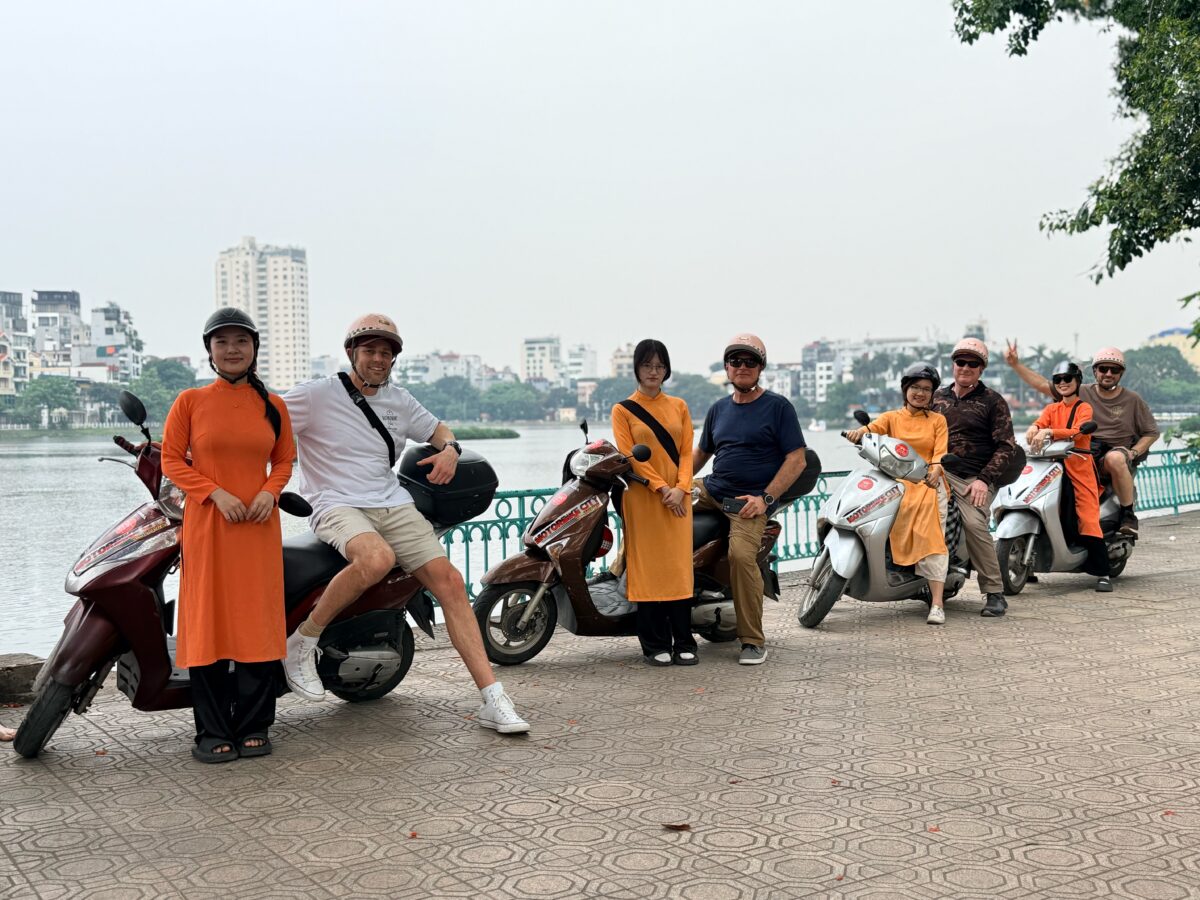
Motorbike tours are useful when you want to cover more neighborhoods in a few hours without spending your entire day walking.
Cycling can be enjoyable in quieter areas, particularly around West Lake and the outskirts, but central Hanoi traffic requires confidence.
For visitors unfamiliar with Vietnamese traffic, a guided motorbike experience with a professional driver is a much easier way to explore the city than renting a scooter yourself.
Hanoi Airport to City Center
Noi Bai International Airport is located outside central Hanoi. The most comfortable option for first-time visitors, families or travelers arriving with significant luggage is a pre-arranged private transfer.
Taxis and ride-hailing services are also available, while public buses provide a lower-cost alternative.
If your hotel is in the Old Quarter, expect the final section of the journey to be slower during busy traffic periods because the narrow streets can become congested.
How Many Days Do You Need in Hanoi?
2 days is enough for a quick introduction, covering Hoan Kiem Lake, the Old Quarter, major historical attractions and a food experience.
3 days gives you a much better balance. You can explore the Old Quarter and Hoan Kiem Lake on one day, visit the Temple of Literature, Ho Chi Minh complex and museums on another, then spend the third day exploring West Lake, the French Quarter and Hanoi’s food scene.
4 days or more allows you to slow down, discover smaller neighborhoods and add a day trip outside the city.
If Hanoi is the beginning of a longer Vietnam journey, three full days is a strong starting point.
Hanoi 2-Day Itinerary
Day 1: Begin around Hoan Kiem Lake in the morning, visit Ngoc Son Temple and walk through the Old Quarter. Continue to Bach Ma Temple, Dong Xuan Market and the historic streets around Hang Buom. Spend the afternoon around St. Joseph’s Cathedral and the French Quarter, then finish with a Hanoi street food experience and evening walk around Hoan Kiem Lake.
Day 2: Start at the Ho Chi Minh Mausoleum complex, continue to the One Pillar Pagoda and Temple of Literature, then visit one museum according to your interests. In the afternoon, travel toward West Lake and visit Tran Quoc Pagoda and Quan Thanh Temple. Finish the day with Vietnamese coffee, dinner and an evening cultural performance.
Hanoi 3-Day Itinerary
Day 1: Explore Hoan Kiem Lake and the Old Quarter slowly, combining historic streets, temples, traditional shops and Vietnamese food. Spend the afternoon around the French Quarter and Hanoi Opera House before enjoying dinner and Hanoi’s nightlife.
Day 2: Focus on Hanoi’s history with the Ho Chi Minh complex, One Pillar Pagoda, Temple of Literature, Imperial Citadel and a museum. Leave the evening free for a food tour or water puppet performance.
Day 3: Explore West Lake, Tran Quoc Pagoda and quieter neighborhoods before spending the afternoon discovering cafés, markets and smaller streets. A guided motorbike tour is an excellent alternative if you want to cover parts of Hanoi that are difficult to reach on foot.
Hanoi for Couples
Hanoi works particularly well for couples because it offers many experiences that do not require a rigid sightseeing schedule. Walk around Hoan Kiem Lake in the morning, share egg coffee in a small café, explore the Old Quarter, enjoy a private food experience and finish the evening at a rooftop restaurant or bar.
For couples celebrating a special occasion, a private car, private guide and carefully selected restaurants can turn a standard city visit into a more comfortable experience.
Hanoi for Families
Families should avoid trying to walk continuously for an entire day, particularly during the hottest months. Combine short walking sections with private transportation and schedule indoor attractions during the hottest part of the afternoon.
The Temple of Literature, water puppet performances, museums, cafés and food experiences can be mixed with outdoor sightseeing to create a more comfortable schedule for children.
Hanoi for First-Time Visitors
If this is your first visit, do not try to see everything.
Prioritize Hoan Kiem Lake, the Old Quarter, Temple of Literature, Ho Chi Minh complex, one museum, West Lake and Hanoi’s food culture.
Then choose one special experience such as a motorbike tour, cooking class, water puppet performance or evening food tour.
This gives you a much better understanding of Hanoi than spending your entire trip moving from monument to monument.
What to Wear in Hanoi
Lightweight clothing is appropriate during the hot season, but modest clothing is better when visiting temples, pagodas and historical religious sites.
From December through February, bring a jacket and layers because Hanoi can feel surprisingly cold and damp.
Comfortable shoes are essential because walking is one of the best ways to explore the Old Quarter.
During the rainy season, carry a compact rain jacket or umbrella and protect phones and cameras when sudden showers arrive.
Hanoi Travel Safety
Hanoi is generally straightforward for international visitors, but the city’s traffic requires attention.
When crossing streets, move predictably rather than suddenly stopping or running. Keep phones and cameras secure near busy roads and markets, and use reputable transportation services.
At restaurants and shops, check prices when ordering unfamiliar items, particularly where there is no clearly displayed menu.
When visiting temples, respect religious customs and avoid touching sacred objects without permission.
Hanoi Travel Tips
Start early. The city is cooler and quieter in the morning, and Hoan Kiem Lake is especially atmospheric.
Take breaks. Hanoi’s heat and humidity can make walking more tiring than expected.
Stay near the area that matches your travel style. The Old Quarter is convenient for first-time visitors who want restaurants and nightlife close by, while West Lake is better for travelers seeking more space and a quieter atmosphere.
Do not plan every minute. Hanoi rewards spontaneous exploration.
Try street food with guidance if you are uncertain. A knowledgeable guide can explain dishes, ingredients and eating customs while taking you to places that are difficult to identify independently.
Keep small cash available. Smaller food stalls and shops may not accept cards.
Do not underestimate traffic. A short distance on the map can take much longer by car during rush hour.
Where to Stay in Hanoi
The Old Quarter is the best choice for first-time visitors who want to walk to restaurants, markets, Hoan Kiem Lake and nightlife.
The French Quarter is better for travelers who prefer grander architecture, wider streets and access to upscale hotels and restaurants.
West Lake suits longer stays, couples, families and travelers who prefer a quieter environment with cafés and lakeside restaurants.
The best neighborhood depends less on the hotel itself and more on how you want to spend your evenings.
Hanoi and Ha Long Bay
Hanoi is commonly combined with Ha Long Bay because the two destinations work naturally together. Spend several days exploring the capital before transferring by private car or premium shuttle to the cruise departure area.
If your cruise is important to the trip, avoid scheduling a flight immediately after disembarkation. Weather or road traffic can cause delays, so leave a reasonable buffer between the cruise and your next major travel connection.
Hanoi and Sapa
Hanoi is also the main gateway for travelers continuing to Sapa. The journey can be made by limousine van, private car or railway connection to Lao Cai followed by road transportation.
For premium travel, a private vehicle or comfortable limousine transfer is generally more convenient than spending additional time changing transportation.
Hanoi and Ha Giang
Travelers heading to Ha Giang normally use Hanoi as their starting point before continuing by road. The journey is considerably longer than the transfer to Ha Long Bay, so private transportation or a high-quality limousine service can make a significant difference.
For a Ha Giang motorbike journey, allow enough time in the overall itinerary rather than trying to fit the loop into a rushed schedule.
Hanoi Food and Motorbike Experiences
Hanoi is particularly suitable for a guided motorbike tour because the city is too large and diverse to understand from only the Old Quarter.
A motorbike allows you to move between the historic center, French Quarter, West Lake, residential streets, markets and food areas within one experience. Instead of simply seeing famous landmarks, you can observe how different parts of Hanoi function throughout the day.
A private motorbike tour led by women is also an excellent option for travelers who want to explore the city comfortably without having to navigate Hanoi traffic themselves.

Hanoi Travel Guide: Final Recommendation
Hanoi is not a city that should be rushed. The major attractions are important, but the character of the capital is found between them: a bowl of pho eaten at a tiny table, an old temple hidden behind a busy street, coffee served in a narrow upstairs café, a quiet moment beside West Lake or the changing rhythm of the Old Quarter after dark.
For a first visit, plan at least three full days. Use the mornings for major historical sites and walking, the afternoons for museums, cafés or quieter neighborhoods, and the evenings for food, culture and the city’s street life.
Most importantly, leave some space in the schedule. Hanoi’s greatest strength is not one single attraction but the combination of history, food, architecture, people and everyday life that unfolds across the city.
Discover Hanoi With Vietnam Women Travel
Vietnam Women Travel – Premium Private Tours Led by Women creates private Hanoi experiences designed around your interests rather than a fixed group itinerary. Travelers can explore Hanoi by private car, on foot or by motorbike with experienced women guides and drivers, combining historical landmarks with food, architecture, hidden streets, cafés and everyday city life.
For first-time visitors, a private Hanoi itinerary can include Hoan Kiem Lake, the Old Quarter, Temple of Literature, Ho Chi Minh complex, French Quarter, West Lake, Tran Quoc Pagoda and Hanoi’s food culture, with the schedule adjusted according to weather, arrival time and travel style.
Vietnam Women Travel – Premium Private Tours Led by Women
Website: https://vietnamwomentravel.com/
Hotline / WhatsApp: +84 988 402 008 | +84 982 416 518 | +84 981 090 989
Email: info@vietnamwomentravel.com
Hanoi Guide | Hanoi Travel Guide | Hanoi Vietnam | Things to Do in Hanoi | Hanoi Old Quarter | Hoan Kiem Lake | Hanoi Food Guide | Hanoi Itinerary | Hanoi Travel Tips | Best Time to Visit Hanoi | Hanoi Private Tours | Hanoi Motorbike Tours | Vietnam Travel Guide 2026