
Vietnam Travel Tips 2026: Complete Guide to Planning Your Trip to Vietnam
Vietnam is a country that rewards travelers who plan according to geography, weather and travel time rather than simply collecting destinations from a map. The country stretches from the mountains and valleys of Northern Vietnam to the beaches and tropical islands of the south, with Central Vietnam sitting between them as a region of imperial history, UNESCO heritage, beaches and distinctive cuisine. Hanoi, Ha Long Bay, Sapa, Ha Giang, Hue, Da Nang, Hoi An, Phong Nha, Ho Chi Minh City, the Mekong Delta, Mui Ne, Phu Quoc and Con Dao all offer very different experiences. One of the most important Vietnam travel tips for first-time visitors is therefore to avoid putting too many destinations into a short itinerary. A well-planned 10-day trip can be much more enjoyable than a rushed 15-day trip that requires constant hotel changes, long transfers and domestic flights.
How Many Days Do You Need in Vietnam?
The ideal length of a Vietnam vacation depends on how much of the country you want to experience. Seven days is enough for one region, but not enough to see Vietnam from north to south properly. For a first visit of 10 days, a practical itinerary could combine Hanoi, Ha Long Bay, Hoi An and Ho Chi Minh City. With 14 days, you can create a much more balanced journey including Hanoi, Ha Long Bay, Hue, Hoi An, Ho Chi Minh City and the Mekong Delta. Travelers with 18 to 21 days can comfortably include Northern, Central and Southern Vietnam, with additional time for destinations such as Sapa, Ha Giang, Phu Quoc or Con Dao. The key is to calculate travel time between destinations rather than counting only the number of nights.
Best Time to Visit Vietnam
There is no single month that provides perfect weather throughout the entire country because Vietnam has three major climatic zones. Northern Vietnam has cooler winters and hot, humid summers, Central Vietnam has its own rainy and dry periods, while Southern Vietnam remains warm throughout the year with distinct dry and rainy seasons. March to May is often a useful period for travelers wanting to combine several regions, but destination-specific weather should always be checked before booking. For example, the best time for Ha Giang is not necessarily the best time for Central Vietnam, while the ideal beach season in Phu Quoc can be different from the ideal trekking season in Sapa. This regional difference is one of the most important things to understand before planning a Vietnam itinerary.
Vietnam Travel Tips for Northern Vietnam
Northern Vietnam is ideal for travelers interested in history, mountains, traditional culture, rice terraces and dramatic landscapes. Hanoi should normally receive at least two or three nights because the city has enough attractions, food experiences and neighborhoods to fill several days. Ha Long Bay works well as a one- or two-night cruise experience, while Sapa is better with at least two nights if trekking is important. Ha Giang requires more time because the main attraction is the journey through the mountains rather than simply visiting Ha Giang City. Pu Luong is suitable for travelers who prefer peaceful countryside, rice terraces and village walks. Each destination has a different character, so Northern Vietnam should not be treated as one single type of travel experience.
Vietnam Travel Tips for Central Vietnam
Central Vietnam is one of the easiest regions to combine history, culture, beaches and food. Hue is the best destination for travelers interested in the Nguyen Dynasty, imperial architecture and royal tombs. Da Nang provides beaches, modern hotels, Son Tra Peninsula and easy access to surrounding attractions. Hoi An is particularly attractive for travelers who enjoy historic architecture, food, riverside scenery, countryside and relaxed evenings. Phong Nha is completely different again, focusing on caves, karst landscapes and adventure. A well-planned Central Vietnam itinerary can therefore include Hue for history, Da Nang for the coast, Hoi An for heritage and Phong Nha for nature without requiring excessive travel between completely unrelated regions.
Vietnam Travel Tips for Southern Vietnam
Southern Vietnam has a warmer climate and a more energetic atmosphere. Ho Chi Minh City is the major urban center and is ideal for travelers interested in food, history, shopping, nightlife and modern Vietnamese life. The Mekong Delta offers a slower experience with rivers, canals, agricultural areas and communities along the waterways. Mui Ne is known for its beaches, sand dunes and wind sports, while Phu Quoc is a strong choice for travelers who want to finish their Vietnam journey with several days at a beach resort. Con Dao offers a quieter island experience with beaches, nature, marine environments and important historical sites. When planning Southern Vietnam, think about whether you want urban experiences, river landscapes, beaches or a combination of all three.
Vietnam Visa Tips
Visa requirements depend on nationality and can change, so travelers should always check the current requirements before booking flights. If an e-visa is required, make sure your passport information, full name, date of birth, passport number and intended entry details are entered exactly as they appear on your passport. Do not wait until the last moment to discover that your application contains an incorrect passport number or date. It is also important to check whether you need a single-entry or multiple-entry visa if your itinerary includes leaving Vietnam and returning later. Keep a digital copy and an offline copy of your approved visa information with your passport and travel documents.
Vietnam Currency and Money Tips
Vietnam uses the Vietnamese dong, written as VND. The large numbers can initially be confusing for visitors because everyday prices often contain several zeros. A practical way to avoid mistakes is to slow down when paying cash and check the denomination carefully before handing over a banknote. Cash remains important for street food, small restaurants, markets, taxis, small shops and rural destinations, even though international cards are increasingly accepted at hotels, established restaurants, supermarkets and tour companies. Travelers should carry some Vietnamese cash every day and withdraw additional money before heading into remote mountain areas or smaller islands where ATM access may be limited.
Should You Use Cash or Credit Cards?
The best approach is to use both. Credit or debit cards are convenient for hotels, flights, larger restaurants and tour services, while cash is better for small purchases and places outside the main tourist centers. Do not travel around Vietnam carrying all of your money in cash. Keep only the amount you expect to use during the day in your wallet and store additional money and important documents securely. If you are traveling to Ha Giang, remote areas of Northern Vietnam, national parks or smaller islands, withdraw enough cash before leaving the major city.
Getting Around Vietnam
Vietnam has an extensive transportation network, but the best method depends on distance. Domestic flights are the most efficient option for long journeys such as Hanoi to Da Nang or Hanoi to Ho Chi Minh City. Private cars are excellent for regional routes such as Hue to Hoi An, Hanoi to Pu Luong or Ho Chi Minh City to Mui Ne. Buses and limousine vans are convenient for shorter routes, while trains are useful when the journey itself is part of the experience. Motorbikes are excellent for experienced riders exploring destinations such as Ha Giang or parts of Central Vietnam, but inexperienced travelers should consider using a professional driver rather than renting a motorbike independently.
When Should You Fly in Vietnam?
A useful rule is to fly whenever an overland journey would consume most of a vacation day. Vietnam is much longer than it appears on a map. Traveling from Hanoi to Ho Chi Minh City overland takes a very significant amount of time, while a domestic flight allows you to move between regions quickly. For a 10- or 14-day itinerary, flights can make a major difference because they give you more time for sightseeing. For shorter regional journeys, however, a private car or comfortable limousine may be more convenient because you can stop along the way and avoid airport procedures.
Vietnam Train Travel Tips
Train travel can be an enjoyable part of a Vietnam journey, particularly on routes where scenery and the experience of traveling through the countryside are important. However, travelers with limited vacation time should compare the total journey duration with the cost of flying. For a premium itinerary, flying between distant regions and using private cars for shorter transfers is often more efficient. If you do choose trains, book the appropriate class and consider your overnight comfort carefully, particularly on longer journeys.
Vietnam Bus Travel Tips
Buses and limousine services are widely used between major tourist destinations. They are particularly practical for routes such as Hanoi to Sapa, Hanoi to Ha Giang, Hanoi to nearby countryside destinations, Ho Chi Minh City to Mui Ne and Da Nang to Hoi An. Before booking, check exactly where the bus departs, whether hotel pickup is included, how long the journey normally takes and whether the vehicle is a standard coach or a smaller limousine-style van. A low price is not necessarily the best option if the departure point is far from your hotel or the journey involves multiple unnecessary stops.
Private Car Travel in Vietnam
Private transportation is particularly valuable for families, couples and travelers who want a flexible itinerary. Instead of following a fixed departure schedule, you can decide where to stop for coffee, lunch, photographs or sightseeing. Private cars are especially useful for journeys such as Hanoi to Ha Long Bay, Hanoi to Pu Luong, Hue to Hoi An, Da Nang to Hoi An, Ho Chi Minh City to the Mekong Delta and Ho Chi Minh City to Mui Ne. For premium travel, the advantage is not simply a more comfortable vehicle; it is the ability to coordinate the entire journey around your own schedule.
Motorbike Travel in Vietnam
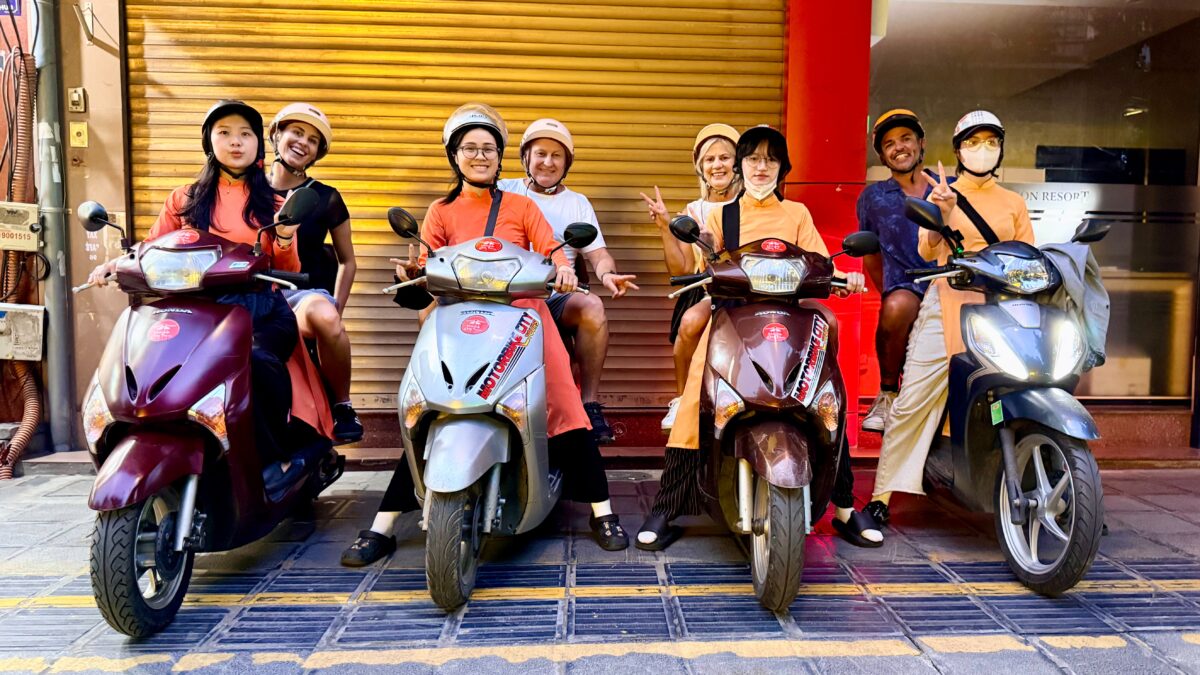
Motorbike travel can be one of the most memorable ways to see Vietnam, especially in mountainous regions and along scenic coastal roads. Ha Giang is famous for its mountain loop, while the Hai Van Pass provides a spectacular Central Vietnam riding experience. However, riding in Vietnam requires genuine experience because traffic, road conditions, weather, trucks, buses and sharp mountain bends can create challenges. Travelers who are not experienced riders should consider joining a guided motorbike experience with a professional driver. This allows you to enjoy the scenery without concentrating on traffic and navigation throughout the entire journey.
Vietnam Traffic Tips
Traffic is one of the first things many visitors notice after arriving in Vietnam. Motorbikes are everywhere in major cities, and traffic may appear chaotic even when it is actually moving according to a predictable rhythm. When crossing a road, do not suddenly run, stop or change direction. Walk steadily and allow approaching vehicles to anticipate your movement. At larger intersections, use pedestrian crossings and traffic lights when available. Visitors should also be particularly careful when stepping from a sidewalk onto a busy road because motorcycles may approach from several directions.
Taxi and Ride-Hailing Tips
When using taxis, choose established operators or reputable ride-hailing applications. Before entering the vehicle, check the driver and vehicle information if you booked through an app. For airport transfers, it is often better to arrange transportation in advance rather than accepting unsolicited offers immediately outside the terminal. If a hotel offers a fixed-price transfer, compare the price with reputable transportation services before deciding. For families with children or travelers carrying several suitcases, a pre-arranged private transfer is often much easier than finding an appropriate vehicle after landing.
Food Safety Tips in Vietnam
Vietnamese food is one of the highlights of the country, but travelers should use common sense when choosing where to eat. Busy restaurants and food stalls often have high turnover, meaning ingredients are used quickly rather than sitting for long periods. Be cautious with food that has been exposed for a long time, particularly in very hot weather. Travelers with sensitive stomachs should introduce unfamiliar foods gradually and avoid changing their diet too dramatically during the first few days. Bottled or properly treated drinking water is recommended if you are uncertain about the local water supply.
What Vietnamese Food Should You Try?
Vietnamese cuisine changes dramatically from north to south. In Hanoi, try pho, bun cha, cha ca and egg coffee. In Central Vietnam, look for bun bo Hue, banh beo, banh khoai, mi Quang and cao lau in Hoi An. In Southern Vietnam, try com tam, hu tieu, banh xeo and a wide variety of seafood. Fresh spring rolls, Vietnamese baguettes and Vietnamese coffee are available throughout the country but can taste different from one region to another. One of the best Vietnam travel tips is to eat regional specialties in the place where they originated instead of ordering the same familiar dishes throughout your entire trip.
Vietnamese Coffee
Coffee is deeply integrated into everyday Vietnamese life. Hanoi is particularly famous for egg coffee, Hue has its distinctive salt coffee, and southern Vietnam is known for strong iced coffee with condensed milk. Do not judge Vietnamese coffee only by hotel breakfast. Visit a traditional café and experience the slower rhythm of sitting with a small metal filter, watching the coffee drip gradually into the cup. Coffee shops range from tiny sidewalk stools to modern specialty cafés, making coffee an easy way to experience different sides of Vietnamese urban culture.
What Should You Wear in Vietnam?
Clothing should be selected according to the region and season. Lightweight breathable clothes are essential for hot and humid areas, while a light jacket is useful for northern Vietnam and mountain destinations. If you are visiting temples, pagodas or religious monuments, bring clothing that covers the shoulders and knees when appropriate. Comfortable walking shoes are much more important than fashionable footwear because many itineraries involve uneven streets, stairs, markets and historic sites. A compact rain jacket or umbrella is also useful because tropical showers can arrive unexpectedly.
What Should You Pack for Vietnam?
A practical packing list includes your passport, visa documents, travel insurance information, payment cards, Vietnamese cash, phone, charger, power bank, travel adapter, sunscreen, sunglasses, hat, comfortable shoes, lightweight rain protection, insect repellent and basic personal medication. Do not bring excessive luggage. Domestic flights may have baggage limits, and moving between several hotels is much easier when you can carry your luggage without assistance. A small daypack is particularly useful for daily sightseeing and short excursions.
Internet, SIM Cards and eSIMs
Reliable mobile internet is extremely useful in Vietnam because travelers frequently use maps, translation applications, ride-hailing services, hotel communication and online booking platforms. Visitors can use a Vietnamese SIM or eSIM depending on their phone and travel needs. Download important information before heading into remote areas because mobile coverage can become weaker in mountainous regions, national parks and some islands. Keep your hotel name, address and phone number saved offline so that you can show the information to a driver even if your connection temporarily disappears.
Vietnam Travel Safety Tips
Vietnam is generally comfortable for tourists, but normal precautions are still necessary. Keep your passport and valuable documents secure, avoid displaying large amounts of cash, and use hotel safes when appropriate. In crowded markets and busy streets, keep your phone and wallet where they cannot easily be taken. Be particularly careful with bags when riding in open vehicles or walking beside busy roads. The majority of travelers experience no serious problems, but being organized and aware is always better than dealing with a preventable incident.
Respect Vietnamese Culture
Vietnamese people are generally welcoming toward visitors, but cultural respect matters. Dress modestly when visiting temples and religious sites, keep your voice down in sacred places and ask before photographing people closely. Do not touch religious objects or enter restricted areas. When visiting homes or traditional communities, observe what residents are doing and follow their lead. A simple greeting and a polite thank-you can make interactions much more comfortable.
Tipping in Vietnam
Tipping is not compulsory in Vietnam, but it is increasingly appreciated in certain tourism services. A private guide or driver who provides excellent service will generally appreciate a tip, while tipping is not expected every time you buy a coffee or street-food dish. The important point is that tipping should reflect the quality of service rather than feeling like an unavoidable charge. If a restaurant already includes a service charge, check the bill before adding anything extra.
Vietnam Travel During Tet
Tet, the Vietnamese Lunar New Year, is one of the most important periods of the year. During Tet, millions of Vietnamese people travel to visit family, which can make flights, trains, buses and hotels much busier. Some restaurants and businesses close temporarily while others operate with modified hours. At the same time, Tet can be a fascinating cultural period with flowers, traditional decorations, family celebrations and special foods. If you want to travel during Tet, book transportation and accommodation well in advance and build flexibility into your schedule.
Vietnam Public Holidays
Vietnam’s major holidays can create significant domestic travel demand. Reunification Day on April 30, International Workers’ Day on May 1 and National Day on September 2 are particularly important periods to consider when planning hotel and transportation bookings. Beaches, mountain destinations and major cities can become considerably busier during long weekends. If your travel dates coincide with a major holiday, reserve popular hotels, domestic flights, cruises and private transportation earlier than you would during a normal week.
Vietnam Travel Tips for Families
Families should avoid itineraries that require changing hotels every night. Two or three nights in each major destination generally creates a much more comfortable rhythm. Private transportation is especially useful because parents can control departure times, meal stops and sightseeing duration. For younger children, combine cultural attractions with beaches, boats, easy countryside experiences and food activities rather than filling every day with museums and historical monuments. A family itinerary should also avoid scheduling the longest sightseeing day immediately after an international flight.
Vietnam Travel Tips for Couples
Couples have enormous flexibility when planning Vietnam. A balanced journey could combine Hanoi’s food and culture, a luxury Ha Long Bay cruise, Hoi An’s evening atmosphere, a private Central Vietnam experience, Ho Chi Minh City’s restaurants and several nights at a beach resort in Phu Quoc or Con Dao. Private transportation, carefully selected hotels and fewer destinations usually create a more romantic experience than constantly moving between cities.
Vietnam Travel Tips for Older Travelers
Older travelers can enjoy Vietnam very comfortably when the itinerary is designed around realistic travel times. Avoid excessive hotel changes, choose hotels with elevators where necessary and allow enough time for rest between major sightseeing activities. Private cars are particularly useful because they eliminate unnecessary walking between transportation connections. In destinations such as Ha Giang, Sapa or Phong Nha, activities can be adapted according to fitness level rather than forcing every traveler to follow the same schedule.
Vietnam Travel Tips for First-Time Visitors
The first trip should focus on understanding the country rather than trying to see every famous attraction. Hanoi provides the strongest introduction to Northern Vietnamese culture, while Hue and Hoi An reveal the history of Central Vietnam. Ho Chi Minh City introduces the energy of the south, and the Mekong Delta provides a completely different environment. Once you understand these three regions, you can decide whether a second trip should focus on mountains, beaches, islands, caves or deeper cultural experiences.
Do Not Try to See Everything
One of the most common Vietnam itinerary mistakes is trying to visit too many destinations. An itinerary such as Hanoi, Ha Long Bay, Sapa, Ha Giang, Ninh Binh, Hue, Da Nang, Hoi An, Ho Chi Minh City, Mekong Delta and Phu Quoc in two weeks may look impressive, but it creates constant packing, transportation and check-in days. It is better to spend three nights in Hanoi, two nights on a cruise, three nights in Hoi An and three nights in Ho Chi Minh City than to spend one night in five different places and barely experience any of them.
A Good 10-Day Vietnam Itinerary
For a first visit, a practical 10-day route could begin with three nights in Hanoi, followed by an overnight Ha Long Bay cruise, then a flight to Central Vietnam for two or three nights in Hoi An and finally a flight to Ho Chi Minh City for two or three nights. This route provides history, food, scenery, heritage and modern Vietnamese city life without requiring an excessive number of hotel changes. Travelers who prefer beaches can replace part of the city stay with a beach destination.
A Good 14-Day Vietnam Itinerary
A 14-day journey can include Hanoi, Ha Long Bay, Hue, Hoi An, Ho Chi Minh City and the Mekong Delta. Spend three nights in Hanoi, one or two nights on Ha Long Bay, two nights in Hue, three nights in Hoi An, two or three nights in Ho Chi Minh City and one or two nights in the Mekong Delta. If beach time is more important than the Mekong Delta, replace the final portion with Phu Quoc. The best itinerary depends on whether your priorities are culture, history, food, adventure or relaxation.
A Good 21-Day Vietnam Itinerary
Three weeks allows much more flexibility. A premium journey could start in Hanoi, continue to Ha Long Bay, explore Northern Vietnam for several days, fly to Central Vietnam for Hue and Hoi An, then continue south to Ho Chi Minh City, the Mekong Delta and finally Phu Quoc or Con Dao. With this amount of time, travelers can slow down instead of treating every destination as a one-night stop. The additional time is especially valuable in mountainous regions where road journeys are part of the experience.
Vietnam Travel Tips for Luxury Travelers
Luxury travel in Vietnam does not simply mean staying in five-star hotels. The biggest improvement comes from combining good hotels with private transportation, experienced guides, carefully planned timing and enough free time. A luxury traveler can have a private airport transfer, a private Hanoi food experience, a premium Ha Long Bay cruise, private transportation through Central Vietnam, a carefully selected Hoi An resort and a private Mekong Delta journey. The goal is to remove unnecessary waiting and complicated logistics while preserving authentic experiences.
Vietnam Travel Tips for Sustainable Travel
Responsible travel is increasingly important throughout Vietnam. Avoid single-use plastic when possible, carry a reusable bottle, follow environmental rules in national parks and marine areas, and do not purchase wildlife products or artifacts that may have been illegally collected. When visiting villages and cultural communities, respect privacy and ask before photographing people closely. Choosing reputable tour operators also helps ensure that guides, drivers and community partners are treated fairly.
Vietnam Travel Tips: Plan Around Experiences, Not Just Destinations
A good Vietnam itinerary should answer a simple question: What do you actually want to experience? If you love food, spend more time in Hanoi and Ho Chi Minh City. If you love mountains, prioritize Ha Giang, Sapa or Pu Luong. If beaches are your priority, reduce the number of inland destinations and allow several nights in Phu Quoc, Con Dao or Mui Ne. If history is important, give Hue, Hoi An and Hanoi enough time. If you prefer luxury and relaxation, choose fewer destinations and invest in better hotels, private transportation and carefully planned experiences.
Vietnam Travel Tips – Final Advice
The most important Vietnam travel tip is to slow down and plan realistically. Vietnam is not a small country, and traveling from one end to the other requires time. Use flights for long distances, private cars for regional journeys, choose accommodation according to the experience you want, carry both cards and cash, check regional weather before booking, protect your documents, respect Vietnamese culture and leave some flexibility in your itinerary. A carefully designed Vietnam vacation should feel like a journey through several different countries within one country: historic Hanoi and the northern mountains, imperial Hue and Hoi An in Central Vietnam, energetic Ho Chi Minh City and the waterways of the Mekong Delta, followed by the beaches of Southern Vietnam.
Plan Your Vietnam Journey With Vietnam Women Travel
Vietnam Women Travel – Premium Private Tours Led by Women creates private Vietnam journeys for couples, families and friends who want a more personal way to travel. Our private itineraries can combine Hanoi, Ha Long Bay, Northern Vietnam, Hue, Da Nang, Hoi An, Phong Nha, Ho Chi Minh City, the Mekong Delta, Mui Ne, Phu Quoc and Con Dao according to the number of days available and the travel style of each group. Private transportation, women-led guides, carefully selected accommodation and flexible sightseeing make it possible to create a Vietnam holiday that is comfortable without losing the authentic character of each destination.
Website: https://vietnamwomentravel.com/
Hotline / WhatsApp: +84 988 402 008 | +84 982 416 518 | +84 981 090 989
Email: info@vietnamwomentravel.com
Vietnam Travel Tips | Vietnam Travel Guide | Vietnam Itinerary | Vietnam Travel Planning | Vietnam Visa Guide | Vietnam Transportation | Vietnam Weather | Vietnam Food Guide | Vietnam Travel Safety | Vietnam Private Tours | Luxury Vietnam Tours | Vietnam Women Travel