
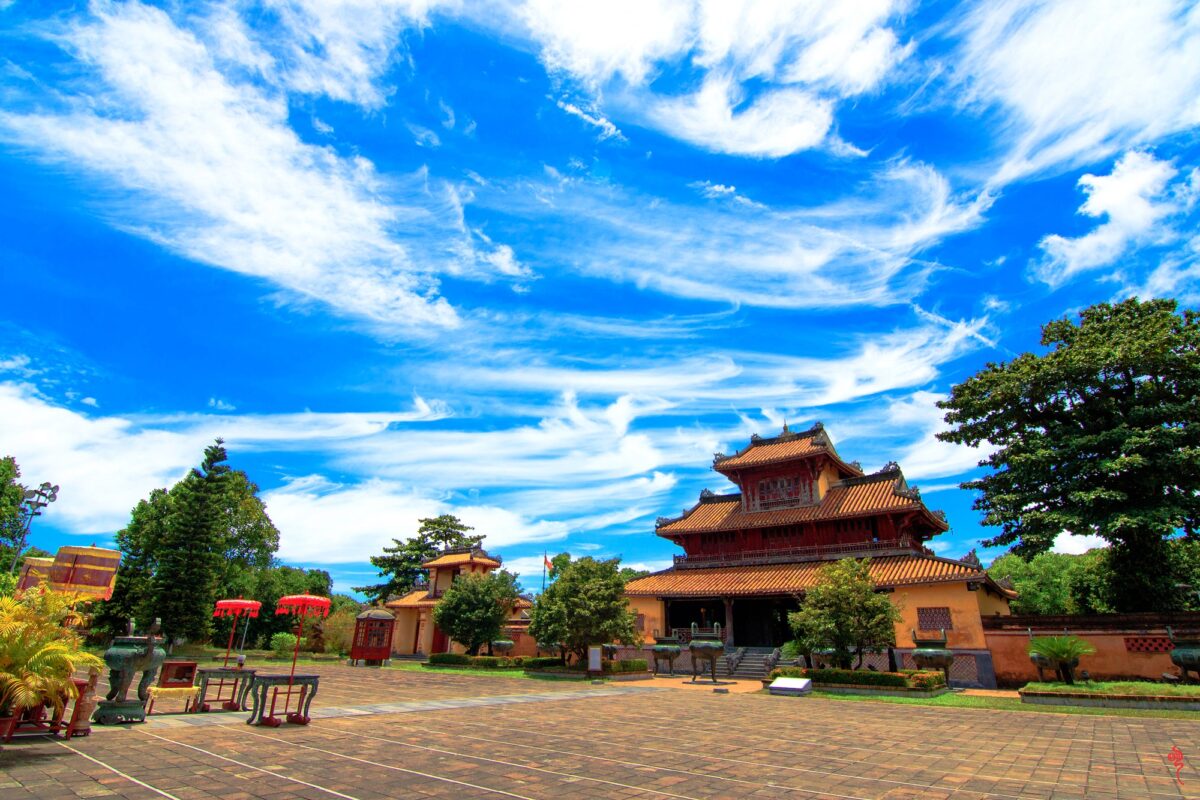
Hue Full-Day Private Car Tour – Imperial City, Royal Tombs & Local Culture Led by Women
Experience Hue Beyond the Imperial City
Discover the former imperial capital of Vietnam through its royal architecture, sacred pagodas, peaceful garden houses, traditional villages, local markets, countryside scenery, and distinctive cuisine on our Hue Full-Day Private Car Tour – Imperial City, Royal Tombs & Local Culture Led by Women.
Designed exclusively for private travelers, this experience combines the most important heritage sites of Hue with quieter cultural discoveries that reveal how local people have lived around the former royal capital for generations.
Travel comfortably in your private air-conditioned car with a professional Vietnamese female guide and explore Hue Imperial City, Dong Ba Market, Thien Mu Pagoda, Minh Mang Tomb, Khai Dinh Tomb, Tu Hieu Pagoda, Thanh Toan Village, Thanh Toan Bridge, local garden houses, traditional craft communities, and authentic Hue cuisine.
Rather than simply moving from one monument to another, the journey connects royal history with ordinary Vietnamese life.
You will see where emperors ruled, where monks lived, where local families shop, where farmers work, where traditional crafts are preserved, and where Hue’s famous food is still prepared according to local traditions.
A Private Journey Designed Around You
This is a 100% private tour, reserved only for you and your companions.
There is no large group, no crowded tour bus, and no fixed experience designed for dozens of strangers.
Your private car gives you a comfortable base throughout the day, while your female guide adapts the experience to your interests.
If you love history, she can explain more about the Nguyen Dynasty.
If you enjoy photography, she can find beautiful viewpoints.
If you love food, she can introduce you to more local specialties.
If you are interested in Vietnamese culture, she can spend more time explaining family traditions, Buddhism, architecture, village life, and local customs.
Led by Vietnamese Women
Your Vietnamese female guide is your local connection to Hue.
She does not simply provide information about monuments.
She explains the stories behind them.
She can introduce the traditions of Hue families, the importance of ancestor worship, Buddhist culture, royal customs, traditional architecture, local food, village life, and the changes Hue has experienced over generations.
Traveling with a woman from Vietnam also gives the experience a more personal perspective on family life, food, traditions, community, and everyday culture.
Begin with Hue’s Royal Heart
Start your private journey at Hue Imperial City, the monumental center of the Nguyen Dynasty.
The citadel sits beside the Perfume River and remains the defining symbol of Hue’s imperial heritage.
Instead of trying to see every corner quickly, your guide focuses on the structures and stories that help you understand how the royal capital actually functioned.
Ngo Mon Gate
Begin at Ngo Mon Gate, the principal ceremonial entrance to the Imperial City.
Your guide will explain how the gate was used during important imperial occasions and why its position and architecture were carefully designed according to royal principles.
From here, enter the heart of the former imperial capital.
Thai Hoa Palace
Continue to Thai Hoa Palace, one of the most important surviving structures inside the Imperial City.
This was the ceremonial throne hall where major royal events took place.
Learn about the emperor, mandarins, court ceremonies, imperial etiquette, and the symbolism incorporated into the building.
The architecture becomes much more meaningful once you understand what happened inside these halls.
Royal Courtyards and Imperial Architecture
Explore the courtyards, gates, pavilions, gardens, and surviving structures of the Imperial City.
Your guide will explain the relationship between the royal palace, administrative areas, religious spaces, and private residences.
Rather than simply photographing the buildings, you will understand how the imperial capital was organized.
Nine Dynastic Urns
Visit the Nine Dynastic Urns, enormous bronze vessels representing the Nguyen emperors.
Your guide will explain the symbolism of the urns and their connection to the legitimacy and continuity of the dynasty.
They are among the most impressive surviving works of imperial bronze art in Hue.
Discover Everyday Hue at Dong Ba Market
Leave the Imperial City and experience a completely different side of Hue at Dong Ba Market.
This historic market is where the atmosphere changes from imperial architecture to everyday commerce.
Walk through sections filled with fresh produce, herbs, seafood, spices, clothing, handicrafts, dried foods, local snacks, and household products.
Watch local residents buying ingredients for their families and restaurants.
Your female guide can explain which ingredients are particularly important in Hue cuisine and introduce you to regional products that visitors often overlook.
Hue Street Food at the Market
Dong Ba Market is also a wonderful place to understand the connection between food and local life.
Depending on your preferences, your guide can introduce you to traditional specialties such as Banh Beo, Banh Nam, Banh Bot Loc, Banh Khoai, Bun Hen, and Che Hue.
Instead of treating food as simply a meal, learn why these dishes became part of Hue’s identity.
Cross the City Toward the Perfume River
Continue by private car through Hue toward the Perfume River.
The river divides the city into distinct areas and has played an important role in the development of the imperial capital.
Your guide will point out historic neighborhoods, bridges, temples, gardens, and local communities along the route.
This is also an opportunity to see how modern Hue has grown around its imperial heritage.
Thien Mu Pagoda
Visit Thien Mu Pagoda, one of the most recognizable religious landmarks in Hue.
The pagoda stands on Ha Khe Hill overlooking the Perfume River.
Its seven-story Phuoc Duyen Tower has become one of the enduring symbols of the city.
Explore the temple grounds, gardens, courtyards, and Buddhist structures.
Your guide will explain the history of the pagoda and the role of Buddhism in Hue’s cultural identity.
Take a quiet moment overlooking the river before continuing into the countryside.
Discover Hue’s Countryside
Leave the central city behind and travel into the greener countryside surrounding Hue.
The landscape changes from urban streets to gardens, rice fields, canals, small roads, family homes, and agricultural communities.
This transition is important because much of Hue’s cultural character exists outside the major monuments.
Here you begin to see the relationship between the city, its villages, and the surrounding countryside.
Thanh Toan Village
Continue to Thanh Toan Village, a peaceful rural community outside central Hue.
The village is famous for its agricultural landscape, traditional architecture, and strong connection with local farming life.
Explore the area around Thanh Toan Bridge and learn how the village developed around the surrounding waterways and rice fields.
Thanh Toan Tile-Roofed Bridge
Visit the historic Thanh Toan Bridge, a covered wooden bridge with a distinctive tiled roof.
The bridge is not simply an architectural attraction.
It is part of the daily life and history of the local community.
Your guide will explain its cultural importance and the role traditional bridges played in connecting villages across waterways.
Take photographs and enjoy the slower pace of rural Hue.
Thanh Toan Agricultural Museum
Visit the agricultural exhibition area around Thanh Toan to learn about traditional farming practices.
Discover how local farmers have cultivated rice, used irrigation systems, harvested crops, and adapted their lives to the seasonal rhythm of the countryside.
This gives you a very different understanding of Hue from what you learn inside the Imperial City.
You see how ordinary families supported themselves while the royal court existed in the nearby capital.
Meet Rural Hue
Walk around the village and observe everyday activities.
You may see farmers working in fields, residents preparing food, gardens surrounding family homes, children cycling through village roads, or older generations sitting outside their houses.
Your female guide can explain the customs and routines of rural Vietnamese communities.
There is no need to rush.
The private format allows you to pause and appreciate the details.
Authentic Hue Lunch
Enjoy lunch featuring traditional Hue cuisine at a carefully selected local restaurant.
Hue is famous for food that ranges from refined dishes influenced by royal cuisine to simple, beautifully prepared dishes enjoyed by local families.
Depending on the restaurant and your preferences, you may try:
Bun Bo Hue
Banh Khoai
Banh Beo
Banh Nam
Banh Bot Loc
Bun Hen
Nem Lui
Che Hue
Your guide can explain the ingredients, flavors, preparation methods, and local traditions behind the dishes.
Vegetarian travelers can also enjoy Hue’s strong tradition of Buddhist-influenced vegetarian cuisine.
Minh Mang Tomb
After lunch, continue to the Tomb of Emperor Minh Mang, situated in a peaceful landscape surrounded by hills, trees, water, and carefully designed gardens.
This tomb is particularly interesting for travelers who appreciate architecture and landscape design.
The complex was created according to principles of harmony between buildings and nature.
Walk through the courtyards, gates, lakes, bridges, temples, and gardens.
Your guide will explain the personality of Emperor Minh Mang and how his ideas influenced the design of his final resting place.
The Harmony of Water and Architecture
One of the most beautiful aspects of Minh Mang Tomb is the way water is integrated into the architecture.
Lakes and waterways guide visitors through the complex while creating reflections of trees, bridges, and buildings.
Your guide will show you how these elements were used to create balance and symbolism.
Khai Dinh Tomb
Continue to Khai Dinh Tomb, one of Hue’s most visually dramatic royal monuments.
The tomb immediately stands apart from Minh Mang because of its unusual architectural style.
Dark stone, elaborate decorations, ceramic mosaics, carved dragons, European-inspired elements, and Vietnamese imperial symbolism come together inside the complex.
Khai Thanh Palace
Enter Khai Thanh Palace, the most richly decorated interior of the tomb.
Look closely at the intricate mosaics and decorative details covering the walls and ceilings.
Your guide will explain why Emperor Khai Dinh chose such a different architectural style and how international influences were incorporated into Nguyen Dynasty architecture.
This is one of the most fascinating places in Hue for travelers interested in art and architecture.
Tu Hieu Pagoda
Continue to Tu Hieu Pagoda, surrounded by a peaceful forest-like setting.
This temple is closely associated with Buddhist traditions and monastic life in Hue.
The quiet atmosphere offers a strong contrast with the monumental Imperial City and ornate royal tombs.
Your guide will explain the importance of filial piety, ancestor traditions, Buddhism, and family values in Vietnamese culture.
This is an especially meaningful stop for travelers interested in understanding the cultural values behind Vietnamese society.
Discover a Traditional Hue Garden House
Continue back toward the city and visit a traditional Hue Garden House.
These homes are among the most distinctive forms of traditional architecture in Hue.
A garden house is not simply a large house surrounded by plants.
Its layout reflects ideas about family, privacy, nature, spirituality, climate, and harmony.
Explore the garden, entrance, courtyard, traditional house structure, trees, ponds, and family spaces.
Your female guide will explain how generations of Hue families have preserved these homes and why garden houses remain such an important part of the city’s cultural identity.
Hue Through a Woman’s Perspective
Throughout the tour, your guide can share stories that go beyond dates and historical facts.
Learn how Hue families traditionally organized their homes.
How food was prepared for family gatherings.
Why ancestor altars are important.
How women traditionally contributed to family businesses and village life.
How local crafts were passed from generation to generation.
And how modern Hue balances its royal heritage with contemporary Vietnamese life.
These personal stories help transform the tour from sightseeing into cultural understanding.
A Taste of Hue Coffee
Before returning to your hotel, enjoy a relaxed coffee stop at a local café.
Try traditional Vietnamese coffee or Hue’s famous salt coffee, a local specialty known for its unusual combination of strong coffee, creamy foam, and a lightly salty flavor.
Sit with your guide, watch local life, and enjoy a final taste of Hue before the journey ends.
Return Through Local Hue
Drive back through neighborhoods and streets away from the main tourist attractions.
Your guide can point out local restaurants, schools, markets, temples, cafés, traditional houses, and small businesses.
This final drive provides a last glimpse of modern Hue and how the city continues to live around its historic monuments.
Why This Private Car Tour Is Different
This experience is designed differently from a conventional Hue sightseeing itinerary.
It does not focus only on collecting famous monuments.
Instead, the day moves through four different sides of Hue:
The Imperial Capital – Imperial City and Nguyen Dynasty heritage.
The Spiritual City – Thien Mu and Tu Hieu Pagodas.
The Royal Countryside – Minh Mang and Khai Dinh Tombs.
The Living Culture – Dong Ba Market, Thanh Toan Village, garden houses, local food, and everyday communities.
The result is a much more complete picture of Hue.
Why Travel with Vietnam Women Travel?
Vietnam Women Travel – Premium Private Tours Led by Women specializes in private experiences designed for international travelers who want meaningful encounters rather than standard mass tourism.
Our female guides are local women who understand Vietnam from the inside.
They can explain history, culture, food, family traditions, architecture, and everyday life in a natural and personal way.
Most importantly, your experience remains private.
You travel only with your own companions and your own guide.
Comfortable Private Car Travel
The private air-conditioned car makes this tour ideal for travelers who value comfort.
There is no need to worry about heat, rain, traffic, or long distances between Hue’s historic sites.
Relax between attractions.
Keep your belongings safely in the vehicle.
Enjoy the scenery through the windows.
And step out refreshed whenever you arrive at the next destination.
This makes the tour particularly suitable for families, couples, older travelers, and private groups.
Ideal for Travelers Who Want More Than Sightseeing
This Hue private car experience is perfect for:
Couples looking for a relaxed cultural day.
Families wanting comfort and flexibility.
First-time visitors who want to understand Hue properly.
History lovers interested in the Nguyen Dynasty.
Food lovers wanting authentic Hue specialties.
Photography enthusiasts searching for architecture and countryside scenery.
Culture travelers interested in Vietnamese traditions.
Travelers who prefer private experiences over crowded group tours.
Places and Experiences You’ll Discover
Hue Imperial City, Ngo Mon Gate, Thai Hoa Palace, Nine Dynastic Urns, Dong Ba Market, Thien Mu Pagoda, Perfume River, Thanh Toan Village, Thanh Toan Bridge, traditional agricultural life, Minh Mang Tomb, Khai Dinh Tomb, Tu Hieu Pagoda, traditional Hue Garden House, local neighborhoods, Vietnamese coffee, and authentic Hue cuisine.
What’s Included
Private air-conditioned car, professional Vietnamese female guide, private hotel pickup and drop-off in Hue, private transportation throughout the experience, sightseeing at the major heritage sites, village and cultural visits, local food experience, drinking water, photography opportunities, and personalized cultural interpretation.
Not Included
Entrance fees unless specifically stated in your booking, personal expenses, additional food and drinks, souvenirs, tips and gratuities, and services not specifically listed as included.
Tour Information
Tour Name: Hue Full-Day Private Car Tour – Imperial City, Royal Tombs & Local Culture Led by Women
Tour Type: 100% Private
Transportation: Private air-conditioned car
Guide: Professional Vietnamese female guide
Pickup: Your hotel in Hue or agreed meeting point
Drop-off: Your hotel in Hue or agreed meeting point
Suitable For: Couples, families, friends, solo travelers, seniors, photographers, history lovers, food lovers, and private groups
Your Private Day in Hue
See the grandeur of the Imperial City.
Discover the daily rhythm of Dong Ba Market.
Follow the Perfume River to Thien Mu Pagoda.
Leave the city behind and discover rural Thanh Toan Village.
Walk across the historic Thanh Toan Bridge.
Understand traditional farming life.
Explore the peaceful landscape of Minh Mang Tomb.
Admire the extraordinary architecture of Khai Dinh Tomb.
Discover the spiritual atmosphere of Tu Hieu Pagoda.
Step inside a traditional Hue Garden House.
Taste the distinctive cuisine of Central Vietnam.
And finish the day with Vietnamese coffee and stories from your local female guide.
Our Hue Full-Day Private Car Tour – Imperial City, Royal Tombs & Local Culture Led by Women is designed to show you the Hue that exists beyond the postcard.
The Hue of emperors and farmers.
The Hue of temples and family homes.
The Hue of royal architecture and village markets.
The Hue of ancient traditions and modern Vietnamese life.
Private. Comfortable. Personal. Led by Women.
Book Your Private Hue Car Tour
Vietnam Women Travel – Premium Private Tours Led by Women
Private Car • Female Guide • Imperial City • Dong Ba Market • Thien Mu Pagoda • Thanh Toan Village • Minh Mang Tomb • Khai Dinh Tomb • Tu Hieu Pagoda • Garden Houses • Local Food • Authentic Hue Culture